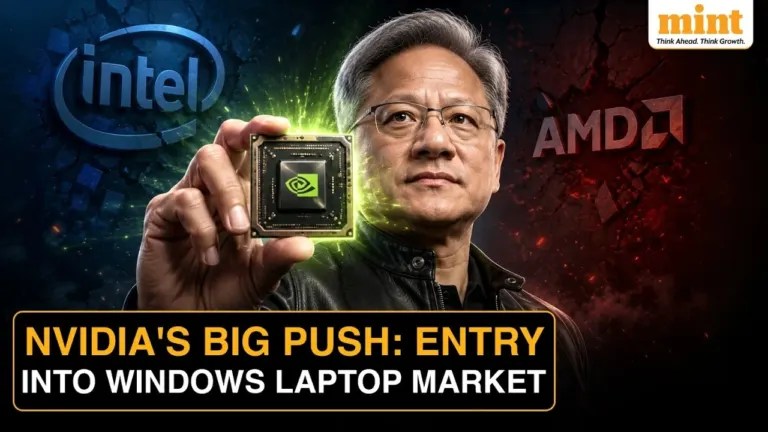
Computex didn’t just bring us shiny new hardware; it gave us a peek into a future where Nvidia wants to rule your desktop, AMD refuse to let your old motherboards die, and the AI bubble gets ready to disrupt your pension fund.
After months of whispers, backroom deals, and endless supply chain leaks, the Nvidia RTX Spark has finally materialized. If you thought the battle for your next laptop was just between Intel and AMD, think again. The silicon landscape is fracturing, and Nvidia has decided it is tired of letting Qualcomm have all the fun in the Windows-on-Arm sandbox. But as we unwrap what happened at Computex, we have to ask: is this the consumer revolution we were promised, or is it just another way for Team Green to flex its AI muscles on our desks?
1. Nvidia’s Big Move: The RTX Spark and the Arm Laptop Invasion
Let’s talk about the giant elephant in the room. Jensen Huang walked onto the Computex stage, did a little dance, and dropped a bombshell that has been brewing in the rumor mill for over a year. The Nvidia RTX Spark is real, and it is heading straight for your next high-performance laptop or desktop.
For those keeping score, this is a massive shift. Under the hood, this consumer-grade Nvidia RTX Spark superchip features 20 Arm CPU cores, a whopping 6,144 Blackwell GPU cores, and 128GB of LPDDR5X memory. If those numbers sound suspiciously familiar, it’s because this is essentially a repackaged version of the GP10 chip that powered Nvidia’s DGX Spark AI mini-PC last year. Except now, it’s coming to machines built by Asus, MSI, Lenovo, Dell, and HP.
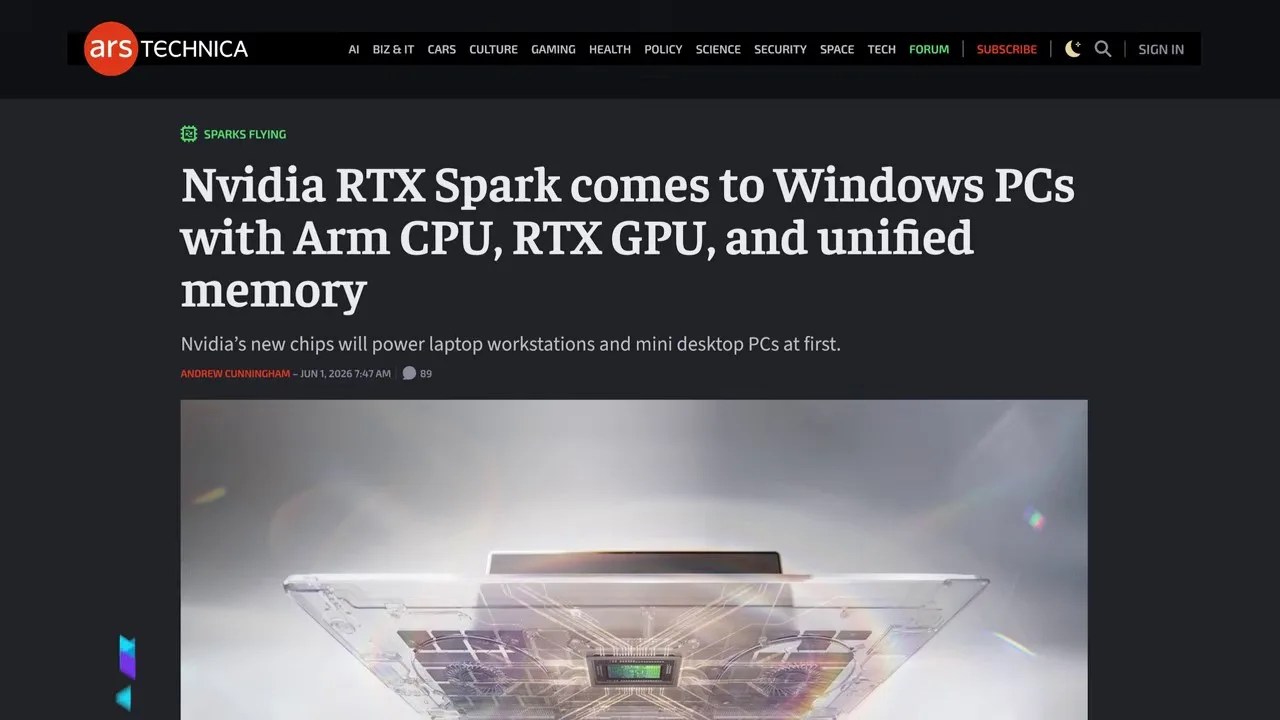
As seen during the keynote: The new Nvidia RTX Spark combining Arm cores with Blackwell graphical power.
But can we talk about the software problem? Windows on Arm has historical baggage. Most games have to run through Microsoft’s Prism emulation layer, which is a certified nightmare for anything running kernel-level anti-cheat or aggressive DRM. However, Nvidia claims to have solved this. They are promising native Arm support for Easy Anti-Cheat, BattleEye, and even Denuvo. It is a bit ironic that Linux gamers have been begging for this level of support for a decade, yet Windows on Arm gets the VIP treatment first. Still, if it means we can actually game on an Arm-based laptop without a compatibility meltdown, I’ll take the win.
2. The Trillion-Dollar Club: Anthropic Heads for the SEC
While Nvidia is busy conquering the physical desktop, the virtual landscape of generative AI is bracing for a financial earthquake. Anthropic, the brains behind the Claude LLM family, has officially thrown down the gauntlet by submitting its proposed IPO filing to the SEC.

The financial race is on: Anthropic positions itself alongside SpaceX and OpenAI for historical market valuations.
This isn’t just another tech company looking to go public so its founders can buy superyachts. Anthropic is part of a very exclusive, terrifyingly ambitious trio—alongside SpaceX and OpenAI—that analysts believe could enter the public market with valuations hovering around or above the $1 trillion mark.
But before you run to your brokerage app, there is a catch. Wall Street insiders are sounding the alarm. Under recently modified Nasdaq rules, having companies of this scale debut could drastically warp the weighting of standard index funds. If you are a casual investor relying on target-date funds or basic ETFs, your portfolio might soon be heavily exposed to the volatile swings of the AI sector. If the current AI bubble pops, ordinary investors could find themselves holding the bag. It’s a high-stakes game of financial musical chairs, and the music is getting faster.
3. AMD’s Masterclass in Keeping PC Gamers Happy
Let’s pivot to something genuinely wholesome. While Intel is scrambling and Nvidia is chasing the enterprise dollar, AMD is out here playing the hero of the consumer space. At Computex, Team Red announced they are extending official support for the AM5 CPU socket all the way out to 2029.
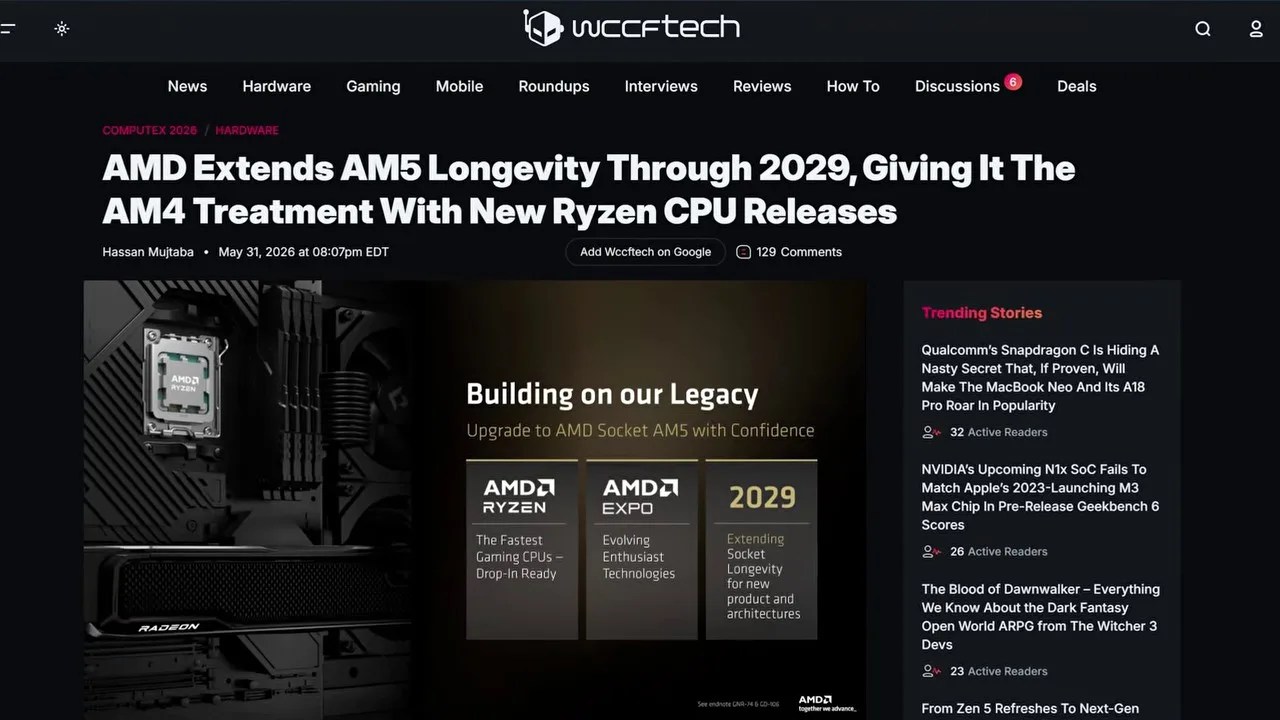
A sigh of relief for PC builders: AMD commits to the AM5 platform long-term, alongside new budget X3D variants.
That means if you invested in an AM5 motherboard recently, you can keep swapping in new CPU generations for the next five years without rebuilding your entire rig. And if you are still rocking a legendary AM4 setup? AMD has not forgotten you either. To mark the 10th anniversary of AM4, they are reviving the beloved Ryzen 7 5800X3D as a drop-in upgrade path for older systems. It is a brilliant escape hatch for budget-conscious builders who want to skip the extortionate DDR5 RAM upgrade costs for just a bit longer.
On top of that, we are getting a brand-new Ryzen 7 7700X3D, designed to be the cheapest entry point into AM5 3D V-Cache gaming yet. It is refreshing to see a hardware manufacturer realize that not everyone has $2,000 to drop on a graphics card or a platform refresh every two years.
4. Form Factor Fixes: Rescuing Port-Starved Mini-PCs
We need to talk about the physical reality of modern computer design. Ever since Apple shrunk the M4 Mac mini down to the size of a couple of stacked sticky notes, the tech world has faced a dilemma. Yes, it looks incredibly sleek on a minimalist oak desk. But trying to plug in a camera, an external SSD, a drawing tablet, and a legacy keyboard quickly turns your gorgeous workstation into an unsightly, cable-cluttered spider’s web.

The new reality of small-form-factor design: Third-party expansion bases adding back essential I/O and storage expansion.
This port-starvation has triggered a fascinating response from hardware accessory designers. We are now seeing a surge in tailor-made docking stations that sit flush underneath these micro-desktops. Instead of paying Apple’s highway-robbery prices for internal storage upgrades, these clever bases let you slide in a standard M.2 SSD while instantly restoring legacy USB-A ports, SD card slots, and dual-monitor outputs. It is proof that even when big tech tries to force us into a wireless, dongle-heavy future, the hardware ecosystem will always find a way to give power users their utility back.
5. Quick Bits: Handheld Pandemonium and DLSS Upgrades
To wrap things up, Computex was an absolute gold rush of smaller, fast-paced announcements that deserve some serious attention:
- DLSS Ray Reconstruction 2.0: Nvidia is finally upgrading its AI ray-tracing de-noiser tech to use the same advanced second-generation transformer approach found in the rest of DLSS 4.5. The update lands in August, promising cleaner, sharper ray-traced visuals for anyone with an RTX card.
- The Handheld Invasion: Handheld PC gaming is officially out of control. Asus refreshed its lineup with the ROG Ally X, boasting a gorgeous 7.4-inch OLED screen. Not to be outdone, MSI and Acer also showed off new handhelds utilizing Intel’s latest Arc graphics chips.
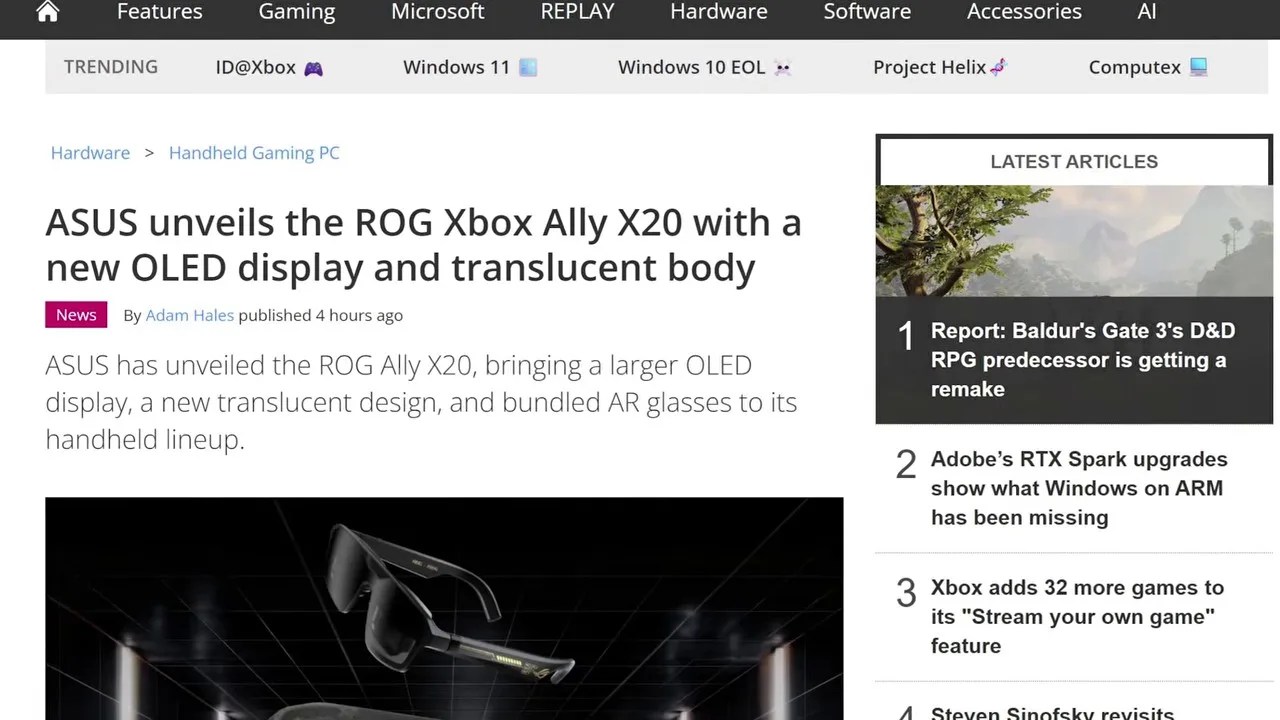
The handheld golden age: ASUS, MSI, and Acer showcasing their latest portable gaming hardware.
- The Streaming-Only Oddity: Acer also revealed the Nitro Blaze Link, a Linux-powered handheld that actually lacks the hardware to run games locally. Instead, it streams them over Wi-Fi from your main rig. It’s bold, lightweight, and incredibly niche.
- Meta Bots Patched: Meta quieted a scary exploit where hackers could use simple prompt injections to trick their AI support system into sending Instagram password reset links without 2FA. The loophole is closed, so your account is safe… for now.
Whether you’re excited to see if the Nvidia RTX Spark can finally make Arm laptops viable for high-end gaming, or you’re just happy that your AM4 motherboard is getting one last ride, it’s clear the hardware industry isn’t slowing down. We’re living in a chaotic, exciting transition phase where AI, custom silicon, and raw consumer demand are constantly colliding. Grab your popcorn; things are about to get very interesting.