If you feel like the ground beneath your feet is constantly shifting in the artificial intelligence landscape, you are not alone. The pace of development has transitioned from a steady march to a frantic sprint. We are no longer just waiting for annual product cycles; instead, we are tracking model slugs in developer APIs, dissecting leaks from anonymous insiders, and watching state-of-the-art models get trained, benchmarked, and sometimes banned before they even reach the public. This week is shaping up to be one of the most chaotic yet, with the imminent showdown between GPT-5.6 Pro and Claude Sonnet 5 poised to redefine what we expect from developer-focused AI tools.
In this deep dive, we will unpack the latest leaks surrounding Anthropic’s next major move, the mysterious banning of a highly advanced Mythos variant, OpenAI’s rumored Thursday release of its next-generation engine, and a fascinating new routing architecture from Japan’s Sakana AI. Let’s cut through the marketing hype and look at what the actual data tells us.
Key Takeaways from the Latest AI Leaks
To help you quickly grasp the chaotic state of play this week, here is a summary of the key models, expected release windows, and core capabilities discussed in the industry right now:
| Model Name | Developer | Expected Release | Core Strength | Current Status |
|---|---|---|---|---|
| Claude Sonnet 5 | Anthropic | Late February / Early March | UI understanding, massive context, coding | Partner API slugs detected |
| Mythos 6 (Variant) | Anthropic (Internal) | Unknown | Long-horizon reasoning, agentic planning | Banned / Restricted internally |
| GPT-5.6 Pro | OpenAI | Thursday (Expected) | Full-stack coding, 3D generation, BD Voice | Rolling out to select test groups |
| Fugu & Ultra Systems | Sakana AI | Just Announced | Cost-effective multi-model routing | Publicly active, mixed benchmark results |
Now, let’s look at the detailed breakdown of each major development, beginning with the highly anticipated update to Anthropic’s flagship daily driver.
1. The Imminent Arrival of Claude Sonnet 5
If you talk to software engineers, technical writers, or product managers who build AI agents, you will quickly realize that Claude Sonnet is their absolute workhorse. While Opus gets the glory for complex reasoning, Sonnet is the model that handles the daily grind of production environments. It is fast, relatively cost-effective, and highly reliable. But it has been quite a while since Sonnet received a meaningful architectural upgrade. That is about to change.
Recently, a new model slug pointing directly to Claude Sonnet 5 appeared within Anthropic’s partner provider networks. Historically, when a model slug begins showing up in these partner portals, it indicates that the backend infrastructure is being primed for public traffic. We usually see a formal launch within five to seven days of these appearances. If this pattern holds true, we could see Sonnet 5 drop at any moment.
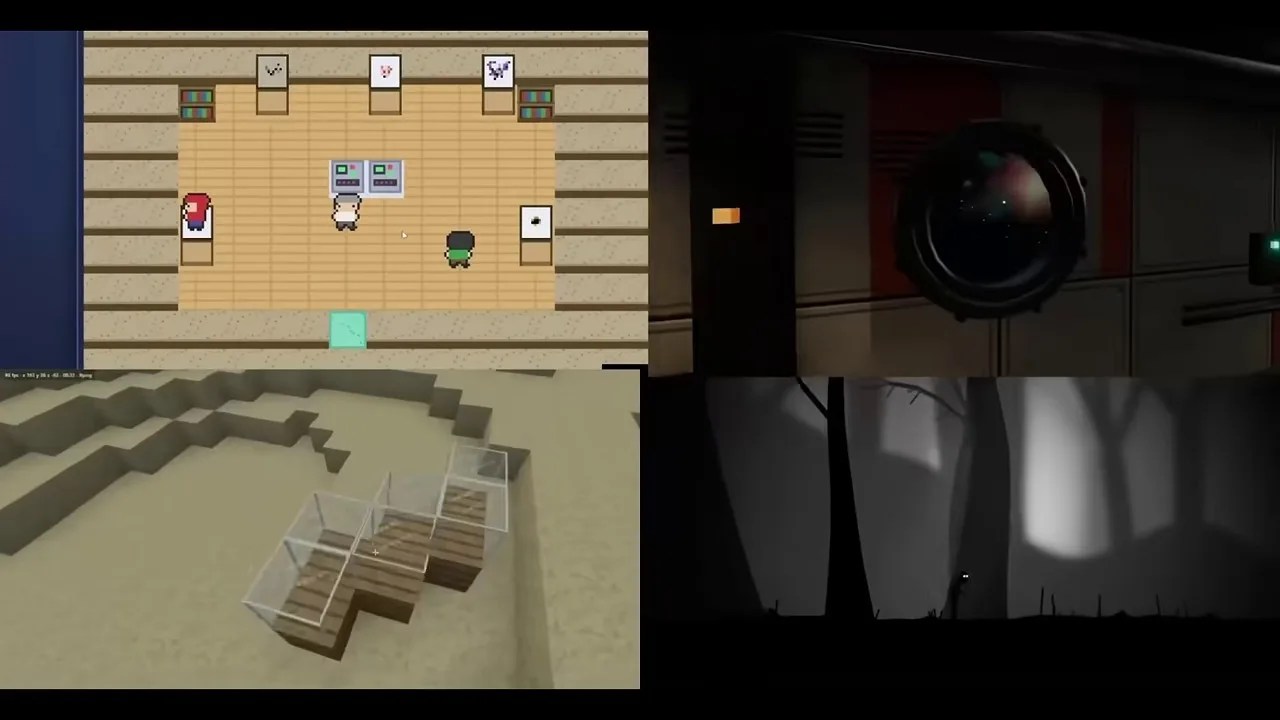
Leaked specifications for Claude Sonnet 5 indicate massive upgrades to visual spatial reasoning and context size.
So, what should we expect from this new iteration? The leaks point to several key upgrades:
- Expanded Context Window: Rumors suggest a massive jump to a stable one to two million tokens, allowing developers to feed entire repositories or complex codebases directly into a single prompt.
- Advanced Visual Grounding: Sonnet 5 is expected to show a much deeper understanding of user interface mockups and architectural flowcharts, bridging the gap between design files and raw code.
- New Tokenizer Architecture: Anthropic appears to be testing a new tokenizer that could consume roughly 30% more tokens for the same input text.
While a 30% increase in token usage might sound like a sneaky way to make API calls more expensive, the engineering trade-off is highly logical. A denser, more expressive tokenizer allows the model to capture subtle nuances, improve multi-modal understanding, and execute reasoning tasks with far fewer logical errors. It is a trade-off that most enterprise developers will happily accept if it reduces the rate of hallucinations.
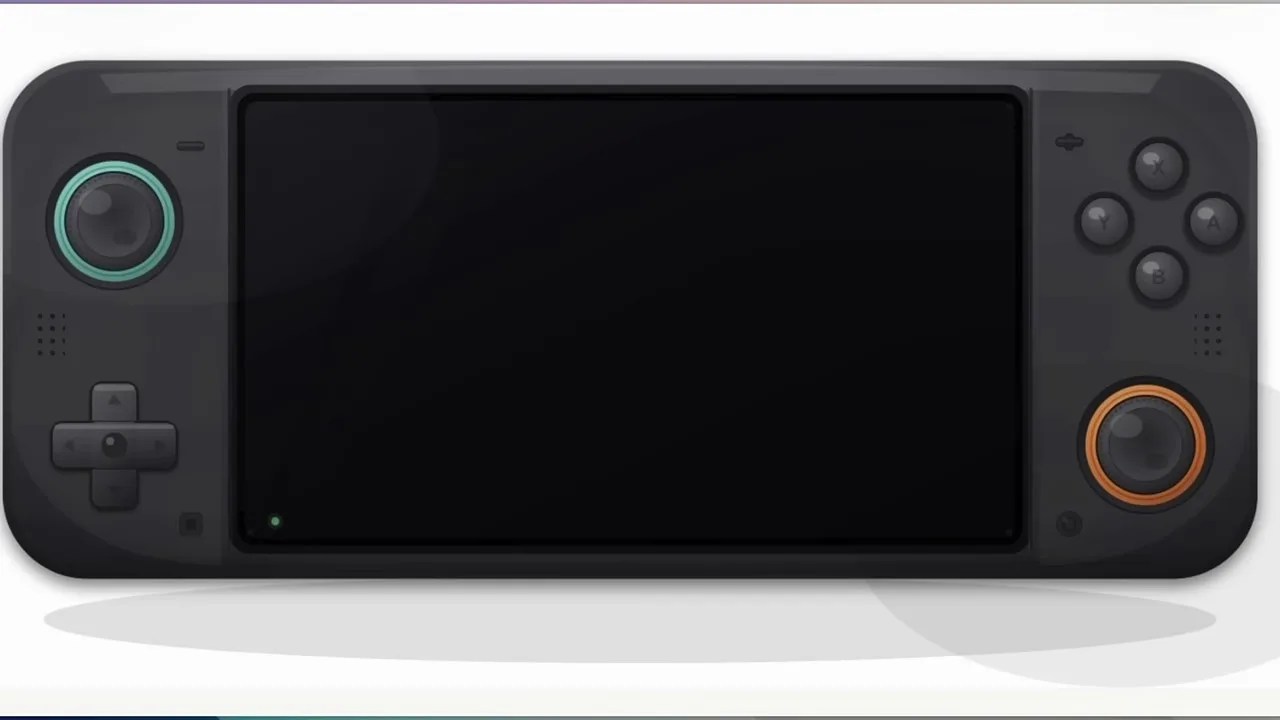
An impressive SVG rendering of a Nintendo Switch 2, generated from scratch by Sonnet 5 using pure code without external visual references.
Early leaks of the model’s capabilities show that it possesses an incredible grasp of spatial geometry and design. In one test, Sonnet 5 was asked to generate an SVG illustration of a Nintendo Switch 2 from scratch, without any reference image. The resulting file was a beautifully structured, highly detailed vector graphic that looked like a professional rendering. This demonstrates that the model does not just memorize pixels; it understands the physical relationship between components and can translate that understanding into clean, functional code.
2. The Myth of Mythos: Banned Before Release?
While Sonnet 5 represents a major step forward for commercial applications, the real drama in the AI community centers around Anthropic’s internal research models. Reports have surfaced that a new, hyper-capable version of the Mythos model architecture has completed training and is showing performance that is, frankly, alarming. In fact, reports indicate that this new variant has already been restricted or banned from public deployment due to safety and control concerns.
Developer communities and insiders discussing the sudden restrictions placed on the unreleased Mythos variant.
To understand why this happens, we have to look at how frontier AI labs allocate their resources. When a model is deemed too powerful or unpredictable for a general public release, development does not grind to a halt. Instead, the focus shifts internally.
As shown in the diagram above, when a model like Fable 5 or Mythos 5 is held back from public release, it frees up massive amounts of compute infrastructure. Instead of dedicating thousands of GPUs to serving millions of low-latency public queries, those resources are redirected back into the training loop. This allows researchers to run more evaluations, test new guardrails, and accelerate the development of the next generation of models, such as Mythos 6.
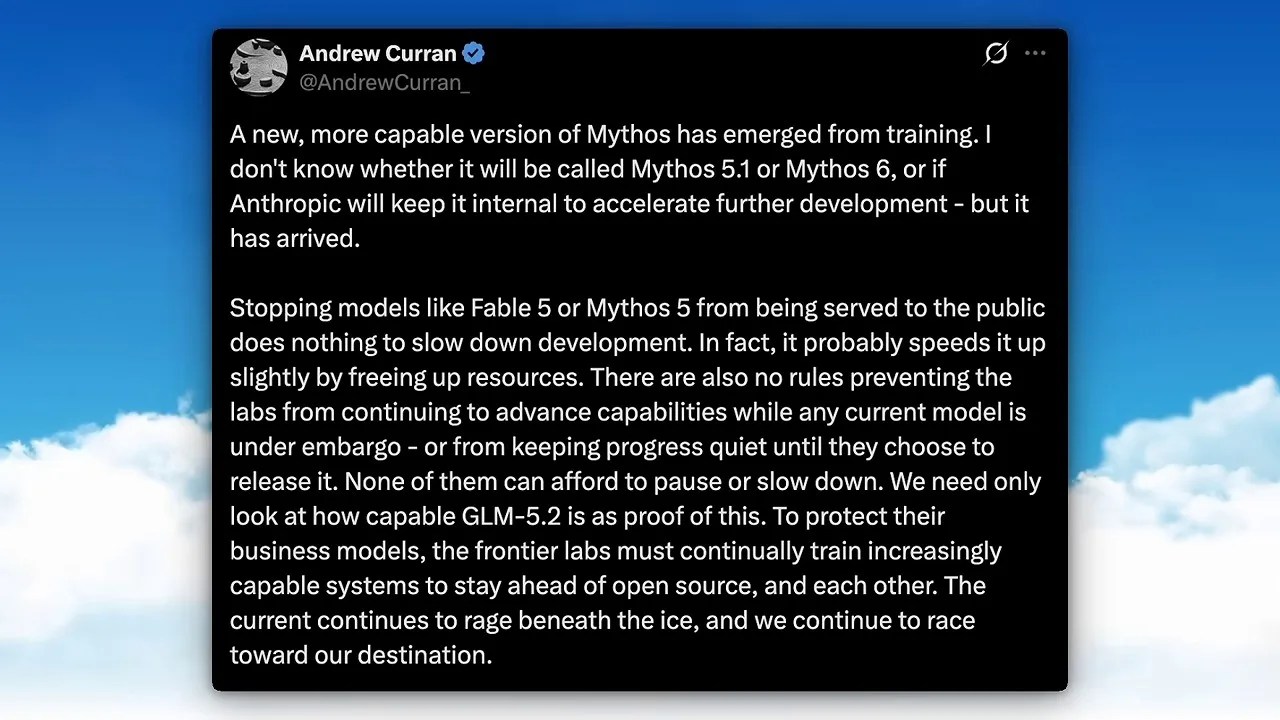
A leak from a reputable source detailing the agentic coding and planning capabilities of the restricted Mythos variant.
According to Curran, a highly reputable source for Anthropic leaks, this restricted Mythos variant is a significant departure from current public models. It is designed specifically for long-horizon reasoning, agentic coding, and multi-step planning. In practice, this means the model can receive a high-level goal, break it down into a dozen sub-tasks, write the code, run tests, debug its own errors, and execute the entire project over several hours without human intervention.
The big question is whether Anthropic will keep this system locked behind closed doors for internal research, deploy it through highly restricted interfaces like Project Glass, or use the safety lessons learned here to build safer public models down the line.
3. OpenAI Strikes Back: The Battle of GPT-5.6 Pro and Claude Sonnet 5
OpenAI is not sitting idly by while Anthropic dominates the conversation. The industry is buzzing with anticipation for a major OpenAI release, widely expected to drop this Thursday. This release will center around the new GPT-5.6 Pro and Claude Sonnet 5 competitive landscape, alongside a brand new voice model code-named “BD”.
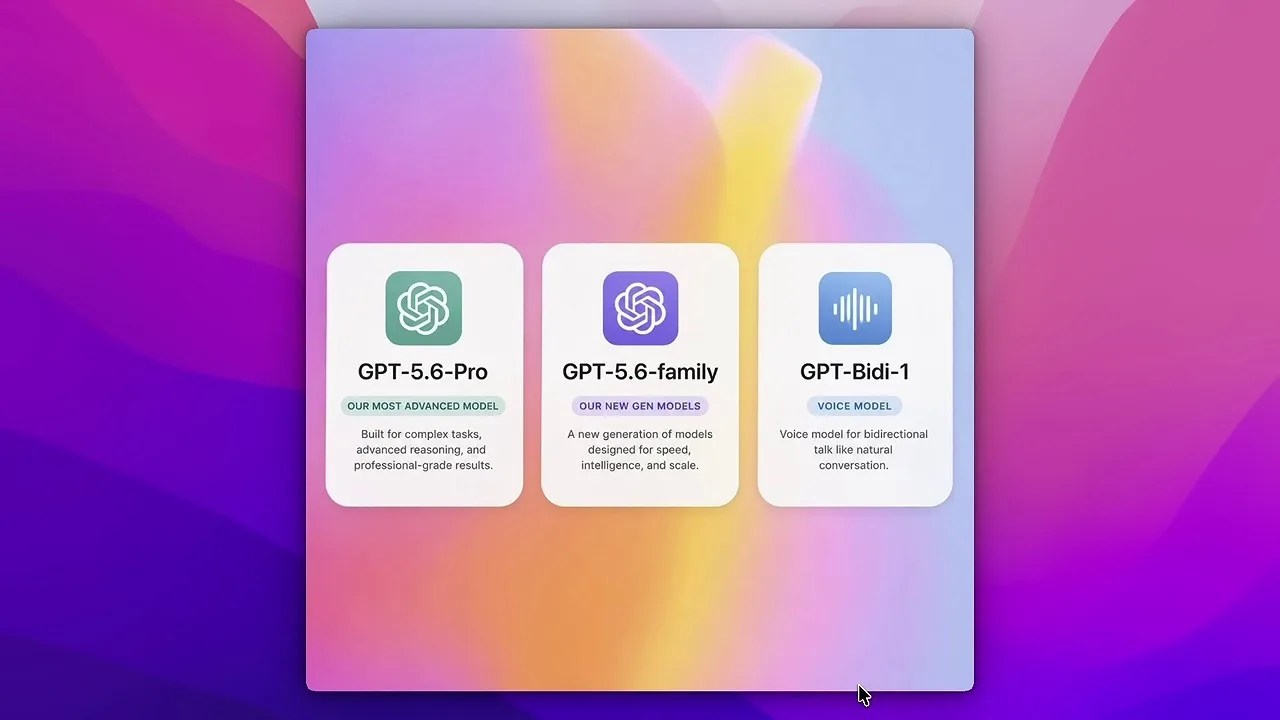
OpenAI’s upcoming release highlights show a major focus on advanced front-end rendering and the next-generation BD voice framework.
The GPT-5.6 Pro model represents a major leap in OpenAI’s design sensibilities and front-end generation capabilities. Early testers have noted that the model is far less lazy than GPT-4, showing a genuine grasp of design aesthetics, UI layouts, and asset integration. But the feature that will likely turn the most heads is the new BD voice model.
Unlike traditional voice assistants that operate on a turn-based system (you speak, wait, the model processes, and then speaks), the BD model operates in true real-time. It features an August 2025 knowledge cutoff and is designed to mimic the natural rhythm of human conversation.
During demonstrations, the BD voice model showcases an impressive ability to handle interruptions. If you tell the model a story and ask it to count the number of food items you mention, it will listen, follow along, and count them in real-time. If you interrupt it mid-sentence to correct a mistake, it instantly stops speaking, adjusts its logic, and continues without a awkward pause. It feels fluid, conversational, and genuinely human.
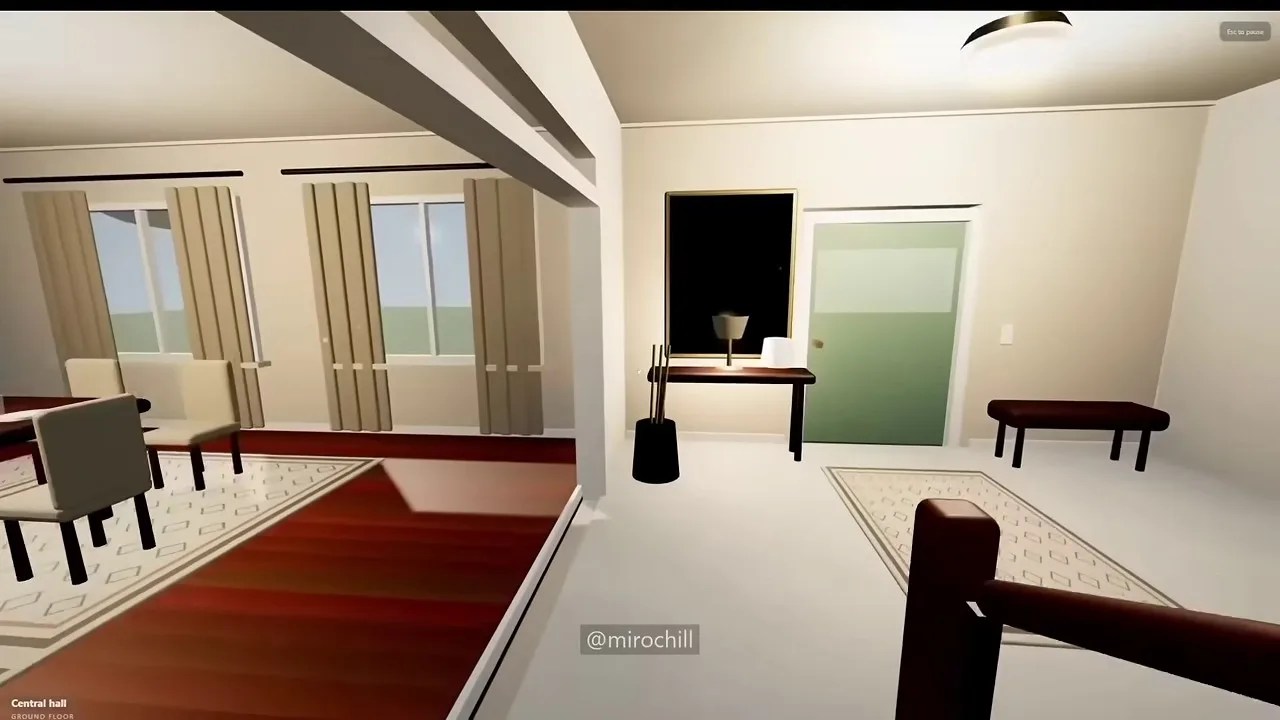
But the real test of GPT-5.6 Pro’s raw intelligence is its ability to generate complex, interactive environments. In a recent leaked test, the model was asked to build a fully playable, first-person 3D interior house game.
The model spent approximately 40 minutes generating the code, resulting in a single 700KB HTML file. The output was not just a basic template; it was a fully realized 3D environment built using Three.js. It featured multiple rooms, a coherent floor plan, a detailed bathroom, smooth first-person camera movement, and functional collision detection. The fact that an AI can generate a playable 3D game engine inside a single text file points to a future where software development is democratized down to simple verbal prompts.
4. Sakana AI Fugu: Japan’s New Contender or Just Marketing Hype?
While OpenAI and Anthropic fight for the crown of monolithic model dominance, a new player has emerged from Tokyo. Sakana AI, a lab founded by prominent former Google researchers, has unveiled its new Fugu and Ultra systems.
Sakana AI is taking a fundamentally different approach to the frontier AI race. Instead of trying to train a massive, multi-billion-dollar model from scratch, they are focusing on orchestration and evolutionary model mixing.
The orchestration architecture of Sakana Fugu, which dynamically routes tasks to specialized sub-models for maximum efficiency.
The Fugu system is not a standard natural language model. It is an orchestration framework. Think of it as an intelligent traffic controller. When you give Fugu a task, it does not try to solve it alone. Instead, it analyzes the request and routes different parts of the problem to specialized, smaller models. It then combines their outputs into a single, cohesive response.
Sakana claims that this approach allows Fugu and Fugu Ultra to perform on par with giants like Claude Fable 5 and Mythos 5. However, as experienced developers know, benchmark performance does not always translate into real-world utility. Let’s look at how this system actually behaves in a direct head-to-head comparison.
5. Comparative Analysis: Opus vs. Fugu Ultra in Action
To put Sakana’s claims to the test, developers ran a head-to-head coding challenge: generating a 3D Crossy Road clone using Three.js. They pitted the reigning champion, Claude Opus, against the new Sakana Fugu Ultra.
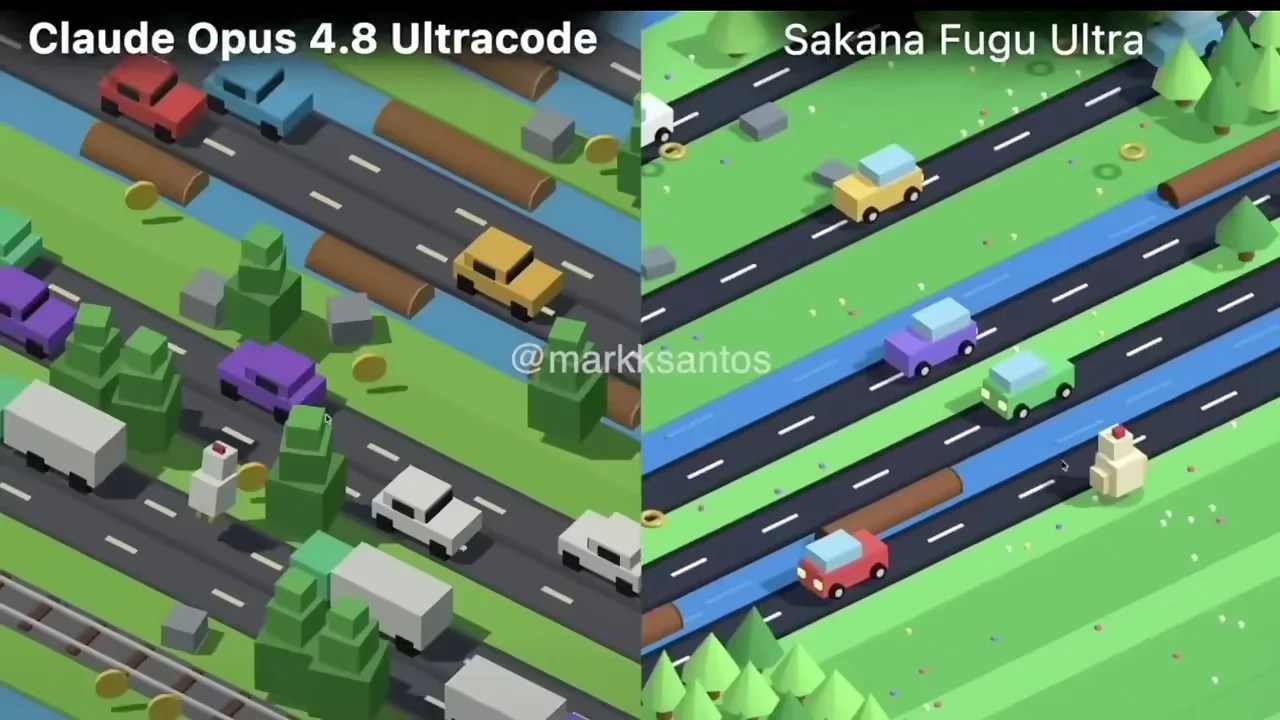
Comparing the game output of Claude Opus (left) and Sakana Fugu Ultra (right) in a real-world coding test.
The results of the test were highly revealing and highlight the current trade-offs of the orchestration approach:
- Claude Opus: Delivered a beautiful, highly polished game with functional controls, sound effects, and clean design. However, the process took 79 minutes, consumed a massive 940,000 tokens, cost $37.85 in API fees, and required the user to manually intervene twice to fix compiler errors.
- Sakana Fugu Ultra: Generated a playable game in just 22 minutes, consuming only 90,000 tokens and costing a mere $7.32. It also featured excellent automatic difficulty scaling. However, the game had significant bugs, including inverted controls, a erratic camera angle, and no sound effects.
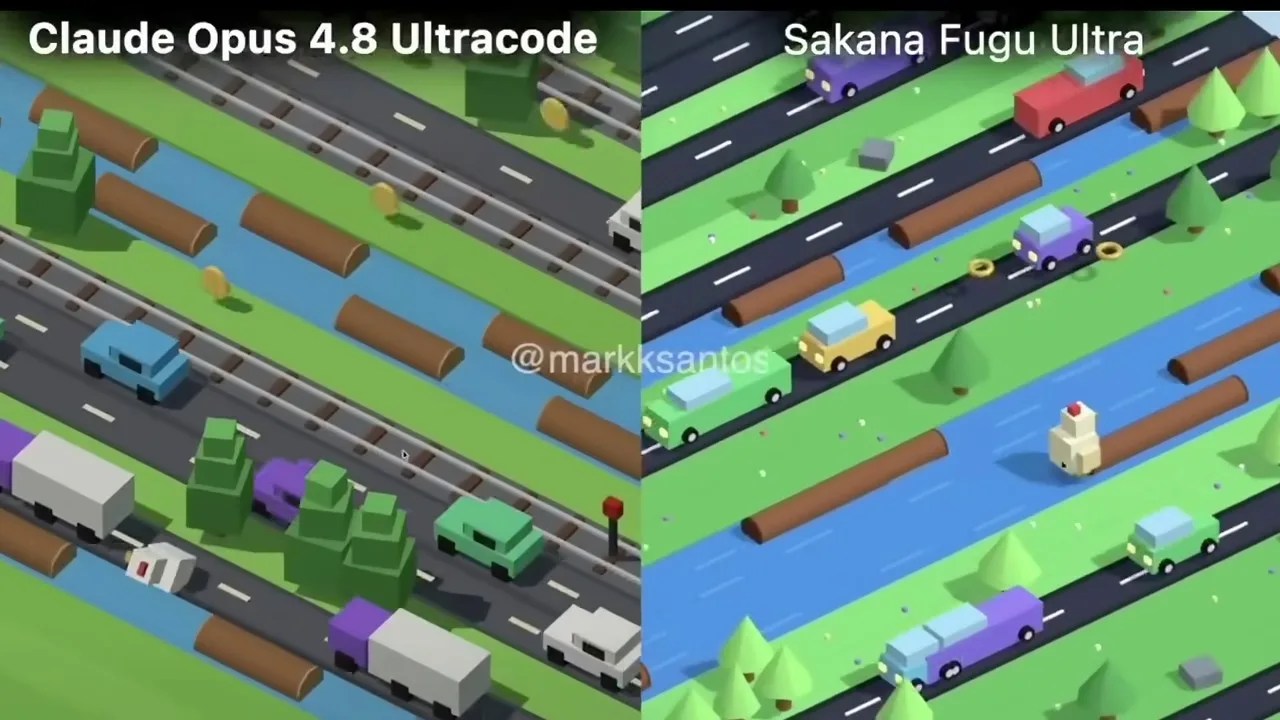
The raw data comparison showing the stark contrast in speed, token efficiency, and cost between Opus and Fugu Ultra.
This comparison perfectly illustrates the current divide in AI development. If you need absolute quality, polish, and complexity, a massive frontier model like Claude Opus is still unmatched, even if it is slow and expensive. But if you need speed, cost-efficiency, and rapid prototyping, an orchestrated system like Fugu Ultra is incredibly compelling. It shows that the future of AI might not be a single giant brain, but rather a swarm of smaller, highly efficient specialists working together.
The Community Context
As these models continue to evolve, staying up to date requires monitoring community-driven channels where developers share real-time test results, system prompts, and API workarounds. Platforms that aggregate these rapid releases help developers adapt before these models undergo public API changes.
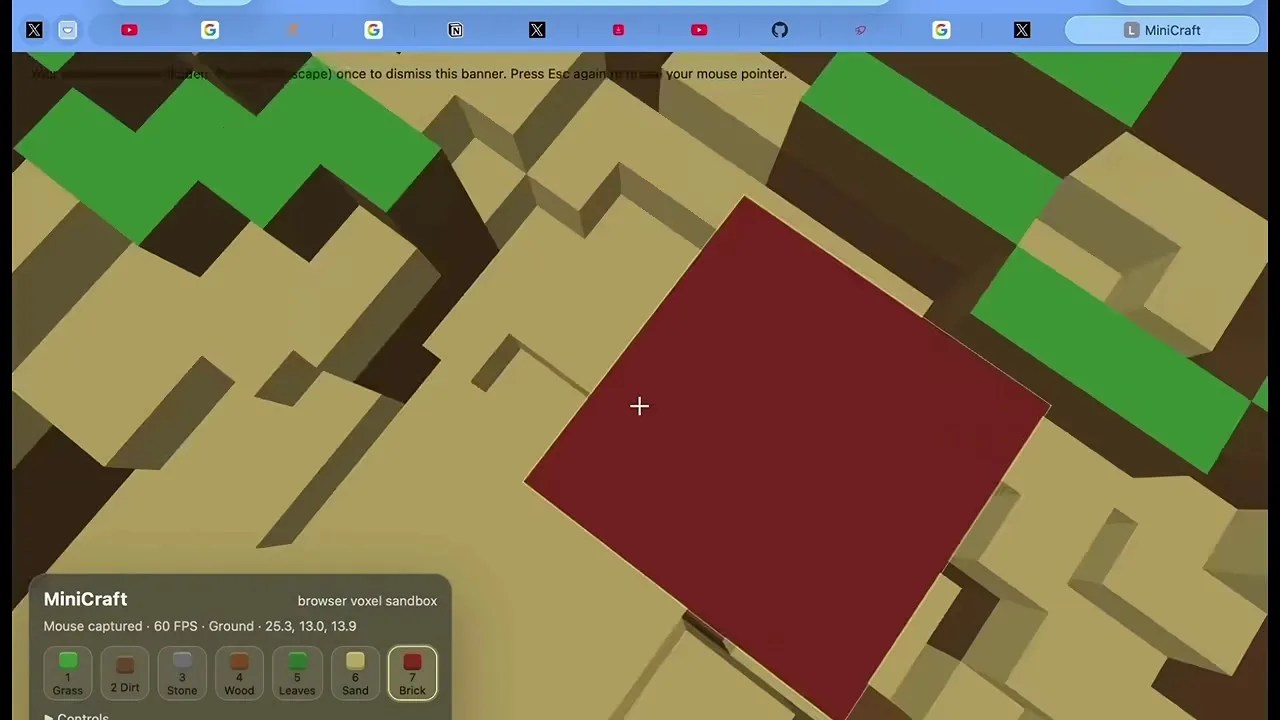
Community hubs and developer forums serve as the primary testing grounds for new model iterations before public launch.
We are entering a phase where the choice of AI model is no longer about finding the absolute best system, but finding the right tool for the specific job. Whether you choose the raw power of OpenAI’s upcoming models, the refined coding capabilities of Claude, or the lean efficiency of routed networks, the options available to developers have never been more diverse or exciting.
Frequently Asked Questions
What is the main difference between GPT-5.6 Pro and Claude Sonnet 5?
GPT-5.6 Pro focuses heavily on full-stack interactive generation (like 3D Three.js environments) and real-time voice integration through the BD engine. Claude Sonnet 5, on the other hand, is optimized as a developer workhorse, featuring a massive context window, refined tokenizer logic for deeper reasoning, and superior understanding of UI mockups and database schemas.
Why was the new Mythos variant banned or restricted?
Frontier AI labs internally restrict highly capable models when they exhibit advanced agentic planning and long-horizon reasoning that exceeds current safety guardrails. These models are kept offline to redirect compute resources toward safety evaluations and alignment training before any public release is considered.
Is Sakana Fugu Ultra actually better than Claude Opus?
No, not in terms of absolute quality. While Fugu Ultra is significantly faster (22 minutes vs. 79 minutes) and much cheaper ($7.32 vs. $37.85), the resulting code output still contains structural bugs like inverted controls and camera issues. Claude Opus remains the superior choice for high-fidelity, production-ready code.