Welcome to 2026, where opening your editor feels less like crafting software and more like moderating a toxic group chat. You write a single line of code, and suddenly a dozen different autonomous agents in your terminal start bickering over design patterns. If you’re like me—one of those romantic fools who actually enjoyed the tactile sensation of writing code line by line, earning those tiny dopamine hits—congratulations: we are officially living in the dark ages of Slop Overflow.
Instead of grinding out features, we now describe what we want, cross our fingers, and watch an LLM hallucinate an entire repository. The CEO of Replit even declared that having actual coding experience might now be a disadvantage. Why? Because developers get lost in the details of architecture and security while the “vibe coders” are shipping products at warp speed. But we aren’t going back to the hand-crafted era. The only logical move is to master the chaos. To do that, you need to equip your workflow with specialized open source AI tools that whip these erratic agents into shape.
Figure 1: Entering the era of the agentic pipeline—navigating 7 projects you’ve likely never heard of.
💼 The Agency: Spinning Up Your Virtual C-Suite
In the old days, being a solo full-stack developer meant wearing fifty different hats. You had to grasp state management, configure CI/CD pipelines, design databases, and somehow not make the CSS look like a 1999 GeoCities page. Today, you don’t need to master those disciplines; you just need to hire the right digital workers.
The Agency is a framework providing production-ready agent templates for almost every conceivable startup role. Need a pragmatic backend engineer? A paranoid security specialist? A hyperactive growth hacker or a Twitter engager? They are pre-packaged as templates. By wiring these personalities directly into local execution tools like Claude Code, you can delegate tasks down the chain of command, transforming yourself from a keyboard-masher into an engineering director overnight.
🔬 Prompt Foo: Unit Testing the Vibe
It’s one thing to get an agent to do your bidding in a single, isolated session. It’s an entirely different battle to guarantee that your production application won’t lose its mind when a real user interacts with it. When your app relies on stringing together prompts, how do you know a subtle change in your wording won’t break your entire pipeline? This is why serious engineering teams treat prompt engineering not as an art, but as a testable science.
Enter Prompt Foo, an outstanding project that functions as a unit-testing framework specifically designed for your prompts and LLM configurations.

Figure 2: Running parallel evaluations on Prompt Foo to discover which LLM version behaves best.
Prompt Foo allows you to systematically run multiple prompts against different model APIs, comparing outputs side-by-side on accuracy, latency, and cost. More importantly, it features automated “red-teaming.” It acts as a malicious user, trying to trick your backend into revealing system instructions or leaking API keys. If your client-facing chatbot can be manipulated into offering your entire SaaS database for free by an mischievous teenager on Discord, your business model has a terminal vulnerability. Prompt Foo is one of those essential open source AI tools that turns chaotic vibe coding into predictable, enterprise-grade software engineering.
🐠 Micro Fish: The Miniature Society Simulator
If you’re hunting for a startup idea that isn’t just another wrapper of a wrapper, you need a way to spot market inefficiencies before everyone else. This is where Micro Fish comes in. It is a multi-agent prediction engine that behaves like an evolving, synthetic social ecosystem.
The system constantly ingests raw data from the web—breaking financial news, geopolitical updates, and localized social trends. It then populates a digital sandbox with diverse, independent AI agents, each possessing unique biases, backgrounds, and motivations. By letting these agents converse, trade, and react to real-world stimuli, you can simulate how complex human networks might react to upcoming events. Want to test how a sudden interest rate drop will affect micro-SaaS adoption? Spin up a Micro Fish simulation and watch the digital crowd organize. (And yes, some of the codebase and documentation is in Chinese—but in 2026, if you aren’t using translation tools to bridge development gaps, you are already falling behind.)
🎨 Impeccable: Curing the “Purple Gradient” Epidemic
We’ve all seen it: the classic AI-generated UI. It almost always features an obnoxious purple neon gradient, over-engineered cards, and animations that make your CPU scream. When an AI designs a frontend, it has a tendency to throw every trick in the book at the screen, resulting in sensory overload.
To rescue your users from this visual clutter, you can use Impeccable, a design-focused utility loaded with 17 specific UI-refinement commands.

Figure 3: Stripping out excess visual noise and distilling the user interface with Impeccable.
Instead of manual CSS hacking, you pass your generated UI through Impeccable’s pipeline. The distill command immediately strips away unnecessary nesting and visual junk. Once the interface is clean, you can execute targeted instructions like colorize to bind it to your specific brand kit, and then incrementally introduce micro-interactions via the animate and delight utilities. It’s the ultimate antidote to cookie-cutter AI aesthetic syndrome.
⛵ Open Viking: Smarter Memory on a Shoestring Budget
Let’s talk about the elephant in the server room: context management. If you feed your agents unstructured, endless streams of data, they get sluggish, lose their focus, and run up astronomical API bills. Shoving everything into a massive vector database isn’t always the magical solution we were promised.
Open Viking tackles this problem by treating an agent’s memory, tools, and environmental state not as abstract embeddings, but as a clean, hierarchical system organized directly in the file system.
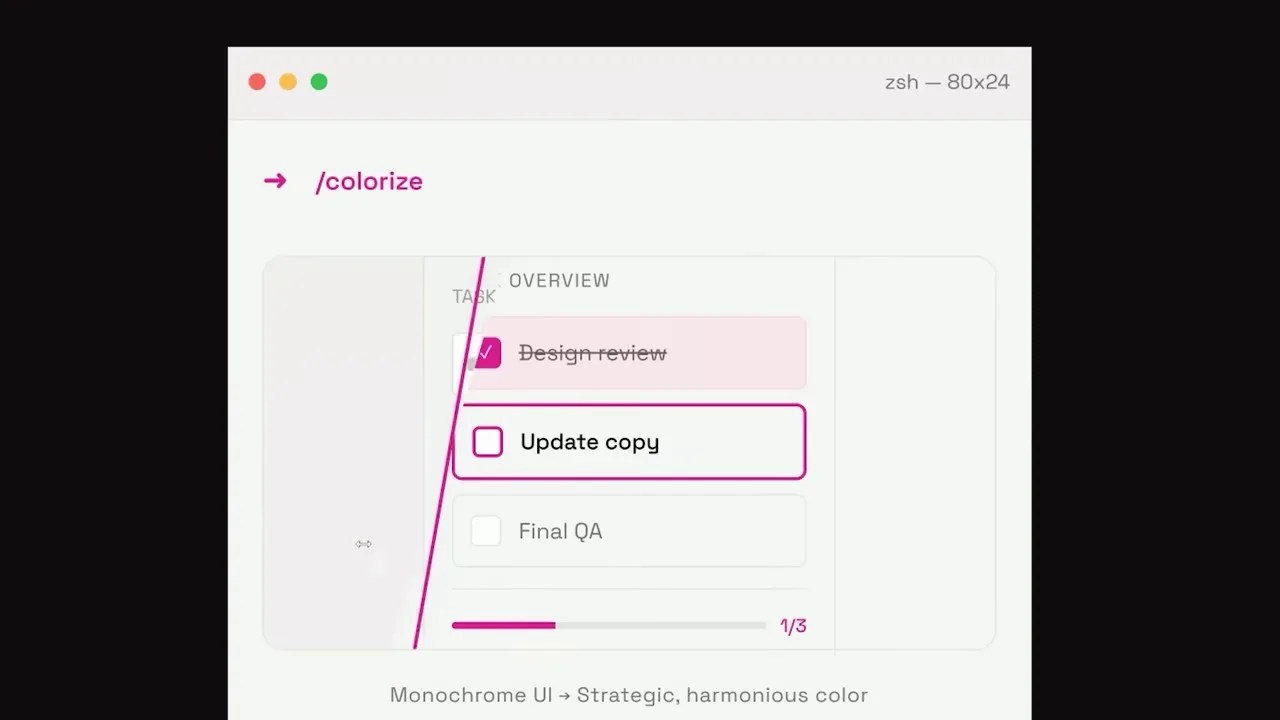
Figure 4: How Open Viking orchestrates tiered context loading to optimize token budgets and maintain sharp agent recall.
By organizing context into files, Open Viking implements a tiered loading strategy. Instead of pulling an entire historical conversation on every turn, it dynamically loads only what is active, compressing long-term experiences into background memory profiles. The result? Your agents actually get smarter and more context-aware over time, while your token consumption plummets. It’s a beautifully pragmatic approach to agent state management.
🔓 Unshackled Power: Heretic & NanoChat
Most commercial models are heavily sanitized. The creators put massive guardrails on them to prevent legal liabilities, but sometimes those safety nets turn into annoying creative blockades that stop you from doing unconventional experiments. If you want to bypass these corporate limitations, you have two options: break the restrictions, or build your own environment.
Heretic: The Censorship Obliterator
Rather than spending tens of thousands of dollars on complex post-training or fine-tuning to bypass safety filters, Heretic uses a mathematical technique known as “obliteration” to neutralize alignment layers. You can run Heretic locally against a highly restricted open weights model like Google’s Gemma, and in minutes, you’ll have a model that obeys your direct instructions without giving you a preachy lecture about safety guidelines. Use it responsibly.
NanoChat: Building Your Own LLM Pipeline
If you’re skeptical of third-party platforms and want total control over your intellectual property, you can construct an LLM from scratch. NanoChat is an incredible, minimal codebase that implements the entire end-to-end LLM pipeline. It covers tokenization, pre-training, instruction fine-tuning, evaluation, and even ships with a neat web UI.
While you aren’t going to build a competitor to Claude or GPT-5 on your home setup, NanoChat lets you train a highly specialized Small Language Model (SLM) for around $100 in consumer GPU time. For vertical tasks where data privacy and deterministic behavior are non-negotiable, having an in-house model you fully control is incredibly powerful.
🎙️ Architectural Realities: The Nightmare of Meeting Integrations
We can talk about autonomous agents all day, but true productivity gains happen when you hook AI into your actual everyday workflows—which inevitably includes meetings. However, if you’ve ever tried to build an AI assistant that records, transcribes, and extracts action items from video calls, you know it is an absolute engineering nightmare.

Figure 5: Building reliable real-time video and audio ingestion pipelines with unified infrastructure.
Writing separate media pipelines for WebRTC streams, handling SIP dial-ins, and managing individual integrations for Zoom, Google Meet, and Microsoft Teams is a black hole of development time. It requires heavy infrastructure management, handling real-time audio chunking, and dealing with arbitrary platform API updates.
To solve this, modern developers are shifting toward unified infrastructure APIs that abstract all video platforms into a single interface. By offloading the raw media recording and transcription pipeline to a centralized system, you can build production-ready meeting bots with just a few lines of code. This leaves you free to focus on what actually matters: using your custom LLM pipelines to extract valuable insights from the conversations.
🛠️ Why Deploying Open Source AI Tools is No Longer Optional
The transition from manual developer to agent architect is happening whether we like it or not. The developers who thrive in this environment won’t be those who complain about the quality of generated code; they will be the ones who build robust testing systems, manage context efficiently, and keep their agents on a tight leash. By running and mastering these open source AI tools locally, you protect your workflow from vendor lock-in, slash your operational costs, and regain creative control over the software you build. The era of the artisanal coder might be evolving, but the age of the systems architect has only just begun.