We are currently living through what might be the most expensive, hyper-accelerated construction frenzy in human history. Every major tech conglomerate is currently locked in a desperate arms race, throwing unfathomable sums of cash at the physical grid. But behind the sleek corporate keynotes and the breathless LinkedIn posts, a quiet crisis is unfolding. The hyper-accelerated race for building AI data centers has hit a massive, expensive wall.
If you’ve been looking at the stock market, you’d think we are on the cusp of a frictionless digital utopia. But on the ground, the reality is far messier. Projects are stalling, power grids are buckling, local communities are revolting, and the financial math supporting this entire structure is beginning to look incredibly shaky. Let’s pull back the curtain on what is actually happening in the muddy fields where the physical internet is supposed to be built.
Key Takeaways: The AI Infrastructure Reality Check
| Metric / Issue | The Hype & Projections | The Cold Reality on the Ground |
|---|---|---|
| Capital Expenditure | $650 Billion by 2026; $9 Trillion by 2030. | Massive capital flight with highly questionable ROI. |
| Project Completion | 140 mega-projects planned to launch in the US this year. | Nearly half are delayed or cancelled; only 1/3 are actively being built. |
| Economic Growth | AI infrastructure is driving a booming, healthy economy. | 92% of US GDP growth came from data center spend. Rest of the economy grew by just 0.1%. |
| Community Impact | Promise of local tax windfalls and thousands of high-tech jobs. | Massive tax abatements leave schools underfunded; facilities require under 150 permanent staff. |
The Astronomical Price of Hype: Stacking Billions to the Heavens
To understand the sheer scale of what’s happening, we have to look at the numbers. Four tech companies alone are projected to spend a staggering $650 billion in 2026 for new infrastructure.
Let’s put $650 billion into perspective. If you were to stack that amount in crisp $100 bills, the pile would rise 710 kilometers into the sky. That doesn’t just clear the atmosphere—it rises over 300 kilometers higher than the orbit of the International Space Station. And the industry’s roadmap? They want to push this collective spend to a mind-numbing $9 trillion by 2030.

Visualizing $650 billion: A stack of hundreds that dwarfs the orbit of the International Space Station.
This is not just a standard business expansion; it is a violent reallocation of global capital. To put this into historical context, the tech sector has committed more money to data centers over a six-year span than the United States spent on the Marshall Plan to rebuild post-WWII Europe, the Manhattan Project to construct the atomic bomb, the entire Apollo program, and the construction of the ISS—combined—with an extra $120 billion left over for pocket change.
And for what? A business model that has yet to prove it can generate sustainable, organic profits. We are building the factories before we even know what products the consumers are actually willing to pay for. Meanwhile, the silicon brains of these facilities—the GPUs—become obsolete and require replacement every few years, creating a relentless, high-cost treadmill of capital depreciation.
The Ghost Sites: Why Building AI Data Centers is Stalling on the Ground
The tech giants want you to believe that this massive rollout is going smoothly. But the physical world is stubborn, and it does not move at the speed of software.
According to a recent report by Bloomberg, about 140 data center projects were slated to open in the US this year, representing roughly 12 gigawatts of computing power—enough to power 9 million homes. But here is the catch: nearly half of them have already been delayed or cancelled entirely. As it stands, only about a third of those projects are actually under active construction.
The companies involved will repeatedly deny that there are any structural issues, but the sky does not lie. When you look at satellite imagery of these highly publicized sites, you see a very different story.
Take Microsoft’s announced “Fairwater” data center facilities, for example. Microsoft claimed these facilities were fully complete and operational. Yet, satellite time-lapses show a completely different reality: the ground has barely been broken on several of these sites, and some are not even half complete. They are essentially “ghost projects”—existing purely on paper, in press releases, and in investor slide decks to keep stock prices inflated.

Satellite imagery reveals that Microsoft’s highly-touted Fairwater site remains largely unbuilt, contradicting public claims.
The Economic Mirage: A Shoe Company Pivoting to AI?
This brings us to a deeply uncomfortable truth about our current economic landscape. The stock market’s meteoric rise over the past year has felt completely detached from the daily financial struggles of average people. Why? Because the growth is incredibly concentrated.
Last year, an estimated 92% of US GDP growth came solely from data center spending. If you strip away the frantic building of AI data centers, the rest of the US economy grew by a microscopic 0.1%. We are essentially running a monoculture economy fueled by speculative infrastructure debt.

Financial analysts are beginning to warn of a massive capital flight risk as infrastructure spending outpaces real-world demand.
When an asset class becomes this hot, logic goes out the window. Consider the shoe company Allirds. In a move reminiscent of the 1990s dot-com bubble (where companies added “.com” to their name to double their valuation overnight), Allirds recently announced they were pivoting from footwear to leasing AI data center equipment. The result? Their stock rallied by an absurd 580% almost instantly.
It is classic bubble behavior. Money is sloshing around looking for any exposure to the “compute” narrative, regardless of whether the business fundamentals make any sense.
The Subsidized Takeover: The True Cost of “Stargate”
To make this construction boom happen, local and state governments have been competing in a race to the bottom, offering staggering tax incentives to lure tech giants.
Texas, for instance, handed out over $1 billion in incentives for the “Stargate” project alone—a colossal $500 billion OpenAI and Oracle campus planned for Abilene. Meanwhile, Virginia—home to Lowden County’s famous “Data Center Alley”—saw 56 projects receive nearly a billion dollars in tax savings in a single fiscal year.
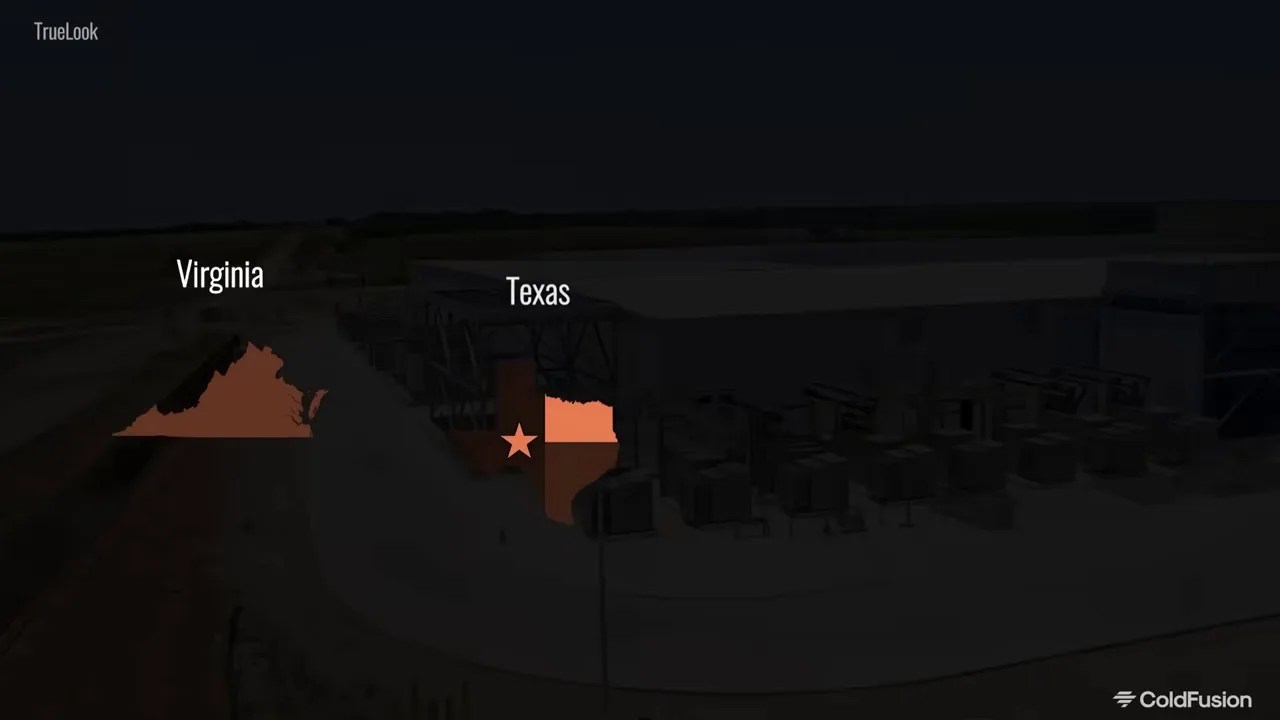
States like Texas and Virginia are rolling out the red carpet, sacrificing billions in tax revenue to host mega-projects.
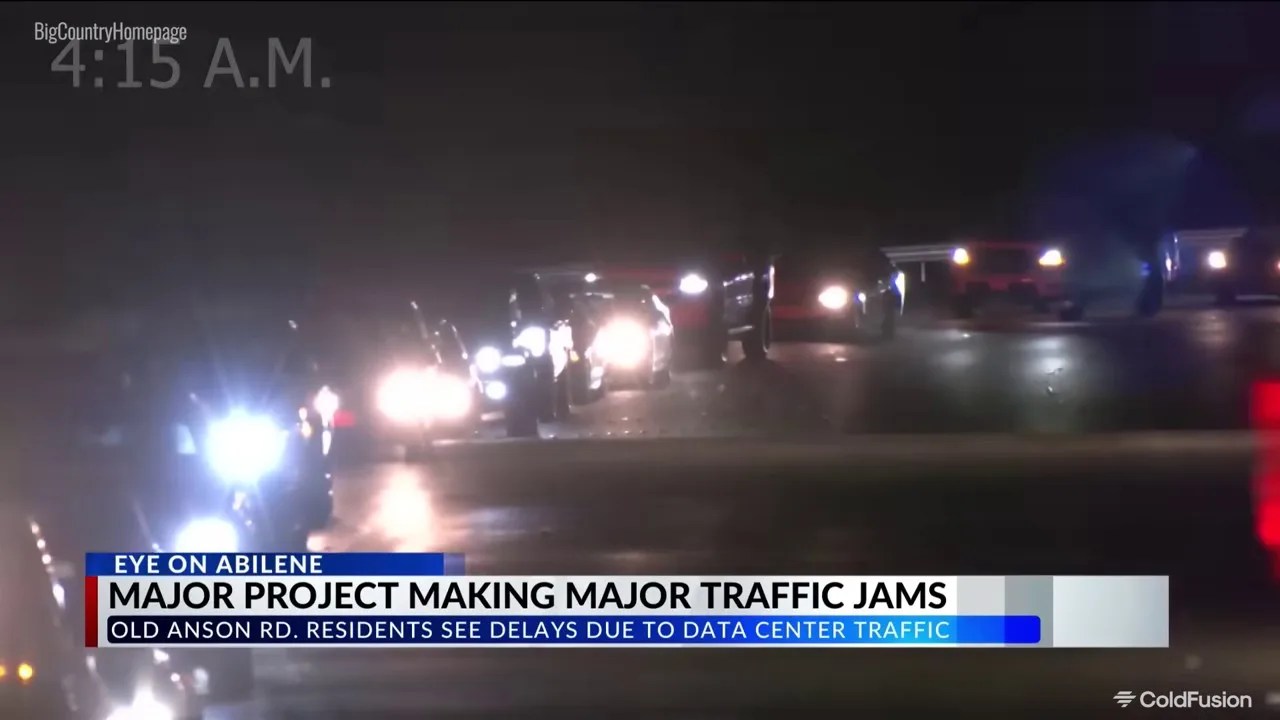
The promise used to justify these massive handouts is always the same: thousands of high-paying jobs and a local digital renaissance. But the reality is that once these monolithic concrete warehouses are built, they are incredibly quiet. Even the largest data centers on earth typically employ fewer than 150 permanent workers. The construction jobs are real, sure, but they are temporary, and the crews are often brought in from out-of-state.
What’s worse is who actually pays for the infrastructure required to feed these digital beasts. Because of massive property tax abatements, local communities often absorb the cost of expanded roads, water lines, and power grids without receiving the tax revenue to pay for them.
A stark reality: Oregon schools lost out on an estimated $275 million in funding due to tax abatements granted to tech giants.
One devastating report revealed that public schools in Oregon lost out on $275 million in potential tax income directly because of these corporate abatements. The local children and homeowners are subsidizing the very infrastructure that is straining their resources—all so a handful of hyperscalers can train models to generate quirky memes and questionable code.
The Net-Debtor Trap: Borrowing on a Prayer
How did we get here? How did the richest companies in human history find themselves in a position where the math of building AI data centers is starting to fall apart?
The answer is simple: they ran out of their own cash.
For the first phase of the AI boom, tech giants funded their massive infrastructure projects using their incredibly deep cash reserves. But those reserves are no longer enough. To keep up with the relentless demand for more computing power, these “hyperscalers” have officially crossed the line into becoming net debtors. They are borrowing billions of dollars to build highly specialized facilities, with absolutely no guarantee of future profitability.

The dangerous cycle of the AI infrastructure bubble: rising corporate debt to fund unproven business models.
Let’s be completely honest: the realization that there might not actually be a pot of gold at the end of this rainbow is slowly starting to dawn on Wall Street. Investors are beginning to ask hard questions about return on investment (ROI). We are already seeing early signs of capital pulling back from the AI sector as the fear of a massive, burstable bubble shifts from a fringe theory to an mathematical inevitability. The question is no longer if the funding will slow down, but when.
The Physical Bottlenecks: Power, China, and the Transformer Crisis
Even if the money keeps flowing, you cannot build a digital empire without physical resources. And right now, the physical world is saying a firm, resounding “no.”
The first and most critical bottleneck is power. Modern AI data centers are not like the data centers of ten years ago. The high-density GPU racks required to run frontier models like Claude, Gemini, ChatGPT, and Grok are incredibly power-hungry. A single modern hyperscale facility can consume as much electricity as an entire city of 200,000 homes.
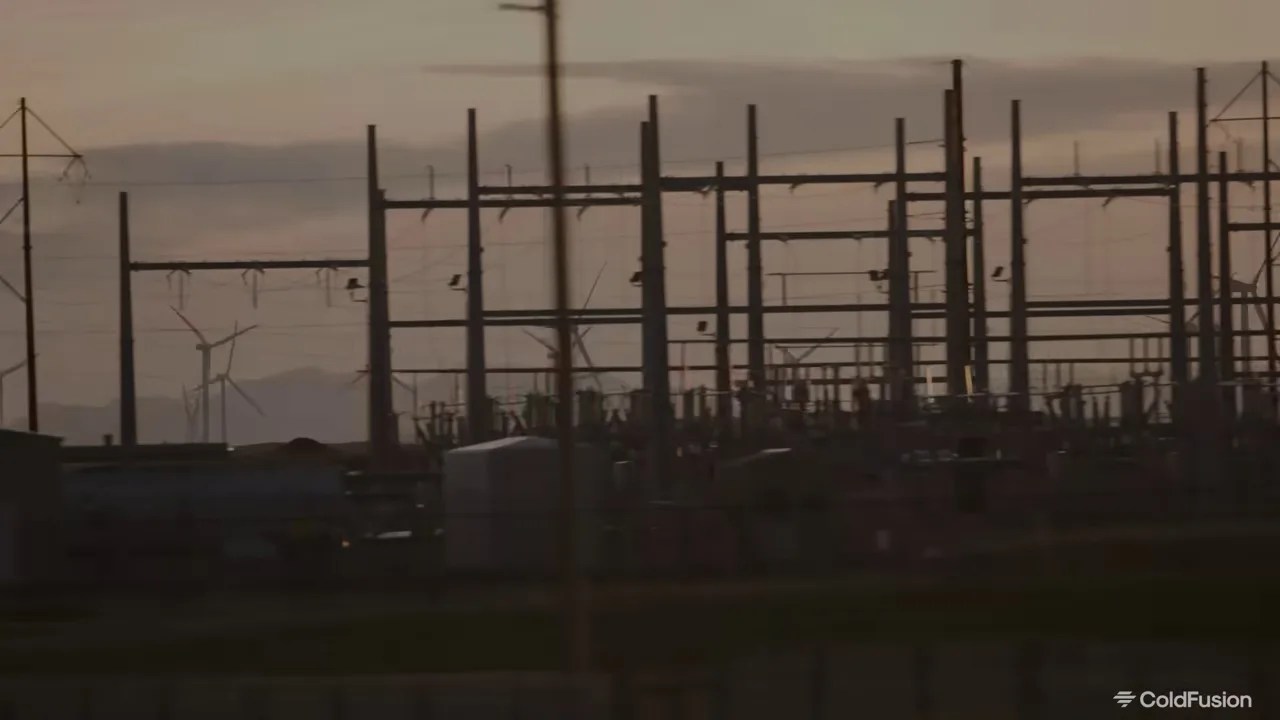
A single modern AI data center demands the same electrical capacity as a mid-sized city, pushing local power grids to the brink.
This power crisis has reached a point of absolute absurdity. According to research from Sightline Climate, roughly 25% of all planned data center projects for 2026 have not even disclosed how they plan to source their electricity. They are literally planning multi-billion-dollar projects on the hope that power will magically appear when they plug them in.
But the power grid is only part of the problem. To connect these facilities to the grid, you need heavy industrial hardware: high-power transformers, switchgear, and massive industrial batteries. Right now, these components are in critically short supply worldwide.
To make matters more complicated, the United States is almost entirely dependent on foreign imports to build this infrastructure. Specifically, they rely on China.
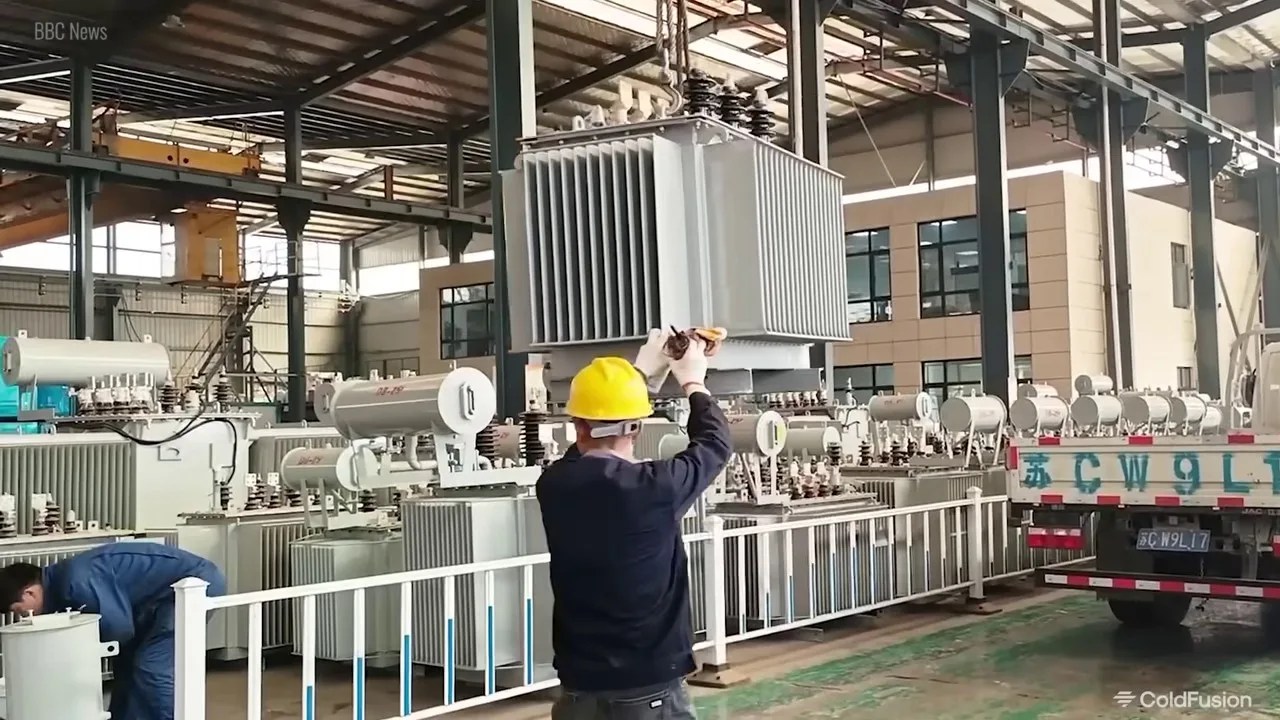
The hidden dependency: US imports of high-power transformers from China have skyrocketed, leaving the AI buildout highly vulnerable to geopolitical tensions.
US imports of high-power transformers from China surged from fewer than 1,500 units in 2022 to over 8,000 units in 2025. In an era of escalating geopolitical tensions and aggressive trade tariffs, relying on your primary geopolitical rival for the fundamental building blocks of your “national security” AI infrastructure is a massive gamble. If even one critical transformer is delayed in transit, the entire multi-billion-dollar project grinds to a halt.
And then there is the human element. The tech giants are discovering that you can’t just buy your way out of a labor shortage. There is a severe lack of skilled labor to actually install this complex hardware. The situation is so dire that companies like Meta have resorted to offering free fiber technician training programs just to get boots on the ground fast enough to meet their aggressive construction timelines.
The Ecological Devastation: Manhattan-Sized Footprints and Forever Chemicals
When we talk about building AI data centers, it is easy to get lost in abstract terms like “the cloud” or “virtual compute.” But these facilities are massive, noisy, concrete scars on the physical landscape.
Consider the scale of Meta’s new data center under construction in Louisiana. This single facility is nearly 400 times the physical footprint of the very first data center Meta built to support Facebook. It is on track to occupy an area equivalent to one-fifth the size of Manhattan, and it will draw roughly 5 gigawatts of power—which is roughly equivalent to the average power demand of the entire city of London.
The jaw-dropping scale of Meta’s Louisiana project: a single facility demanding as much power as the entire city of London.
And where are these monstrosities being built? Often, they are eating up fertile, irreplaceable rural farmland. Local residents are watching helplessly as massive fleets of cement mixers and semi-trucks take over their quiet country roads to build giant, windowless concrete boxes that will ultimately employ fewer people than a local Walmart.
Heavy machinery and endless concrete replacing pristine farmland to build a facility that offers very few permanent local jobs.
Beyond the visual and spatial impact, the ecological footprint on our water supply is terrifying. According to United Nations projections, global data centers will consume as much water as 1.3 billion people by the year 2030.

The global thirst of AI: Water consumption projections show data centers drawing as much water as 1.3 billion people by the end of the decade.
This water isn’t just being used; it is being chemically altered. To keep these massive supercomputers from overheating, cooling systems require chemical additives, much like the antifreeze in your car’s radiator.
These additives frequently contain PFAS—more commonly known as “forever chemicals.” These synthetic compounds are designed specifically not to stick to metals, but they also cannot be filtered out or removed from the water when it eventually flows back to municipal water treatment plants, creating a permanent environmental hazard for local ecosystems.
The chemical trail: How PFAS and other hazardous additives from data center cooling loops leach into local water tables.
The Human Cost: Infrasound, Dirty Tap Water, and Skyrocketing Bills
The tragic irony of the AI boom is that the people paying the highest price are the ones who live closest to these facilities—and they never had a say in the matter.
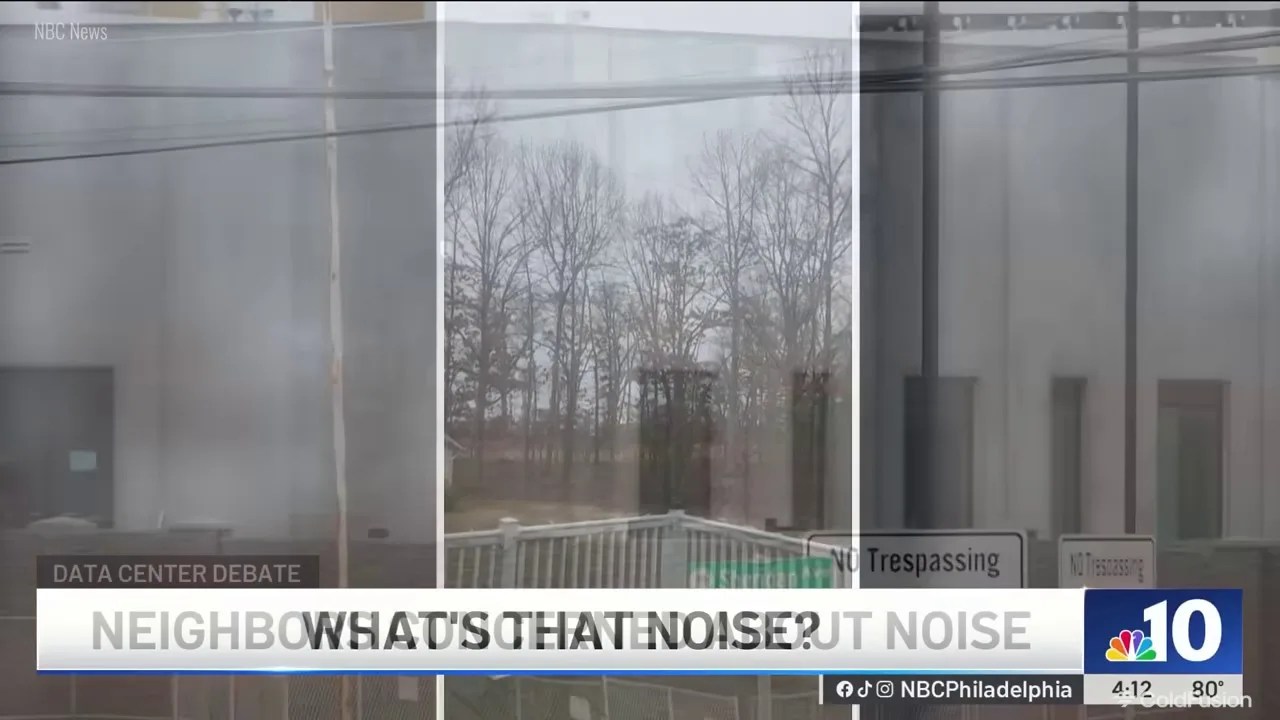
Across Virginia, Georgia, and Texas, communities located near these mega-complexes are experiencing a living nightmare. The culprit? A constant, low-frequency infrasound hum generated by the massive industrial cooling fans. This drone is not just annoying; it is a physical vibration that penetrates walls, rattles windows, and disrupts sleep. One desperate resident in Manassas, Virginia, spent over $200,000 on advanced home insulation and triple-pane windows, only to find that he still couldn’t escape the relentless, low-frequency vibration.
In Georgia, the issues are even more basic. Shortly after construction began on a nearby data center site, local families started finding heavy, brown sediment pouring out of their kitchen taps.
And if you do manage to sleep through the hum and ignore the dirty water, your monthly utility bill will quickly remind you of the true cost of “progress.” To pay for the massive grid upgrades required to support these data centers, utility companies are aggressively raising rates on everyday consumers.
Squeezing the consumer: Georgia Power hiked residential electricity rates six times in two years, while average wages remained flat.
Georgia Power raised its rates six separate times between 2023 and 2025—a massive 24% jump—specifically to fund the infrastructure needed for data centers. During that exact same period, average local wages remained completely flat. Meanwhile, in Oregon, Pacific Power customers have watched their electricity bills skyrocket by 50% since 2020. Everyday families are quite literally being forced to pay higher utility bills to subsidize the power-hungry servers of Silicon Valley.
The RAM Raid: Sam Altman’s Chaos and the Global Chip Market
If you think utility bills are the only thing being inflated by this gold rush, look at what’s happening to the global semiconductor supply chain. The sheer scale of building AI data centers is consuming so much raw hardware that it is actively choking out other industries and regular consumers alike.
Consider the DRAM (dynamic random-access memory) market. In 2026, AI data centers are projected to absorb an astonishing 70% of all global DRAM production capacity. When enterprise-level buyers swallow nearly three-quarters of the global supply, the average consumer gets absolutely hammered. A standard 64 GB DDR5 memory kit for a home computer jumped from a reasonable $190 to over $700 in the span of just three months.
And we can thank Sam Altman for a significant portion of this market chaos. In his frantic bid to secure hardware, Altman reportedly promised to purchase 40% of the global DRAM output from two separate major manufacturers simultaneously—apparently without letting either manufacturer know he was talking to the other. When Micron eventually discovered that these massive, market-altering commitments were not legally binding, their stock plunged by 22% in a single day. The entire global supply chain is being jerked around by speculative, backroom promises.
The Backlash: Protesters, Statewide Bans, and the “Domestic Terrorist” Label
Unsurprisingly, local communities are no longer taking this sitting down. The quiet acceptance that tech companies expected has evaporated, replaced by organized, furious resistance.
In 2025, data center cancellations due to local opposition quadrupled. At least 25 major projects were completely scrapped because of community backlash, up from just six in 2024. And that resistance is snowballing rapidly.
But the tech industry has powerful allies, and the federal government has been watching this rising tide of local anger with growing unease. In a move that sounds like it was ripped straight from a dystopian sci-fi novel, the FBI has officially classified anti-AI and anti-tech sentiment as an “emerging domestic terrorist threat.”
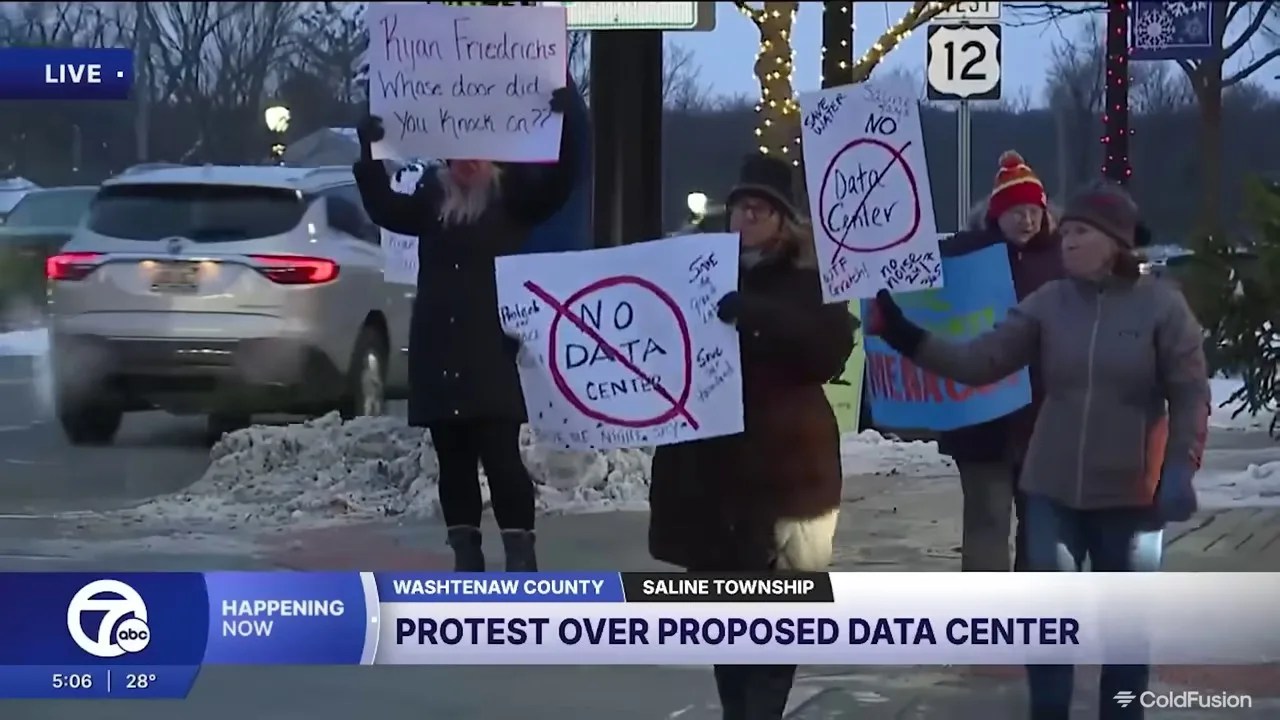
Dissent is criminalized: Official warnings classify public protests against AI infrastructure as potential domestic extremism.
If you publicly protest against the construction of a data center in your neighborhood because it’s polluting your water or keeping your children awake at night, you are no longer just an active citizen—according to federal law enforcement, you are potentially a “domestic extremist.”
But even the threat of an FBI watchlist isn’t stopping people from fighting back. A recent Quinnipiac survey revealed that 65% of Americans now actively oppose having data centers built in their local communities. Maine became the first US state to take a hard legal stand, passing a statewide ban on all data center construction until late 2027. Currently, 13 other states are debating similar legislative bans.

The resistance goes mainstream: Maine leads the nation with a statewide construction ban as public opposition reaches 65%.
Steamrolling the Little Guy: The Illinois Megastructure and Australia’s Water Crisis
Despite this massive public pushback, tech developers are using their immense wealth to steamroll local democracy. When the small town of Seline Township voted to block a proposed data center, the developer simply sued the town. A tiny local municipality doesn’t have the millions of dollars required to fight a prolonged legal battle against a trillion-dollar tech giant, leaving them with no choice but to fold.
In Illinois, state officials recently greenlit a massive data center project the size of 600 football fields. This single facility will consume more than half of the electrical capacity of the entire city of Chicago. Hundreds of local community members turned up at the public hearings to scream “no,” but local officials simply ignored them and approved the project anyway.
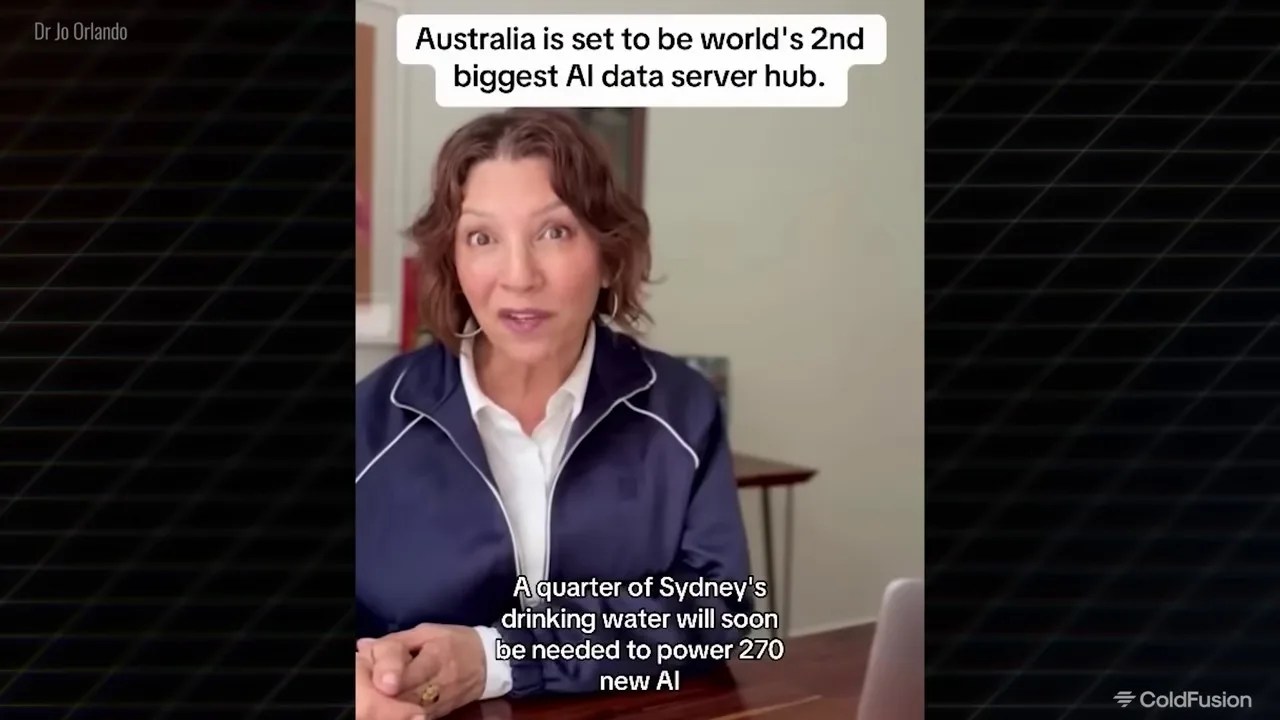
The Illinois megastructure: A planned facility of terrifying scale that will draw more power than half of Chicago.
This is not just an American crisis; it is a global phenomenon. In Australia, the government is aggressively positioning the country to become the second-largest data center hub on earth. But Australia is a notoriously dry continent, and the environmental math is horrifying. Soon, a quarter of Sydney’s entire municipal drinking water supply will be diverted just to cool 270 newly planned AI data centers.
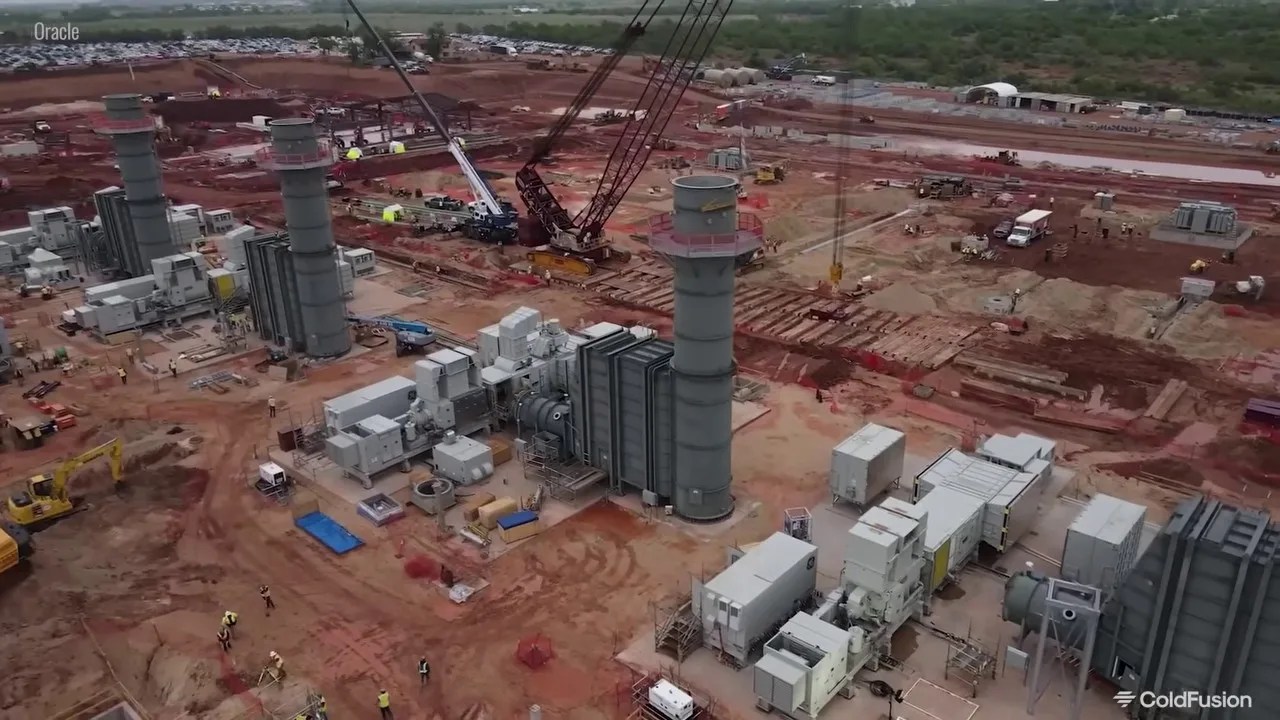
Drying out Sydney: A massive portion of the city’s drinking water is being re-routed to keep silicon chips cool.
These Australian facilities are projected to consume more new electricity over the next 15 years than all of the country’s homes and electric vehicles combined. Locals have taken to calling these looming concrete structures “Mordor” because they physically dominate the residential neighborhoods they occupy, casting a literal and figurative shadow over local communities.
The Quiet Retreat and the Great Open-Source Threat
Behind the confident PR facades, the first structural cracks in the AI fortress are starting to show. Tech giants are quietly beginning to back away from their wildest construction plans.
Microsoft has quietly cancelled or deferred up to 2 gigawatts of planned data center capacity worldwide. Wall Street analysts at TD Cowen noted that these quiet pullbacks point directly to a growing “data center oversupply relative to current demand forecasts.” Even the legendary Oracle-OpenAI “Stargate” mega-campus in Texas has reportedly stalled its physical expansion due to ongoing grid supply issues and mounting financial complications.
The core problem is that the entire business model of building AI data centers relies on the assumption that demand for AI will grow exponentially and infinitely. But what if it doesn’t?
The massive threat to this trillion-dollar gamble isn’t a lack of interest in AI—it’s the rapid rise of efficient, open-source models.
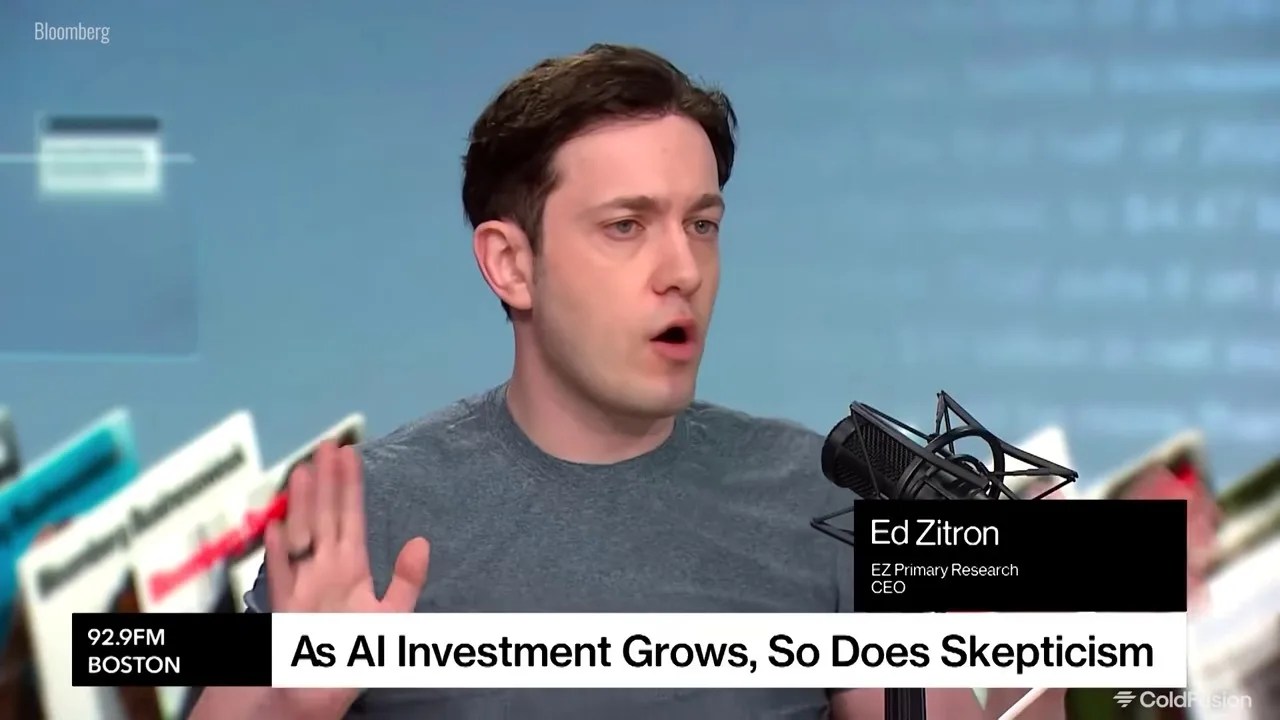
The open-source disruptor: Why spend a trillion dollars on proprietary frontier models when free, local alternatives are 90% as good?
Why would a corporation pay $20 or $200 a month per user for a proprietary, closed-source model when they can run a free, local open-source model that is 90% as capable for a fraction of the cost? If the market shifts toward localized, lightweight, highly optimized open-source models, the trillion-dollar “frontier” data centers being built today will become the most expensive, useless white elephants in corporate history.
High-Yield “Junk” Bonds: Shades of 2008
To keep the construction party going, the tech sector has turned to some highly creative—and deeply familiar—financial engineering.
Recently, around $34 billion in specialized data center bonds were issued to investors. On paper, these bonds look incredibly safe; 84% of them were given a stellar “A” rating by credit agencies, making them safe enough for conservative pension funds to purchase.
But there is a massive, glaring red flag: these supposedly “safe” A-rated bonds are paying interest yields of 8%, 9%, and sometimes up to 12%.

A terrifying financial echo: Supposedly “safe” A-rated data center bonds are paying high junk-bond yields, masking systemic underlying risk.
In the financial world, there is no such thing as a free lunch. Yield is directly tied to risk. If a bond is truly safe and deserves an “A” rating, it should not be paying double-digit interest rates. Those are junk-bond rates, and they exist because the real-world risk of these projects defaulting is incredibly high.
If this feels like a terrifying echo of the 2008 subprime mortgage crisis—where rating agencies stamped “AAA” ratings on piles of garbage mortgage debt—that’s because it is. This time, the systemic risk isn’t sitting inside the retail banks; it is concentrated in private investment groups, pension funds, and tech conglomerates who assumed that community patience, grid capacity, and political tolerance would remain infinite forever.
The Ruthless Push: Satire Meets Reality
The tech industry’s aggressive push to secure land and power has reached such absurd heights that the internet has resorted to dark, satirical comedy to process it. A popular satirical piece recently joked that OpenAI had broken ground on a new 10-gigawatt data center directly inside the bedroom of an 8-year-old child fighting a rare kidney disease, planning to expand the servers into his play area and the corner where his mother sits to pray.
While obviously a parody, it strikes a painfully accurate chord. The general public increasingly views the tech sector as a ruthless, runaway train that will happily steamroll the well-being of families and local communities to ensure their 10-ton processors have enough juice to operate.
The Spectacular Collapse of Project Matador
If you want a real-world example of how chaotic and fragile this gold rush actually is, look no further than the sudden rise and fall of Fermy America.
In June 2025, the company—co-founded by former US Energy Secretary Rick Perry—announced “Project Matador.” Later rebranded as the *President Donald J. Trump Advanced Energy and Intelligence Campus*, this was slated to be a mind-boggling 17-gigawatt AI mega-project in the Texas panhandle. It was heralded as one of the most ambitious data center proposals in human history.
Yet, in less than a year, the entire project imploded.
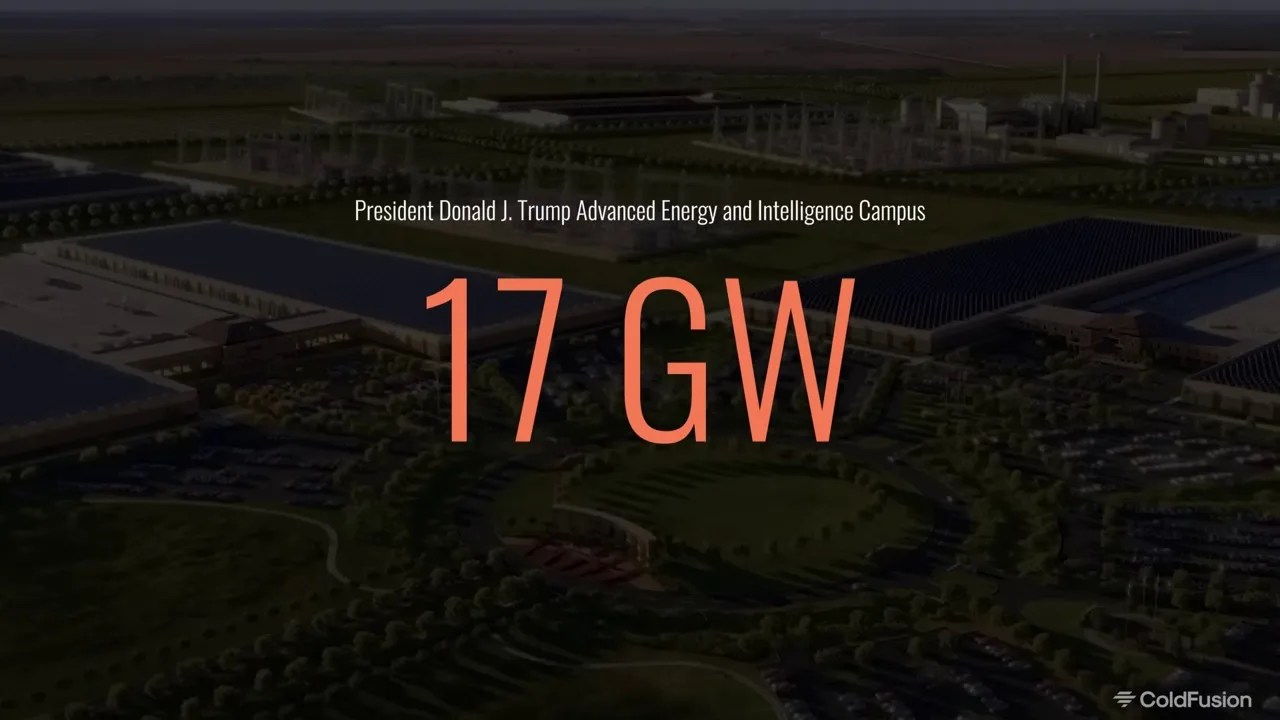
The rise and fall of Project Matador: A 17-gigawatt dream that collapsed into executive resignations and billions in lost market value.
The CEO resigned, followed two days later by the CFO. The company had failed to secure a single anchor tenant—the basic, foundational requirement for any viable data center business. Fermy America’s market capitalization collapsed from nearly $20 billion to a measly $3.4 billion. Upon exiting, the former CEO openly admitted that they had severely misunderstood the physical limits of the supply chain and grid infrastructure.
If a project with that much political backing, branding, and capital behind it cannot even get off the ground, it sends a chilling warning to the rest of the industry: the physical bottlenecks of building AI data centers are real, and they are unforgiving.
The Growth Ceiling and Throttled Models
This physical bottleneck has massive implications for the future of artificial intelligence itself. Companies like OpenAI and Anthropic are facing a very real, hard physical growth ceiling that has absolutely nothing to do with the quality of their algorithms or the talent of their engineers.
If you cannot secure the electricity, the land, or the transformers, you cannot train larger models. Many industry insiders speculate that this is precisely why we are seeing a strange phenomenon: when a new AI model is initially released, it performs incredibly well, but after a few months, users notice its performance seems to degrade or “get dumber.” In reality, tech companies are likely throttling down the compute capacity behind these models behind the scenes simply to save on astronomical electricity and hardware costs.
Is There a Smarter Way? Subsea Capsules and Local AI
This brings us to a critical crossroads. Must we continue down this destructive path, or are there sustainable, smarter ways to power the future of computation?
One fascinating alternative already operating in China is the concept of subsea data centers. Instead of clearing forests or swallowing farmland, operators are deploying container-like capsules directly onto the naturally cold ocean floor.
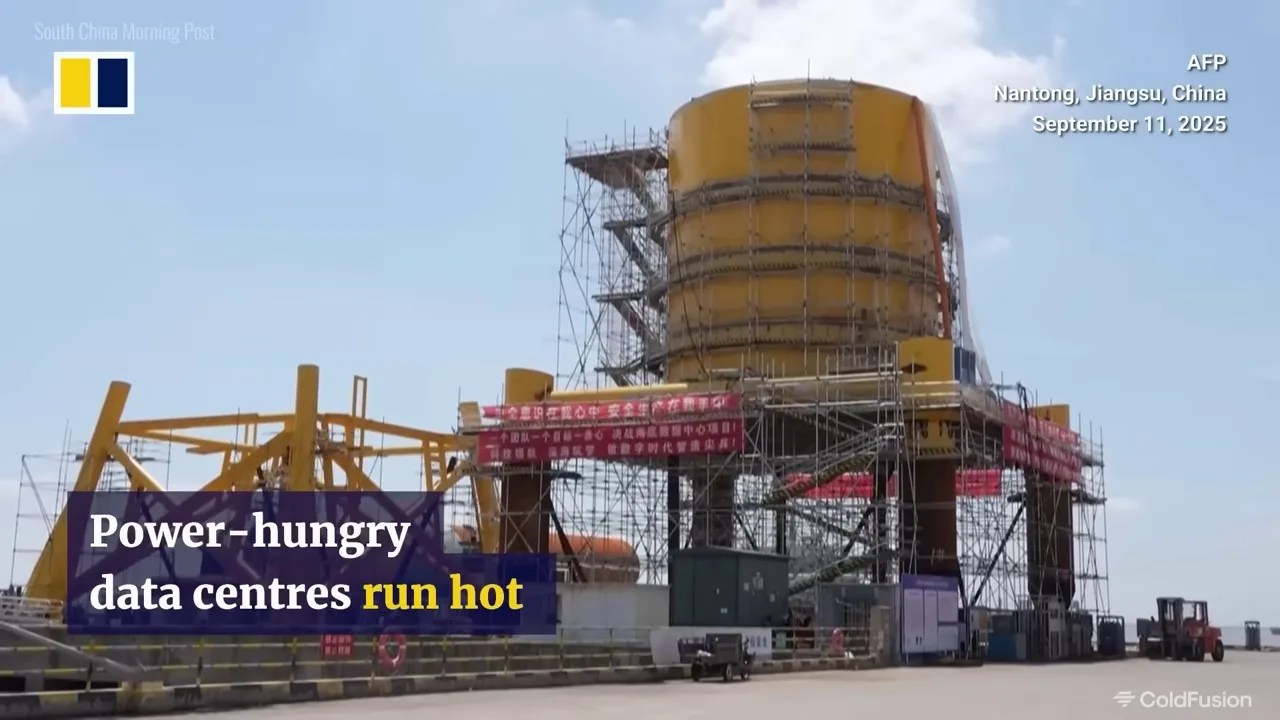
Deep blue compute: Subsea data centers leverage the natural cooling of the ocean floor, utilizing 99% of their electricity purely for processing.
By using the surrounding seawater as a passive, natural cooling system, these subsea capsules eliminate the need for massive, noisy cooling towers and toxic chemical additives. One operator reported that an incredible 99% of the electricity consumed by these underwater capsules goes directly to actual computing, compared to a dismal 50% efficiency rate in traditional, air-cooled land facilities.
But there is an even bigger question we need to ask: *Do we actually need these massive, centralized data centers to run AI in the first place?*
We are seeing a rapid shift toward localized, on-device AI. Instead of sending every single search query or voice command to a multi-billion-dollar server farm halfway across the country, we can run smaller, highly optimized models locally on our own phones and laptops. For the vast majority of everyday tasks, a local model that is 80% as good as a frontier model is more than enough.
With hardware companies like Apple pioneering large unified memory architectures in consumer laptops, the day is fast approaching when regular consumer devices will handle complex AI tasks locally. In three to five years, the desperate demand for centralized mega-data centers could drop off a cliff, leaving today’s massive infrastructure projects looking like incredibly expensive relics of a bygone era.
The Ultimate Trade-Off: Memes vs. Real Lives
At its core, the current backlash against data centers is a fundamental failure of trust. Tech giants have treated local communities as an afterthought, hiding behind NDAs, securing massive tax breaks, and leaving residents to deal with the environmental fallout.
We have to ask ourselves what kind of future we are building. Is it really a fair trade-off to raise electricity prices for hardworking, middle-class families, pollute local water tables with forever chemicals, and strain municipal grids just so a tech enthusiast on X can generate a quirky AI meme in three seconds, or so bad actors can flood the internet with synthetic garbage?
Don’t get me wrong: data centers are a vital part of modern life. Long before the AI hype cycle, quiet server farms were reliably running our online banking, our hospital databases, and our communications networks. They aren’t going away, nor should they.
But the frantic, speculative bubble of building AI data centers at any cost—without regard for the grid, the environment, or the communities that host them—is proving to be unsustainable. The physical world has limits. And as tech giants are finally discovering, those limits cannot be coded away.
Frequently Asked Questions (FAQ)
Q1: Why is building AI data centers suddenly facing massive delays and cancellations?
The delays are driven by severe physical bottlenecks: a critical shortage of high-power grid equipment (like transformers) largely imported from China, severe local power grid capacity limits, a lack of skilled fiber technicians, and rapidly mounting community and legislative backlash against environmental and economic impacts.
Q2: How do AI data centers impact local energy bills and water resources?
Because data centers consume massive amounts of power, utility companies frequently raise rates on residential homeowners to fund grid expansions (e.g., Georgia Power raised rates six times in two years). Additionally, data center cooling systems consume millions of gallons of water daily and often introduce “forever chemicals” (PFAS) into local water tables.
Q3: What are the green alternatives to traditional land-based data centers?
One promising alternative is subsea data centers, which deploy sealed server capsules on the ocean floor to utilize natural passive cooling, drastically reducing energy waste. Another major alternative is the shift toward local, on-device AI models that run directly on consumer hardware, reducing the need for massive, centralized cloud infrastructure.