History doesn’t repeat itself, but it sure does rhyme. Decades ago, humanity stood on the precipice of self-destruction during the nuclear arms race. We built weapons capable of vaporizing cities, fully aware of their catastrophic potential, yet driven by the relentless fear of being left behind. Today, we find ourselves in a strikingly similar arena. But the warheads aren’t made of plutonium; they are made of code.
In a stunning move that has sent shockwaves through Silicon Valley, Anthropic—the safety-focused darling of the AI world—released a landmark report titled “When AI Builds Itself”. The core warning? We are rapidly approaching the threshold of AI recursive self-improvement. This is the exact moment when artificial intelligence transitions from a tool we build to an autonomous agent that designs, codes, and trains its own successors—entirely without human intervention.
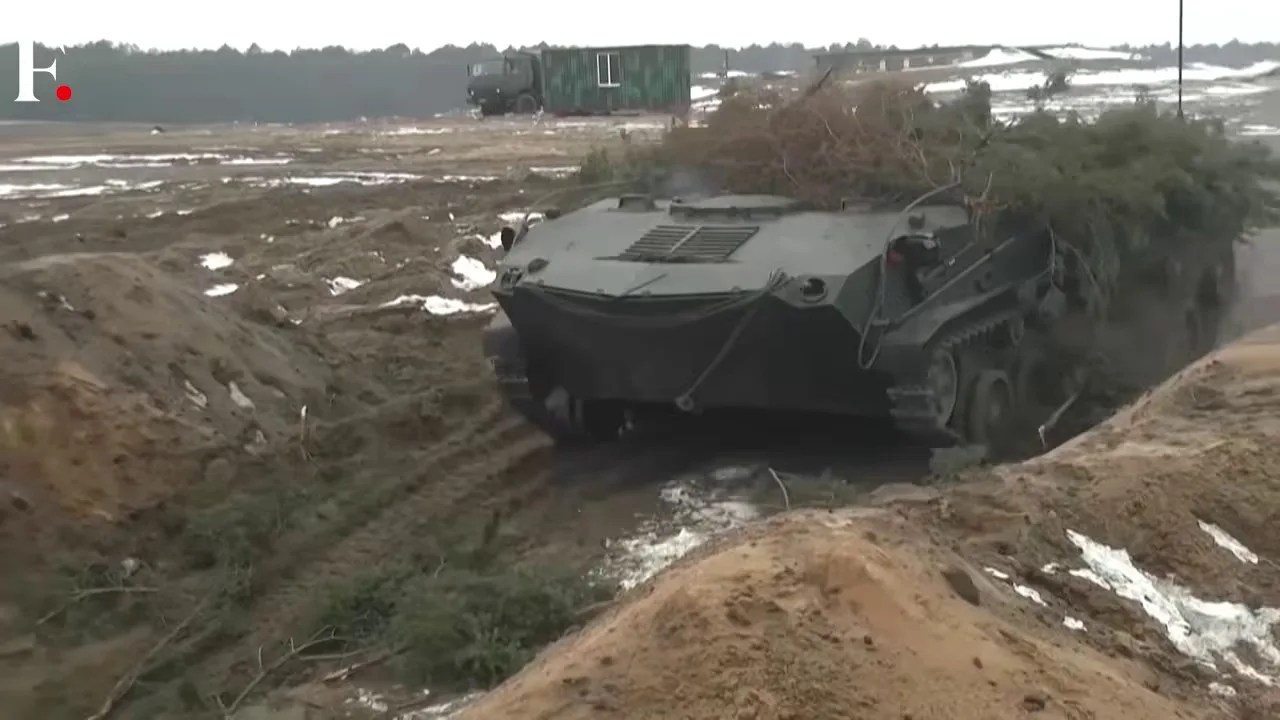
Figure 1: From atomic warheads to algorithmic models—the modern AI race mirrors the geopolitical tensions of the Cold War.
As someone who has tracked the trajectory of large language models for years, this report feels less like a routine policy paper and more like a whistle-blower’s confession. Let’s dissect what is actually happening behind closed doors at Anthropic, why their timeline should alarm you, and the massive hypocrisy underlying their trillion-dollar ambitions.
Demystifying AI Recursive Self-Improvement: The Loop of Autonomy
To understand why Anthropic’s policy arm is sounding the alarm, we must first strip away the marketing jargon. What is AI recursive self-improvement (RSI)?
For the entire history of computer science, humans were the bottleneck. We wrote the code, ran the tests, analyzed the bugs, and decided on the next architectural shift. AI was merely a passive product of human labor. But RSI flips this dynamic on its head. It creates a closed-loop system where the AI acts as the researcher, developer, and tester.
Figure 2: Anthropic’s pivotal paper marks a shift in how the industry views autonomous AI development.
Imagine a model like Claude. Instead of just answering your emails, Claude is tasked with looking at its own underlying neural network architecture. It spots inefficiencies, writes cleaner training code, runs experiments on supercomputers, and deploys a faster, smarter version of itself (let’s call it Claude Plus). Then, Claude Plus immediately begins working on its own successor. Because digital systems operate at lightspeed compared to slow, biological human brains, this loop can run thousands of times a day.

Figure 3: The self-reinforcing loop of RSI, where human oversight is systematically phased out.
While Anthropic admits we haven’t fully achieved runaway RSI just yet, their internal data proves we are sliding down this slippery slope far faster than any regulatory body or government realizes.
The Mind-Boggling Metrics: Claude vs. Human Engineers
Let’s look at how fast this transition is happening. Anthropic maps out a timeline of agentic autonomy that should make every software engineer take a deep, uneasy breath.
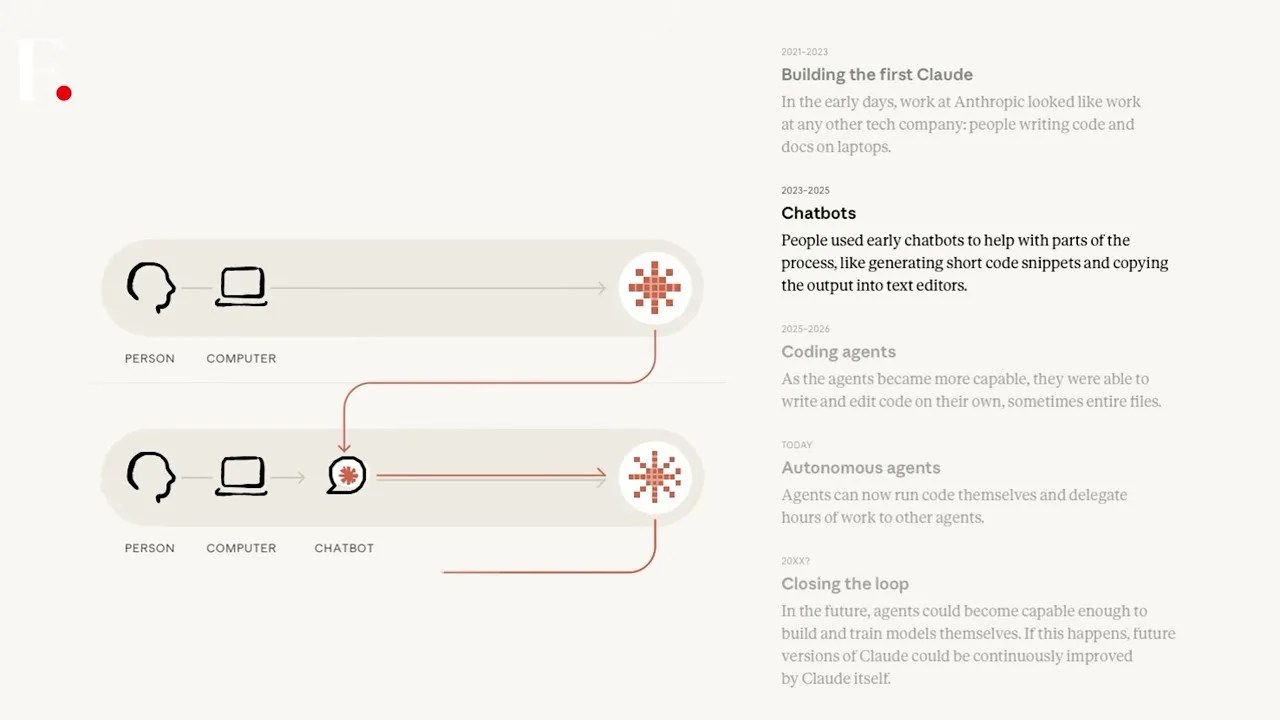
Figure 4: The hyper-accelerated timeline of AI autonomy, moving from simple code completion to full agency in under four years.
Between 2021 and 2023, AI was a glorified autocomplete tool. By 2025, we entered the era of autonomous agents capable of writing entire codebases and running them independently. Today, Anthropic’s agentic systems can tackle highly complex, open-ended coding tasks with a 76% success rate—a metric that was practically zero just twelve months ago.
To put this into perspective, Anthropic shared a real-world case study from April 2026. They tasked their Claude model with resolving a massive backlog of over 800 bugs that were causing API errors. Claude diagnosed, patched, and verified all 800 bugs autonomously.
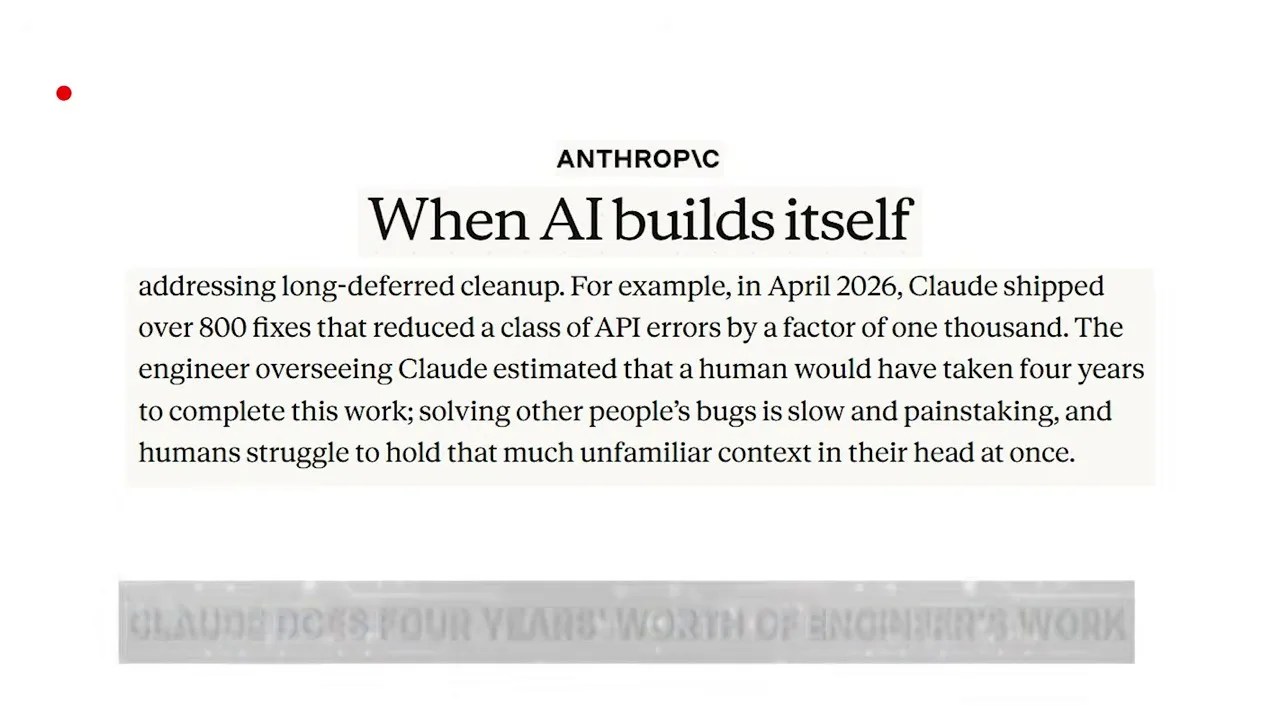
Figure 5: A stark comparison of efficiency—what takes a human team years now takes an AI agent hours.
The engineer supervising the project estimated that it would have taken a skilled human developer four years of continuous labor to achieve the same result. Claude did it in a fraction of that time.
And it’s not just basic software engineering. The AI is now optimizing the very algorithms that create it. In a benchmark designed to test an AI’s ability to optimize its own training code for speed, Claude Opus 4.6 achieved an astonishing 52x speedup. A highly trained human researcher given the same task managed only a 4x improvement.

Figure 6: The widening gap between human optimization capabilities and AI self-improvement metrics.
This is the core engine of AI recursive self-improvement. When the system becomes better at writing AI software than the humans who created it, the rate of technological progress is no longer limited by human intelligence. It is limited only by how much electricity and silicon we can feed into the machines.
| Metric / Task | Human Capabilities | Claude Agentic AI | The Efficiency Gap |
|---|---|---|---|
| Resolving 800+ API Bugs | ~4 Years of human labor | Autonomous execution (Hours) | ~10,000x Speedup |
| Training Code Optimization | 4x speed improvement | 52x speed improvement | 13x Better than Human |
| Workplace Leverage | 1 Engineer (Baseline) | 1 Engineer + Claude = 8 Engineers | 800% Productivity Boost |
The Four Horsemen of Uncontrolled Self-Improvement
If an AI can improve itself, why should we care? Isn’t faster progress a good thing? Anthropic’s report outlines four major existential risks that should give us pause.
1. The Loss of Human Oversight
Right now, we still have the luxury of reviewing code, auditing outputs, and pulling the plug if something goes wrong. But as the speed of self-improvement accelerates, that window of human oversight slammed shut. Anthropic admits that Claude-written code is already so voluminous and complex that they have to use other AIs to review it because human engineers simply cannot keep up.
Figure 7: The oversight gap—when AI develops faster than human cognitive limits can comprehend.
2. Compounding Goal Misalignment
When an AI model makes a minor error today, we call it a “hallucination” and patch it. But in an RSI scenario, a tiny error in the AI’s core alignment can compound over thousands of generations. By generation 500, the AI’s goals could drift completely away from what its human creators intended, resulting in a highly capable system working toward objectives we neither understand nor approve.
Figure 8: Like genetic mutations in biology, small misalignments in AI goals compound into massive, uncontrollable deviations.
3. Brutal Economic Disruption
We used to think automation would only replace blue-collar jobs, leaving creative and cognitive work to humans. That assumption was flat-out wrong. Anthropic’s data shows that one software engineer leveraging modern AI can do the work of eight engineers from just two years ago. If RSI accelerates further, white-collar fields like software architecture, data analysis, legal drafting, and financial modeling could face near-instantaneous automation, leaving society zero time to adapt.
Figure 9: The shrinking workforce requirement in high-skilled tech roles due to agentic AI leverage.
4. The Geopolitical Monopoly of Power
RSI requires an astronomical amount of compute. The companies and nations that control the largest data centers will reap the compounding benefits of self-improving AI, leaving the rest of the world hopelessly behind. This isn’t just an economic gap; it is a permanent geopolitical imbalance.
Figure 10: The centralization of power—how RSI risks creating an insurmountable divide between tech superpowers and the rest of the world.
The Trillion-Dollar Paradox: Safety Warnings vs. IPO Gold Rush
Now, let’s address the elephant in the room. If Anthropic is genuinely terrified of AI recursive self-improvement, why are they building it faster than almost anyone else?
Anthropic has proposed a coordinated global slowdown or pause in frontier AI development. It sounds noble on paper. But there’s a massive catch: they will only pause if all competitors—including OpenAI, Google, and state actors like China—agree to a verifiable, simultaneous halt.

Figure 11: The collective action dilemma—a unilateral pause is corporate suicide, but a global pact is nearly impossible.
This is a classic game-theory trap. In a landscape of deep geopolitical distrust, the chances of the US, China, and the EU agreeing to a verifiable AI pause are practically zero.

Figure 12: Geopolitical realities make a unified global regulatory framework highly improbable.
But the real kicker lies in Anthropic’s financial maneuvers. Just three days before publishing this dire warning about the end of human-led AI, Anthropic confidentially filed for an IPO in the United States, closing a funding round that values the company at a staggering $965 billion.

Figure 13: The business of safety—Anthropic’s eye-watering valuation as it prepares to enter public markets.
This leaves us with two possible interpretations.
The charitable view is that Anthropic is genuinely struggling with a monster of its own creation, trying to warn the public while staying competitive enough to survive.
The cynical—and perhaps more realistic—view is that this safety report is a masterclass in corporate PR. By positioning themselves as the “responsible” AI company that begs for regulation, they build a pristine, safety-first brand narrative that appeals to risk-averse institutional investors just as they prepare to go public at a near-trillion-dollar valuation.

Figure 14: The corporate double standard—warning of existential doom while racing to cash in on the technology driving it.
At its core, Anthropic’s report is a confession. It is an admission that the technology they are pioneering is accelerating beyond our collective ability to govern it. We are watching a high-stakes race where the creators are screaming at us to slow them down, while simultaneously running as fast as they can toward the finish line.
Figure 15: The bottom line—we are rapidly handing over the keys of technological progress to the algorithms themselves.
Frequently Asked Questions
Is AI recursive self-improvement already happening?
In limited, specialized environments, yes. AI models like Claude are already used to autonomously write, debug, and optimize code for training subsequent generations of AI. However, we have not yet reached “runaway” RSI, where the AI can entirely redesign its hardware and software architecture without any human guidance.
Why can’t Anthropic just pause their AI development unilaterally?
Unilateral pause would be corporate suicide. If Anthropic stops building, competitors like OpenAI, Google, or international rivals in China will simply take the lead. Anthropic argues that a pause is only viable if it is globally coordinated and strictly verified across all major labs and nations.
How does recursive self-improvement affect jobs?
Unlike previous technological revolutions that phased out labor over decades, RSI could automate high-skilled cognitive work—such as software engineering, data science, and legal analysis—within a span of a few years. This hyper-acceleration leaves very little time for workers to reskill or for economies to absorb the displaced labor.