A single week in technology can sometimes feel like an entire decade. If you have been paying attention to the robotics sector recently, you will know that the race to build functional, autonomous machines has just transitioned from a slow jog into a chaotic, high-stakes sprint. We are no longer just looking at laboratory concepts or pre-rendered marketing videos. Instead, we are witnessing a clash of philosophies: the pursuit of human-like empathy versus raw industrial utility, and the struggle between Western software dominance and China’s massive hardware manufacturing engine.
In this deep-dive analysis, I want to unpack the five major robotics developments that have taken the industry by storm. We will look past the polished promotional videos to examine the financial realities, the engineering breakthroughs, and the software frameworks that are quietly bringing these machines into our factories, hospitals, and homes.
As we examine these developments, it becomes clear that the landscape of humanoid robots is diversifying rapidly, with different companies targeting vastly different niches of human-robot interaction and utility.
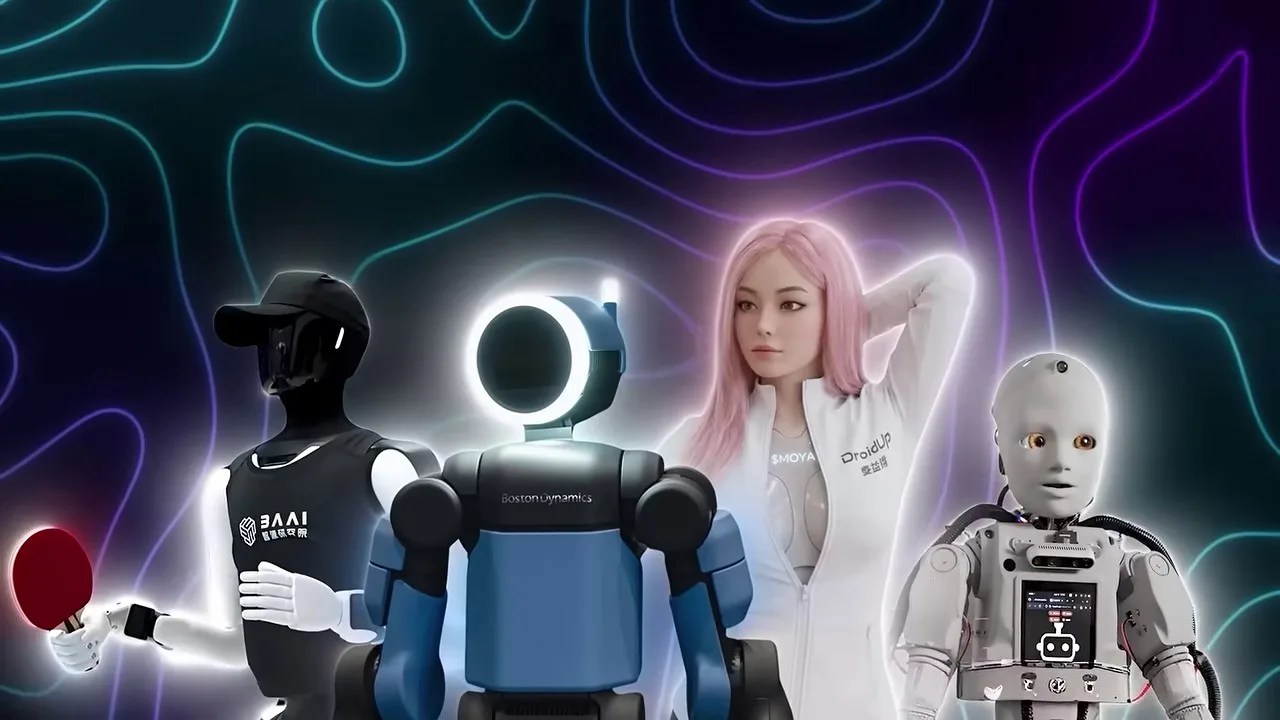
Five distinct humanoid robots representing different design philosophies, from hyper-realistic social companions to heavy-duty industrial workers.
Key Takeaways: The Current State of Play
Before we dive into the granular technical details, let us establish a baseline. The table below outlines the core specifications, target markets, and defining characteristics of the systems we will be discussing today.
| Robot / Platform | Developer | Key Feature | Primary Target Market | Est. Price / Status |
|---|---|---|---|---|
| Moya | Droidup (Shanghai) | 92% human gait, 97°F warm silicone skin | Elder care, hospitality, companionship | $173,000 (Low-volume batch) |
| Atlas (Electric) | Boston Dynamics | Sim-to-real pipeline, 2-actuator layout | Heavy manufacturing, automotive assembly | Industrial deployment pilot |
| Yuanjing A3 | Agibot | Autonomous table tennis at 5 m/s | High-speed industrial and athletic tasks | Research & development stage |
| Cody | Mind Children | Hyperon decentralized AGI framework | Museums, hotels, pediatric healthcare | Crowdfunded ($600k+ raised) |
| Qwen Robot | Alibaba Cloud | Embodied AI model family (Nav/Manup/World) | Software stack for third-party hardware | Enterprise pilot testing |
1. The Uncanny Valley: Inside China’s Bid to Make Humanoid Robots Feel Real
Let us start with the announcement that generated the most intense online reaction this week. Shanghai-based startup Droidup (officially known as Shanghai Robotics) pulled back the curtain on its full-body humanoid robot, Moya. The demonstration immediately polarized the tech community, sparking a debate between those who see it as a major step forward in social robotics and those who find it deeply unsettling.

The official unveiling of Droidup’s Moya, a robot designed to blur the boundary between machine and human presence.
To understand what Droidup is trying to achieve, we have to look past the superficial aesthetic and analyze the hardware. Moya stands 5.5 feet tall and weighs a remarkably light 70 pounds. The robot is built on the Walker 3 platform—the same underlying skeleton that powered Droidup’s athletic models to a third-place finish in a recent humanoid half-marathon. However, Moya is not designed for athletic performance. Her purpose is to sit across from a human being and simulate empathy.

Moya standing at Jiangwan Robotics Valley, the rapidly growing epicenter of China’s humanoid hardware industry.
How does Droidup attempt to cross the Uncanny Valley? They have focused heavily on tactile and visual feedback. Behind Moya’s eyes are active camera systems that do not just map the environment; they perform real-time facial tracking. When you smile, frown, or tilt your head, Moya mirrors those expressions back to you.
Underneath the silicone skin, the engineers have placed specialized padding designed to mimic human fat and muscle tissue. The most surprising detail, however, is the temperature. Moya’s skin is heated to run between 90 and 97 degrees Fahrenheit. When you touch her hand, you are not greeted by the cold, sterile plastic or metal of a traditional machine, but by a warm, yielding surface that feels disturbingly biological.

A close-up view of Moya’s face, highlighting the integration of active eye cameras, expressive facial actuators, and heated silicone skin.
Furthermore, Droidup has abandoned the traditional rigid joint architecture in the torso. They have designed an artificial spine that allows the robot to twist and bend. This spine distributes physical forces dynamically, mimicry of the human skeletal system that gives Moya a much more organic posture when standing or interacting with people.

An engineering render showing how Moya’s artificial spine distributes force and allows for natural torso twisting compared to rigid joint systems.
Despite these innovations, the skepticism surrounding Droidup is entirely justified. The company claim that Moya achieves a “92% natural human gait” was quickly picked apart by the robotics community online. Observers on platforms like Reddit noted that the gait looked less like a healthy adult and more like a careful, geriatric step.
More pressingly, the financial health of Droidup raises serious flags. The startup is only two years old, has raised $28.5 million in total, and has already burned through nearly half of that budget on aggressive recruitment and payroll for its 32 employees. With their primary venture partner valued at only $50 million, Droidup is running on a very thin financial runway.
This financial pressure might explain why the promotional video featured highly edited, suspicious cuts—particularly during the sequence where Moya pours orange juice for an elderly woman. The hands, which many reviewers pointed out look like rigid wooden sticks, seem to lack the fine motor control required for complex manipulation tasks without heavy scripting.
The promotional demonstration of Moya pouring orange juice, a sequence that drew skepticism from industry analysts regarding its level of actual autonomy.
At a price point of $173,000, Droidup is pitching Moya to hospitals, elder care facilities, banks, and museums. While the company plans a wider release later this year, the first production batch is limited to just 50 units. Whether Moya can prove her worth beyond a novelty greeting robot remains to be seen, but she stands as a fascinating, if creepy, milestone in the pursuit of human-like machines.
2. Boston Dynamics’ Atlas: The Sim-to-Real Industrial Juggernaut
If Droidup represents the pursuit of human-like aesthetics, Boston Dynamics represents the absolute prioritization of mechanical utility. The latest reports regarding the electric version of Atlas suggest that the machine is rapidly approaching the level of autonomy and reliability required for actual factory deployment.
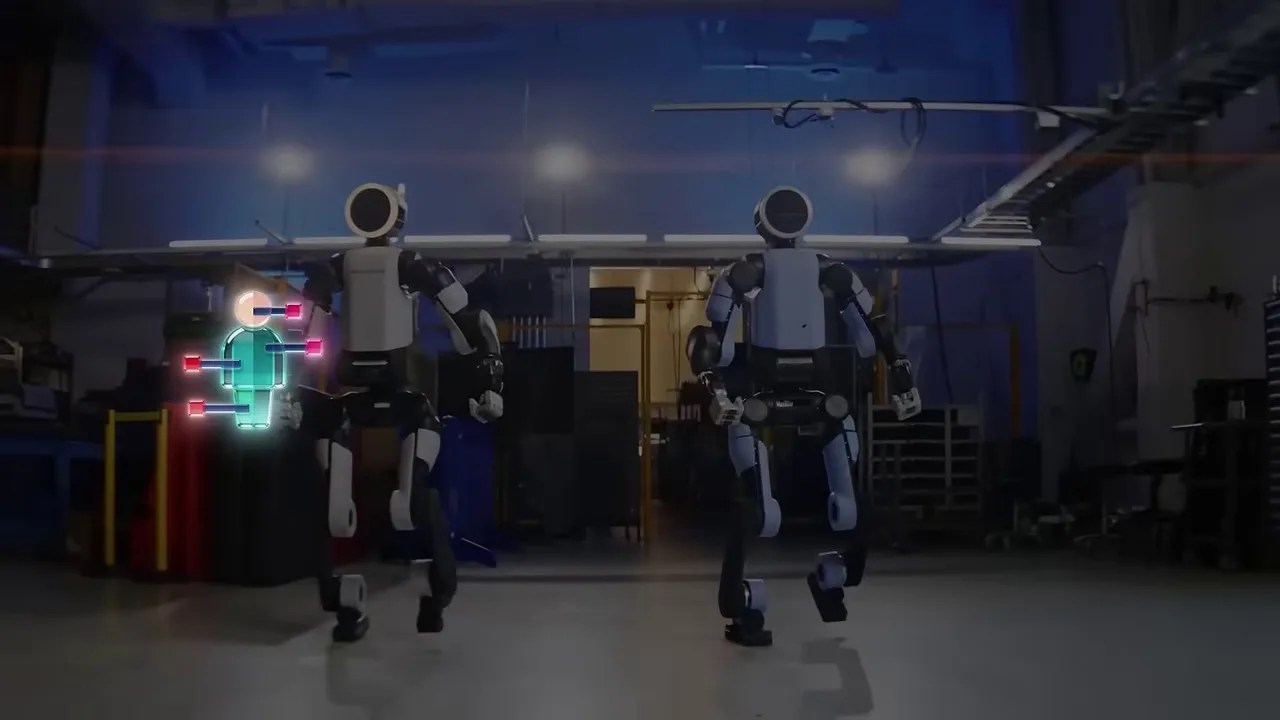
The secret weapon behind Atlas’s rapid evolution is not just hardware; it is the simulation pipeline. Through strategic partnerships with Google DeepMind (for AI and reinforcement learning) and NVIDIA (for high-performance computing infrastructure), Boston Dynamics can now simulate millions of hours of robot training in a single day.
An overview of the simulation-to-real (Sim2Real) pipeline, showing how millions of hours of virtual training are compressed and transferred to physical hardware.
What once took weeks or months of physical trial and error can now be computed virtually in hours. Once a policy is optimized in simulation, it can be compiled and transferred to the physical Atlas robot in about an hour. This rapid iteration loop has completely changed the pace of development.
Furthermore, the physical design of the electric Atlas is a masterclass in hardware simplification. Most humanoid robots are incredibly difficult to model in simulation because they use dozens of different, custom actuators. Boston Dynamics solved this by using only two types of actuators across the entire body.
The symmetrical design of the electric Atlas, utilizing only two standardized actuator types to simplify control systems and simulation modeling.
By designing the arms and legs symmetrically and removing external cabling around the joints, the engineers have created a robot that can rotate its joints continuously. This gives Atlas a range of motion that no human can match, allowing it to navigate tight factory spaces without needing to turn its entire body around.
We saw the practical results of this engineering approach when Boston Dynamics demonstrated Atlas lifting and moving a refrigerator weighing over 100 pounds. What makes this impressive is that the robot’s neural network had only been trained on loads ranging from 50 to 70 pounds.
The electric Atlas demonstrating physical AI by dynamically balancing and moving a refrigerator weighing over 100 pounds.
Lifting an object that exceeds your training data requires more than just pre-programmed trajectories. It demands active physical AI: real-time weight estimation, dynamic center-of-mass calculation, and continuous force adjustment. The athletic maneuvers Boston Dynamics is famous for—like backflips and handstands—were never just for show. They were the training ground for the balance, slip recovery, and agility that Atlas is now deploying in industrial environments.
Financial analysts are taking note. Reports project that Boston Dynamics could capture up to 15% of the global humanoid robot market by 2035, and potentially dominate up to 60% of the premium industrial segment. Unlike Droidup, Boston Dynamics has the backing of Hyundai Motor Group and a clear, pragmatic path to commercialization on the factory floor.
3. Agibot’s Yuanjing A3: Solving the Chaos of Autonomous Table Tennis
While Atlas focuses on heavy lifting, Chinese robotics startup Agibot has quietly achieved a milestone in high-speed coordination. Their full-size bipedal robot, the Yuanjing A3, recently completed a fully autonomous table tennis match with no human operators, scripts, or remote controls.
The Agibot Yuanjing A3 executing a forehand return during a fully autonomous table tennis rally.
To understand why this is a big deal, we have to look at the physics of table tennis. The ball is incredibly light, travels at speeds exceeding 5 meters per second, and changes trajectory based on spin and air resistance in fractions of a second. For a bipedal robot to return a serve, it must run a continuous, high-frequency closed-loop system:
- Perception: Detect the ball and calculate its velocity vector.
- Prediction: Estimate the landing point and spin profile on the table.
- Planning: Calculate the inverse kinematics to move the arm and body into position.
- Execution: Strike the ball with millimeter-level precision while maintaining bipedal balance.
To solve this, Agibot partnered with academic researchers to implement the “Spike Ping Pong” algorithm. This motion control system is specifically optimized for humanoid robots. It pairs the planning model with a 20 kHz high-frequency spike camera.
Standard cameras capture video at 30 to 60 frames per second, which introduces too much latency for high-speed sports. The spike camera operates at speeds 10 times faster, allowing the Yuanjing A3 to track the ball’s position with sub-millimeter accuracy and adjust its paddle angle dynamically mid-swing. This is a massive demonstration of how physical AI can handle chaotic, high-speed environments.
4. Cody: The Approachable, Child-Friendly Face of Autonomous AGI
Shifting away from industrial giants and athletic platforms, a Seattle-based startup called Mind Children is taking a completely different approach to design. They have built Cody, a three-foot-tall robot designed specifically for public spaces like museums, hotels, art galleries, and eventually, pediatric hospitals.
Unlike Moya, which tries to mimic a human adult, Cody is designed to look like a friendly, approachable companion. The robot features glowing hazel eyes and expressive facial animations that help put children and anxious visitors at ease.
What makes Cody interesting from a technical perspective is that it runs on Hyperon, a decentralized Artificial General Intelligence (AGI) framework developed by Singularity. Instead of relying on rigid, rule-based programming, Hyperon uses knowledge representation and reasoning engines to give the robot a form of “motivation.” Cody can prioritize tasks, navigate around dynamic obstacles, and adapt its conversations based on the emotional state of the person it is interacting with.
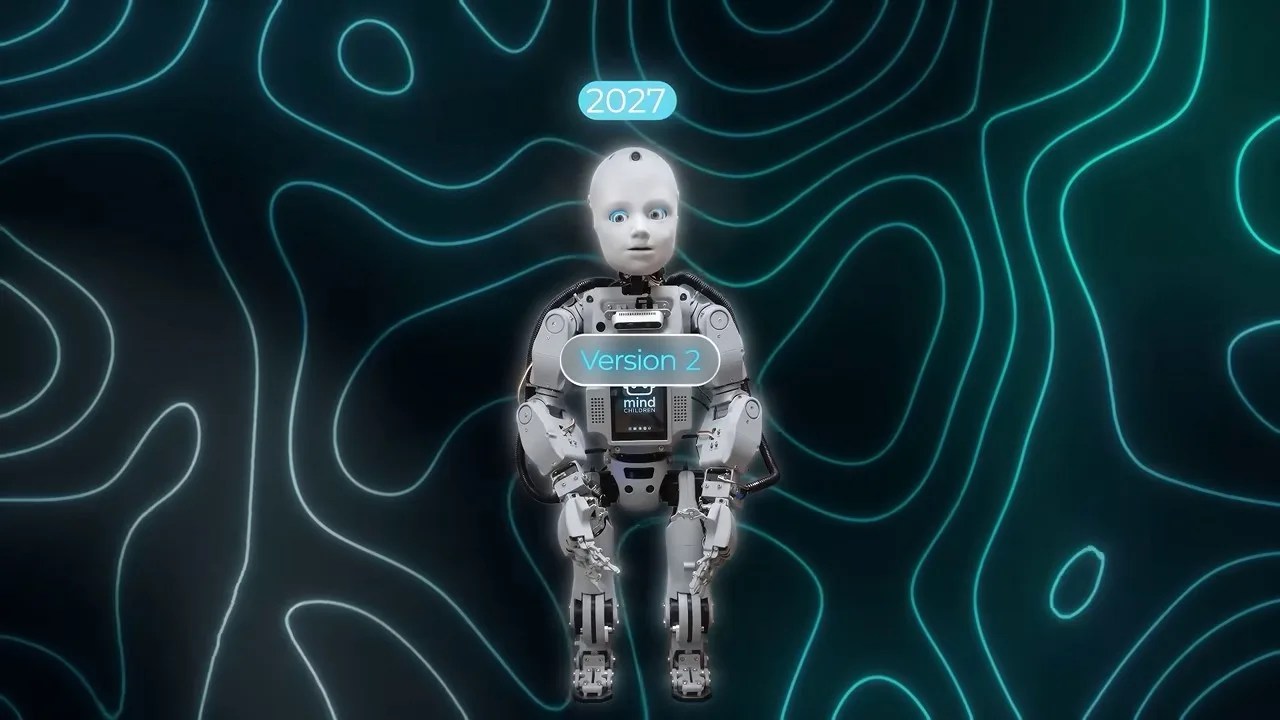
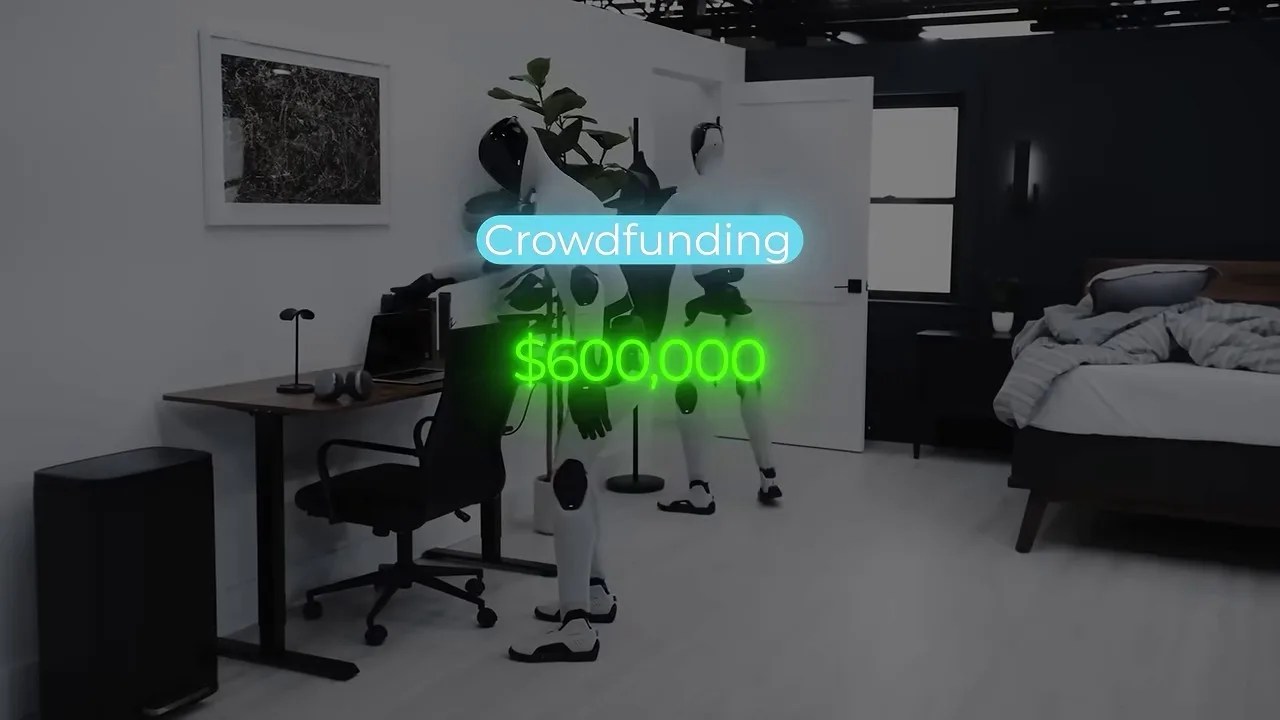
Mind Children has raised over $600,000 via crowdfunding to bring Cody to market. The startup plans to introduce basic physical manipulation capabilities—like pressing elevator buttons—in their next iteration, with a second-generation launch scheduled for 2027. It is a highly targeted approach that focuses on emotional utility rather than physical labor.
5. Alibaba’s Qwen Robot: The Software Brain for China’s Hardware Army
While hardware companies are building the physical bodies, tech giants are fighting to control the software operating systems. Alibaba’s Tongyi Lab recently launched the Qwen Robot model family, a suite of embodied AI models designed to bridge the gap between high-level language understanding and low-level physical control.
This is the hardest problem in robotics today. A large language model can easily understand the command: “Go to the kitchen and bring me a clean cup.” However, translating that command into motor torques, path planning, and object grasp forces is incredibly difficult. Robot training data is scarce, expensive to collect, and formatted differently across manufacturers.
Alibaba’s solution is to split the problem into three specialized, interconnected models:
- Qwenroot Nav: Handles spatial navigation and path planning. In trials, a Unitree GO2 quadruped running this model navigated an unfamiliar apartment using only a single low-resolution camera, maintaining an inference latency of just 196 milliseconds.
- Qwenroot Manup: Focuses on manipulation, grasping, and object interaction. Trained on over 38,000 hours of open-source robotics data, this model recently topped the generalist category at the Robo Challenge benchmark.
- Qwen Robot World: Serves as the “world model,” predicting how the physical environment will react to the robot’s actions before they are executed.
To tie these models together, Alibaba released Qwen Robot Claw, an agent framework that allows these systems to use the physical robot as a tool. In one impressive demo, an autonomous agent located a restroom, read an “Out of Order” sign on the door, interpreted the meaning, and independently rerouted to a different restroom without any human intervention.
This development highlights a major geopolitical divide in the robotics industry. The United States currently leads in developing the “brains”—with companies like Google DeepMind, NVIDIA, OpenAI, and Physical Intelligence. However, China possesses a massive “hardware army” consisting of manufacturers like Unitree, Agibot, UBTECH, and XPeng.
By offering the Qwen Robot framework, Alibaba is attempting to become the standard operating system that unites China’s hardware manufacturers. If they succeed, they could create a highly integrated, low-cost robotics ecosystem that will be incredibly difficult for Western competitors to match on price and manufacturing speed.
Frequently Asked Questions
Q1: Why is the “Uncanny Valley” such a significant challenge for humanoid robots like Moya?
A: The Uncanny Valley is a psychological phenomenon where human-like replicas that are almost, but not quite, realistic elicit feelings of revulsion or discomfort. While Moya attempts to bridge this with warm skin and facial tracking, rigid hand designs and unnatural walking gaits can actually make the robot feel more unsettling to users than a clearly mechanical design like Atlas.
Q2: How does Sim-to-Real (Simulation-to-Real) training speed up robotics development?
A: Physical robots are slow, prone to mechanical wear, and expensive to repair when they crash during training. In a virtual physics engine (powered by systems like NVIDIA Omniverse), thousands of virtual robots can train simultaneously in parallel, simulating years of experience in a single day. The resulting control policies are then transferred directly to the physical hardware.
Q3: What is the significance of Alibaba’s Qwen Robot splitting its AI models?
A: Trying to train a single neural network to handle natural language, visual processing, bipedal balance, and fine motor control leads to conflicts in the data. By splitting the architecture into specialized models (Navigation, Manipulation, and World Modeling), Alibaba allows each system to optimize its specific task while working under a unified coordinator.