If you thought the global artificial intelligence race was a simple, binary conflict between the tech giants of Silicon Valley and the rising stars of Beijing, it is time to throw that outdated playbook away. The technology landscape moves far too quickly for rigid ideological borders. In a move that has sent shockwaves through the industry, the strategic partnership between Microsoft and DeepSeek represents a tectonic shift in how enterprise AI is built, deployed, and commercialized. We are witnessing the birth of a highly pragmatic, multi-model ecosystem where cost-efficiency and utility trump geopolitical posturing.
Microsoft, the primary financial backer of OpenAI and a bedrock of Western enterprise computing, is opening its doors to DeepSeek, the Chinese AI startup that recently disrupted the global tech sector with its hyper-efficient reasoning models. This collaboration is not just a minor product update; it is a fundamental realignment. In this deep-dive analysis, we will unpack what this partnership means for the future of agentic AI, the unit economics of enterprise software, and the complex geopolitical web that Microsoft is weaving behind the scenes.
Before we explore the technical details, let us look at the structure of this analysis so you can navigate the key areas of this developing story.
1. The Rise of Copilot Co-work and Agentic Workflows
To understand why this development is so significant, we must first look at the platform where it is unfolding: Microsoft Copilot Co-work. This is not the standard Copilot sidebar you use to rewrite an email or summarize a brief Word document. Copilot Co-work represents Microsoft’s leap into true agentic AI.
Traditional AI assistants operate on a simple, single-turn basis: you provide a prompt, and the model generates a response. Agentic AI, however, is designed for long-running, autonomous tasks. You give it a high-level objective, and the agent takes over. It breaks the job down into sequential steps, retrieves necessary data from internal company systems, calls external tools, performs complex operations across multiple files, and continuously runs in the cloud until it delivers a completed project.
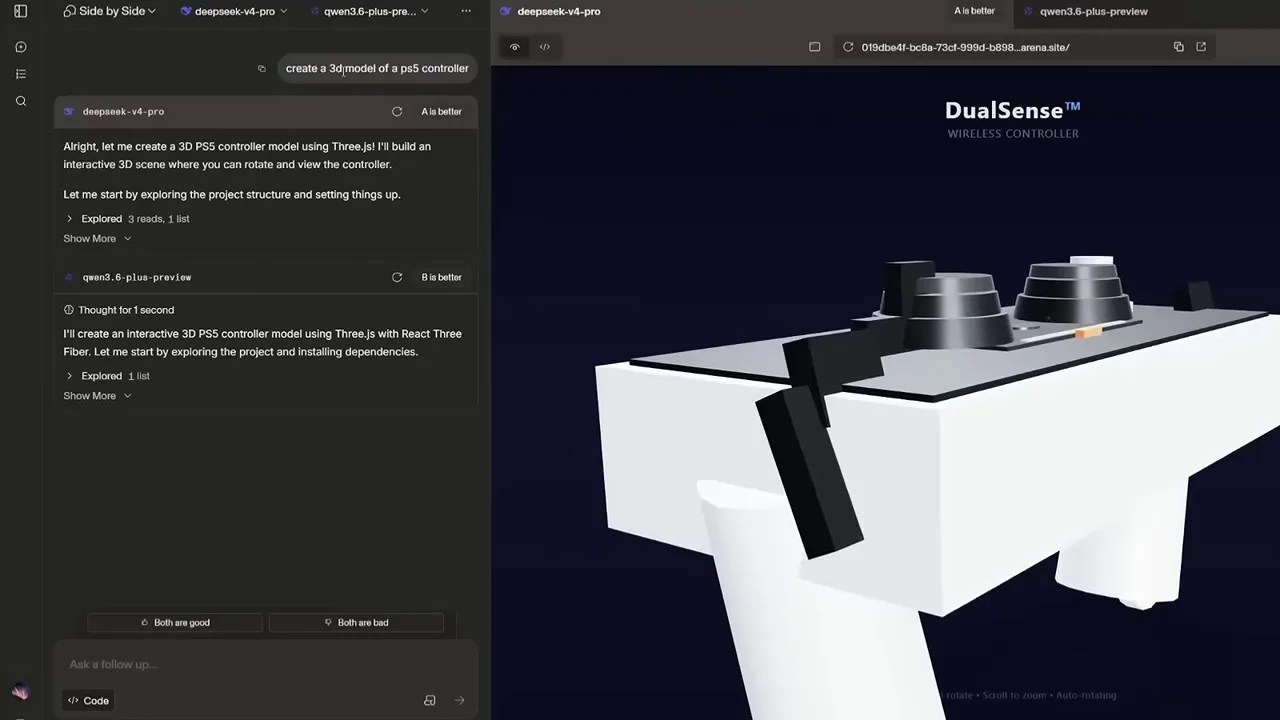
Microsoft introduces DeepSeek as a key partner within the Copilot Co-work ecosystem.
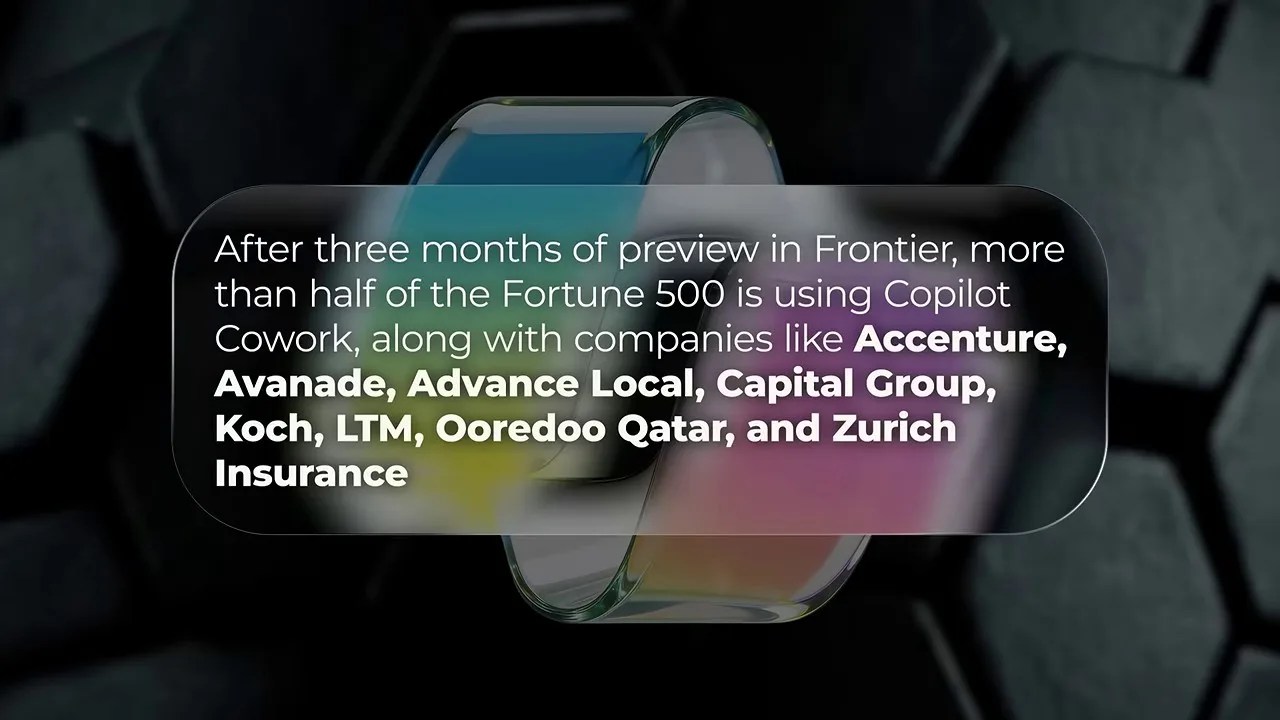
Microsoft recently announced the general availability of Copilot Co-work worldwide. The launch follows a three-month preview program under Microsoft’s Frontier initiative. The enterprise adoption rate during this preview phase was notable: according to Microsoft, more than half of the Fortune 500 companies have already deployed Co-work within their organizations. Early adopters include global brands such as Accenture, Avanade, Capital Group, Zurich Insurance, and Qatar Airways.

General availability announcement showcasing rapid adoption across major global enterprises.
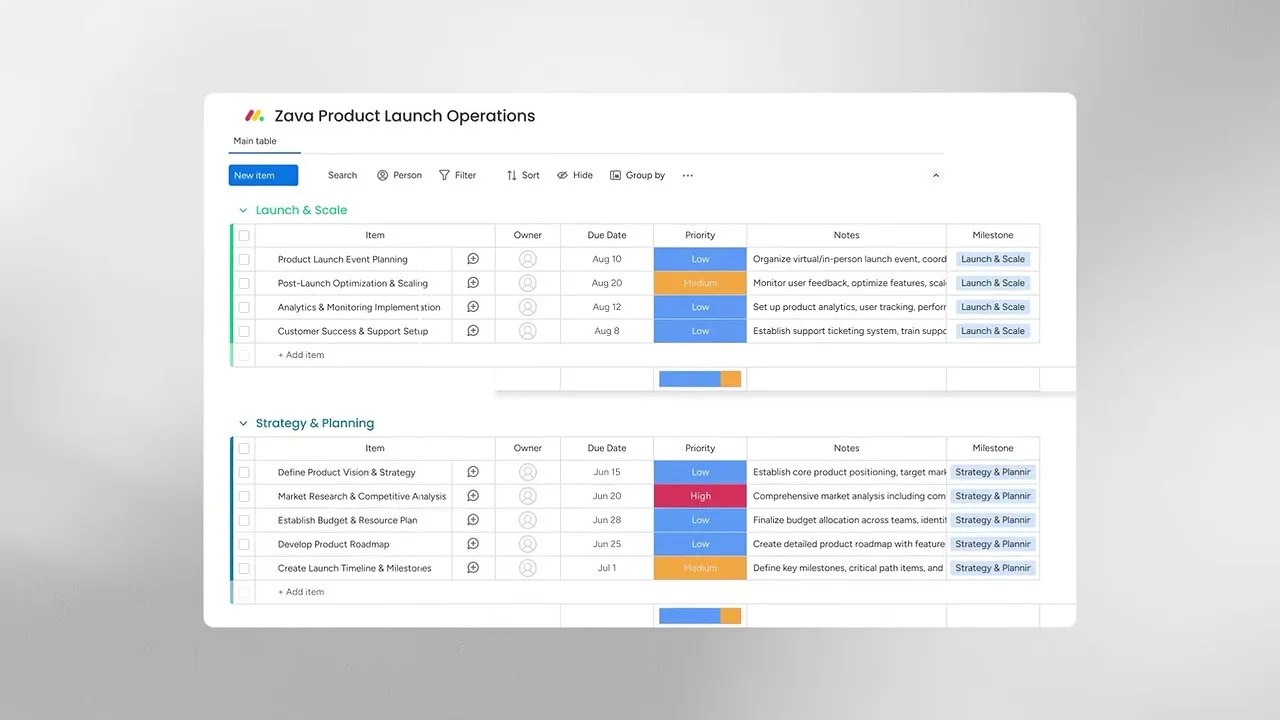
The practical applications of this technology show why enterprises are eager to adopt it. Instead of merely answering questions, these agents are taking over complex workflows that previously required days of manual labor. For instance, an engineering team integrated Co-work to safely edit batch job spreadsheets and automatically update dependency flowcharts with every modification. Another team used the platform to compare nearly 4,000 files across two distinct product versions—a task that would normally take weeks of manual verification.
Real-world enterprise use cases demonstrating the capabilities of Copilot Co-work.
In sales operations, a lead used Co-work to analyze a stalled sales pipeline. The agent did not just generate a generic summary; it returned a prioritized list of at-risk opportunities, identified the exact point where communication had stalled, and suggested specific follow-up actions. This level of autonomy is highly valuable, but it exposes a major challenge for the industry: the high cost of computing power.
The continuous execution loop of agentic AI, showing why these tasks consume high compute resources.
2. The High Cost of Autonomy: Why Microsoft is Killing Unlimited Compute
The primary challenge with agentic AI is its resource consumption. In a standard LLM interaction, you send a prompt, the model processes it, and it returns a response. The transaction is complete. With agentic workflows, the agent runs a continuous loop: calling the model, analyzing the output, retrieving new context, executing tools, checking its own work, and running new prompts. A single high-level goal can result in dozens or hundreds of individual model calls behind the scenes.
This iterative process is highly productive for users, but it creates a financial challenge for cloud providers. When users realize these agents can handle complex tasks, they use them frequently. However, if a flat-rate subscription allows users to run hundreds of multi-step, resource-intensive tasks every week, the provider’s computing costs can quickly exceed their revenue. This is why Microsoft is shifting Copilot Co-work from flat-rate subscriptions to usage-based billing.

The transition to a pay-as-you-go model driven by the high compute demands of agentic workflows.
As reported by Axios, Microsoft is introducing a pay-as-you-go model for Co-work. Charles Lamanna, Microsoft’s Executive Vice President of Copilot Agents and Platform, noted that internal tests showed unlimited access was financially unsustainable. Some power users were running hundreds of tasks weekly, generating significant productivity but also incurring high computing costs. The economics of agentic AI require a model where costs scale alongside usage.
Under this new structure, customers must first hold a base Microsoft 365 Copilot user license. From there, Co-work usage is billed dynamically using a system of “Copilot Credits.” The cost of any given task is determined by four variables:
- Model Use: The size and complexity of the underlying LLM selected for the task.
- Context Retrieval: The volume of internal data retrieved and injected into the prompt window.
- Tool Calls: The number of times the agent interacts with external APIs, databases, or code execution environments.
- Runtime: The total duration the agent runs in the Azure cloud to complete the task.
At launch, Microsoft has set the baseline price for these pay-as-you-go credits at one cent ($0.01) per Copilot Credit. For larger organizations seeking predictable budgeting, Microsoft is also offering a pre-committed purchasing option (P3), which provides volume discounts in exchange for upfront commitments.
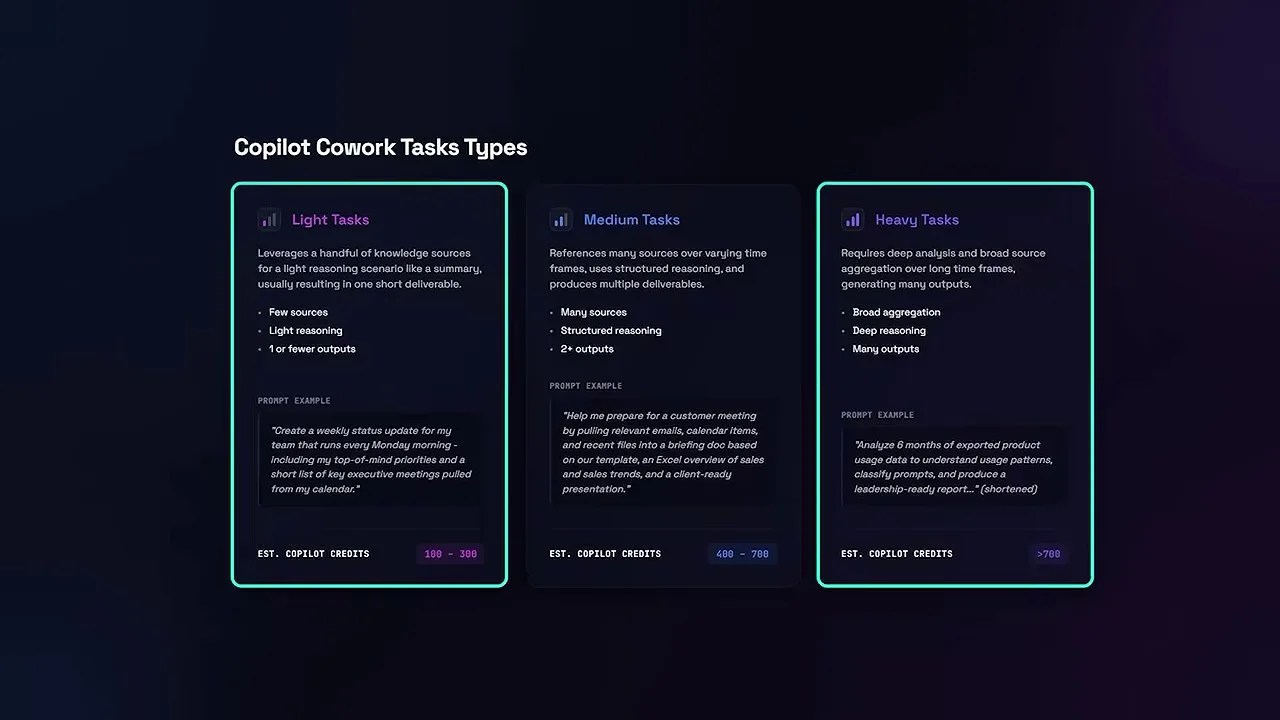
Microsoft’s framework for estimating enterprise costs based on task complexity and user roles.
To help companies estimate their potential spending, Microsoft has categorized tasks into three tiers: Light, Medium, and Heavy. Light tasks require minimal reasoning and draw from limited sources. Medium tasks pull from multiple data points and use structured reasoning. Heavy tasks require deep reasoning, broad data aggregation, and generate multiple complex outputs. By mapping these task types against specific user personas (such as knowledge workers, leaders, or developers), companies can build custom cost models.
3. The DeepSeek Disruption: How the Microsoft and DeepSeek Alliance Saves Compute Costs
This brings us to the core of the partnership: the collaboration between Microsoft and DeepSeek. As computing costs rise, Microsoft must find ways to offer affordable options alongside premium models. According to reports from Axios, Microsoft is exploring the integration of a fine-tuned DeepSeek V4 model (or other highly efficient open-source models) as a lower-cost alternative within the Copilot Co-work ecosystem.
Currently, Copilot Co-work relies heavily on models from Anthropic and OpenAI. At general availability, the platform runs on Anthropic’s Claude 3 Opus and Claude 3.5 Sonnet. For users in the Frontier preview program, OpenAI’s GPT models are available. Microsoft is also preparing to launch “Co-work 1,” its own fine-tuned model optimized for lower-cost execution of everyday enterprise tasks.
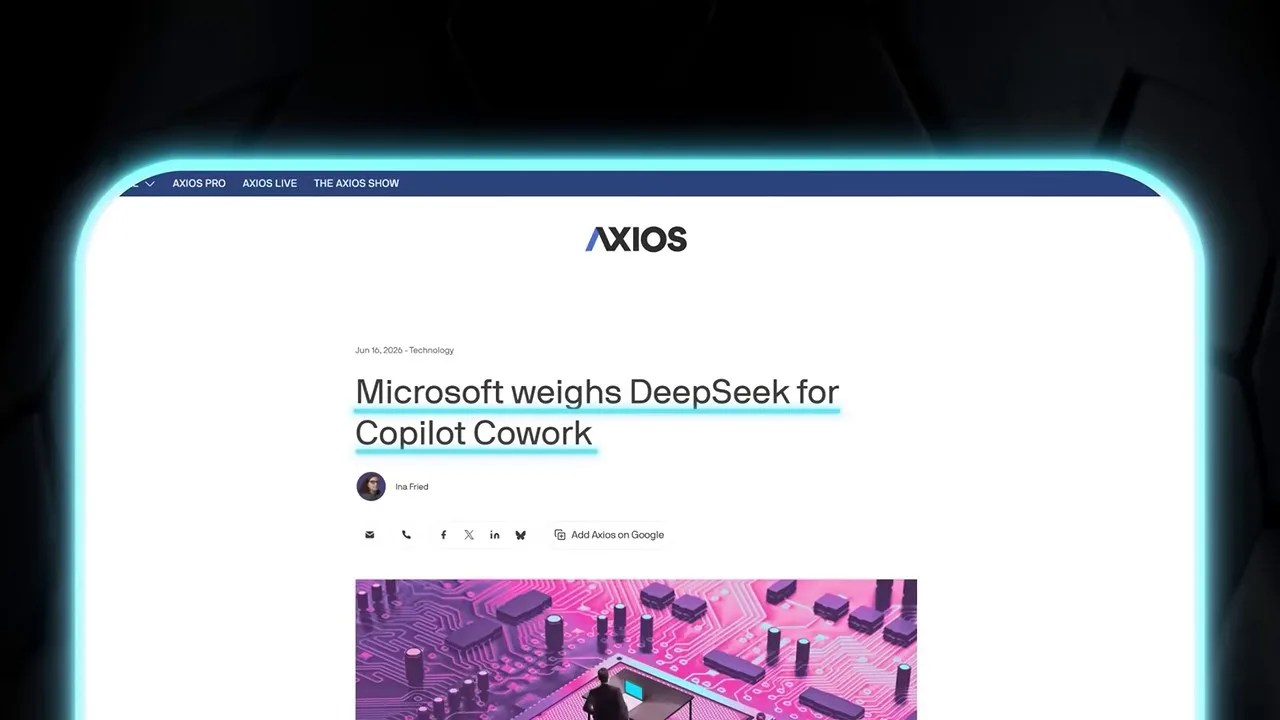
DeepSeek V4 positioned alongside OpenAI and Anthropic models to offer a cost-effective alternative.
However, the inclusion of DeepSeek V4 represents a different approach. DeepSeek has gained attention by matching the reasoning capabilities of leading models at a fraction of the training and operational cost. By offering DeepSeek V4 as an option, Microsoft can provide a model optimized for cost-sensitive, high-volume agentic tasks.
For enterprise customers, the integration is designed with security in mind. DeepSeek will not be enabled by default, and it will not run on external servers. Instead, Microsoft plans to host the model directly on Azure infrastructure. This ensures that enterprise data remains within Microsoft’s compliance boundary, protected by Azure’s security controls, data residency policies, and compliance standards.

The multi-model routing architecture of Copilot Co-work, directing tasks to the most efficient model.
This strategy shows that Microsoft is moving away from relying on a single model provider. Copilot is evolving into a multi-model routing platform. Instead of a single assistant powered by one model, it acts as an intelligent controller. It routes tasks to different models based on the required balance of cost, performance, and security. A complex creative task might go to Claude 3.5 Sonnet; a high-reasoning task to an OpenAI model; and a high-volume, cost-sensitive data processing task to DeepSeek V4 or Co-work 1.
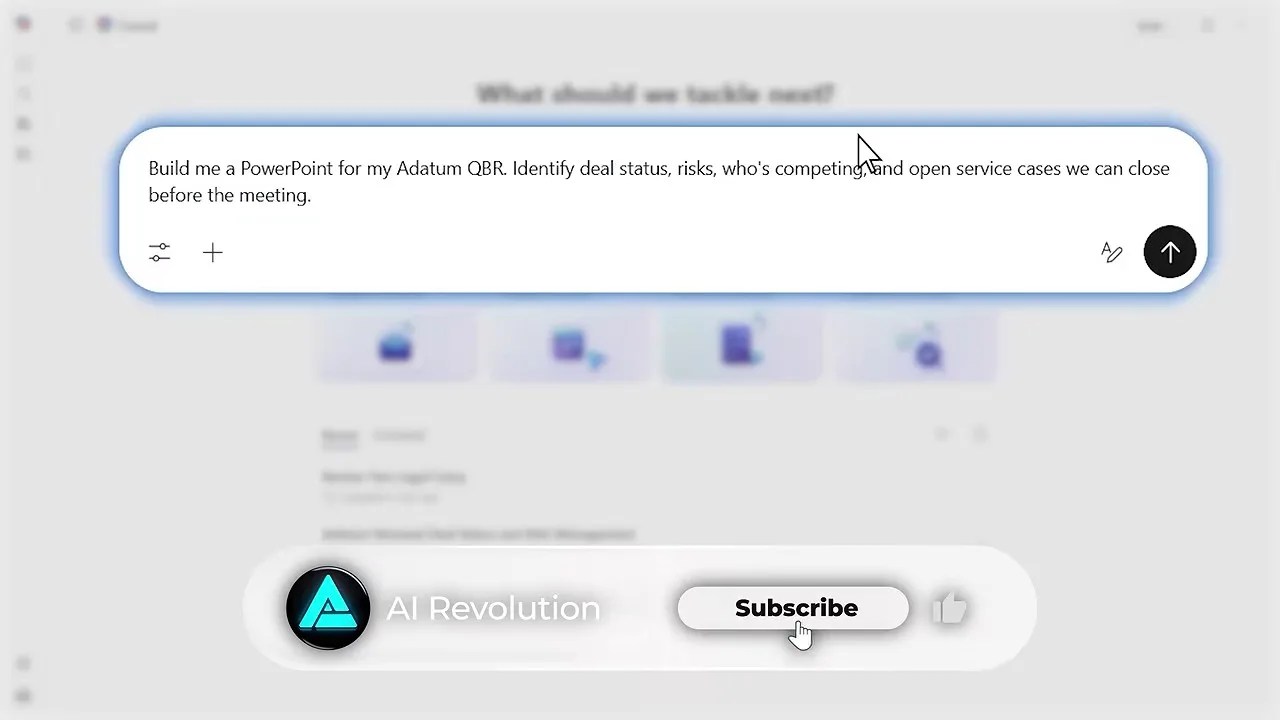
Azure’s security framework ensures that open-source and third-party models comply with enterprise data standards.
4. The Chinese Connection: Microsoft’s Silent Billion-Dollar AI Engine
The partnership with DeepSeek highlights Microsoft’s broader business activities in the Chinese market. A report from Bloomberg revealed that Microsoft has built a substantial business selling Western AI models to Chinese technology companies, navigating the complex geopolitical dynamics between the US and China.
According to sources familiar with these operations, ByteDance (the parent company of TikTok) has become Microsoft’s largest AI customer in China, primarily accessing OpenAI models via Azure. ByteDance is reportedly on track to spend over $1 billion annually on Microsoft’s AI and cloud services. Other major Chinese technology firms, including Tencent Holdings, Ant Group, and Meituan, also spend significantly on Azure-hosted AI models.
This is a notable arrangement because OpenAI and Anthropic do not sell their models directly in China due to regulatory concerns and intellectual property protections. However, Microsoft’s partnership with OpenAI allows it to sell access to these models through Azure in China under its own enterprise policies. While China represents a small portion of Microsoft’s overall global revenue (approximately 1.5% in 2024, according to President Brad Smith), its AI business in the region is growing rapidly.

Azure AI revenue growth in China, showing significant year-over-year increases.
During an internal sales meeting in July 2025, Microsoft’s commercial leadership reported that Azure AI revenue was growing faster in China than in any other sales territory, tripling in the fiscal year ending June 2025. Former Chief Commercial Officer Judson Althoff noted that the most advanced AI solutions are being built on the West Coast of the US and the East Coast of China, and Microsoft aims to be the platform that connects these two ecosystems.
However, this strategy faces operational and political constraints. To comply with security guidelines, Microsoft does not host OpenAI models on physical servers located within mainland China. Instead, Chinese customers access these models via secure network routing to data centers in other regions, such as Singapore.
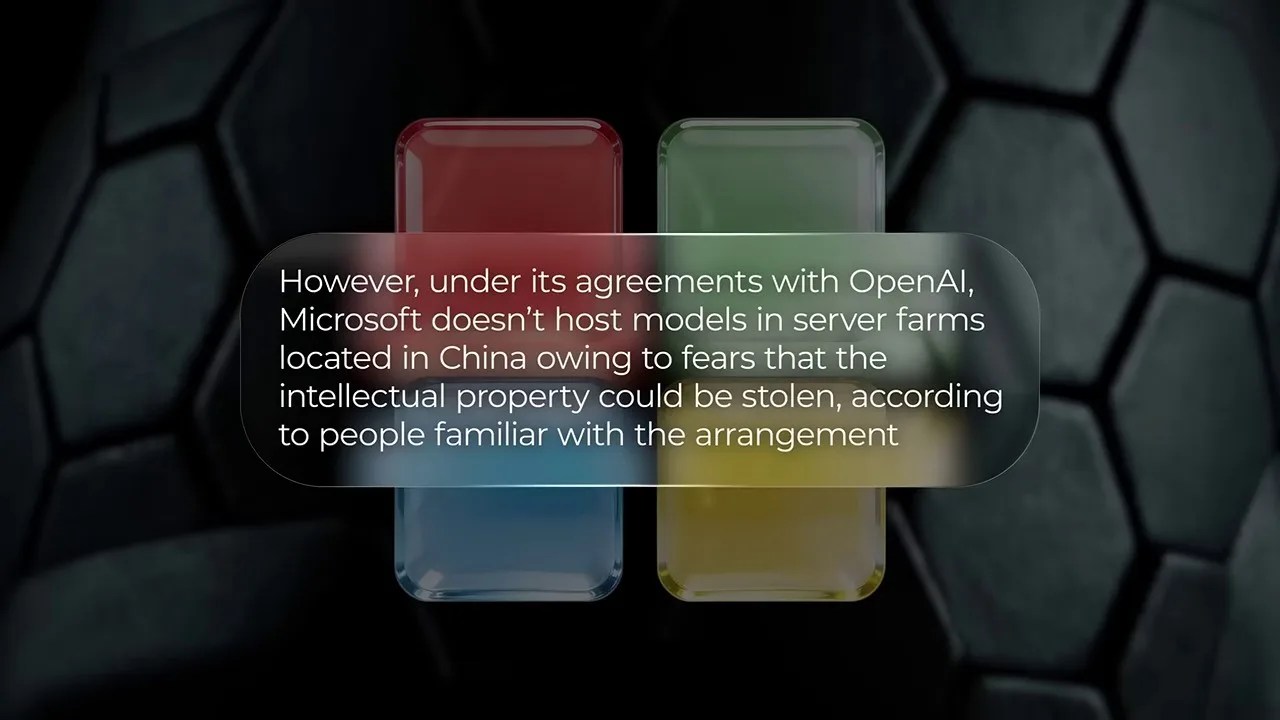
The network routing architecture used to deliver OpenAI models to Chinese enterprise clients via Singapore.
There are also ongoing concerns regarding model distillation. OpenAI has raised concerns about whether Chinese companies might use outputs from its models to train and improve their own competing AI systems. While Microsoft uses automated monitoring to prevent misuse, enforcement remains complex, as the line between normal enterprise use and model training can be difficult to define. This complex dynamic highlights why Microsoft is positioning itself as a bridge between Western cloud infrastructure and global model providers.
5. Web IQ: Building the Sensory Organs for AI Agents
An agent is only as good as the information it can access. To support these autonomous workflows, Microsoft introduced Web IQ, a grounding system built specifically for AI agents and powered by Bing.
Traditional search engines are designed for human users. They return a mix of links, snippets, images, and advertisements for a person to review. AI agents search differently: they run multiple queries simultaneously, retrieve raw text passages, compare sources, and follow up on new leads. They require structured, low-latency data that does not consume unnecessary token window space.
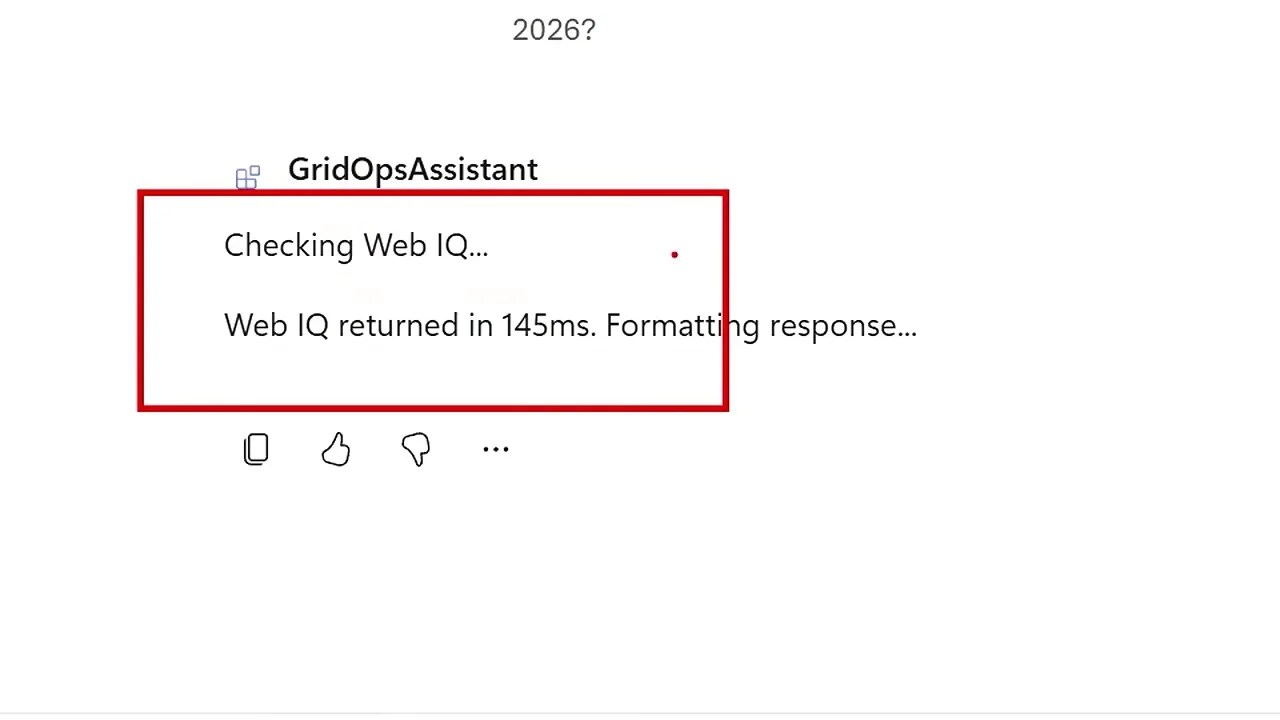
Web IQ’s architecture, designed to provide structured, low-latency web grounding for autonomous agents.
Web IQ rearchitects Bing’s indexing and ranking systems for machine consumption. Instead of standard search results, it provides clean, structured web data optimized for LLM processing. Microsoft claims Web IQ is up to 2.5 times faster than alternative search APIs, which is a key metric for agentic workflows that require frequent search queries.
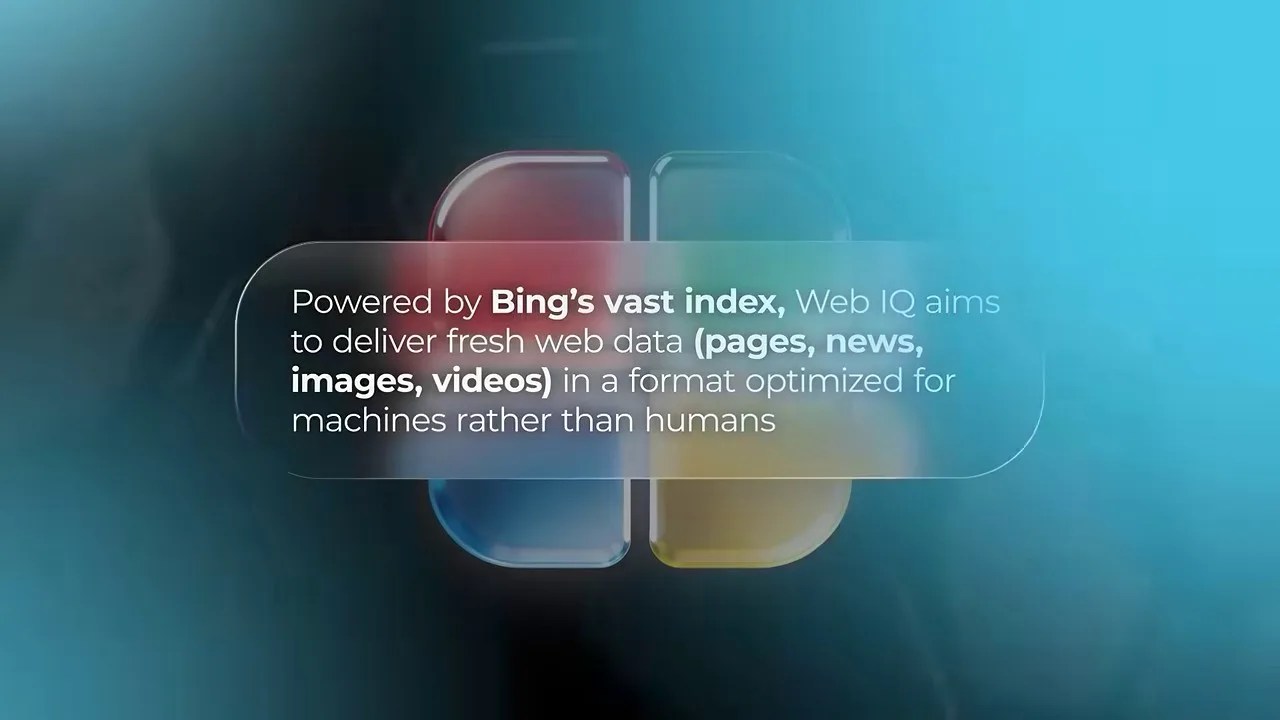
Benchmarking data showing Web IQ’s latency advantage over alternative search APIs.
While the search API market is highly competitive—with alternatives like Perplexity, Google, Brave Search, and Exa—Web IQ gives Microsoft tighter integration within its own ecosystem. It allows Microsoft to control the entire agent stack: the cloud hosting, the security layers, the models, the grounding data, and the billing systems.

The complete Microsoft Enterprise AI Agent Platform, combining models, security, grounding, and orchestration.
6. Strategic Summary and Key Takeaways
The collaboration between Microsoft and DeepSeek, alongside the launch of Copilot Co-work and Web IQ, shows that the enterprise AI market is entering a more mature, practical phase. The focus is shifting from basic model capabilities to operational efficiency, cost management, and system integration.
To summarize these developments, the table below compares the key components of Microsoft’s evolving enterprise AI strategy:
| Component | Key Features | Primary Focus |
|---|---|---|
| Copilot Co-work | Multi-step execution, tool integration, background processing. | Autonomous agentic workflows. |
| DeepSeek V4 Integration | Azure-hosted, fully compliant, cost-optimized. | Affordable, high-volume reasoning tasks. |
| Web IQ | Structured data outputs, optimized for machine reading, low latency. | Real-time grounding for AI agents. |
| Usage-Based Billing | Pay-as-you-go credits based on compute, runtime, and tools. | Sustainable economics for agentic AI. |
Ultimately, Microsoft is positioning itself as the central platform for enterprise AI, regardless of where the underlying models are developed. By hosting models like DeepSeek V4 on Azure and managing compliance, Microsoft allows enterprises to leverage global AI innovations within a secure, managed environment.
Frequently Asked Questions
Q: Will my company’s data be sent to China if we use DeepSeek on Azure?
A: No. Microsoft has stated that DeepSeek models will be fully hosted on Azure’s infrastructure. Your data remains within Microsoft’s secure compliance boundary and is subject to standard Azure data residency and security controls.
Q: Why is Microsoft moving away from flat-rate pricing for Copilot Co-work?
A: Agentic tasks require multiple iterative model calls, data retrieval steps, and tool executions. This high resource consumption makes flat-rate pricing unsustainable for high-volume enterprise use, prompting the shift to a usage-based credit model.
Q: What makes Web IQ different from a standard search engine?
A: Standard search engines are designed to return user-friendly web pages and ads. Web IQ is optimized for AI agents, providing clean, structured data with lower latency and minimal token overhead, allowing agents to verify information efficiently.