Alright, tech enthusiasts, buckle up! Just when you thought the AI landscape couldn’t get any wilder, a new contender has stormed the arena, and trust me, it’s not just participating – it’s dominating. My favorite lab, ZAI, has just unleashed GLM 5.2, and this isn’t just another open-source model. This, my friends, is a game-changer that has managed to create an “insane gap” in performance, even giving the best of GPT and Gemini a run for their money across multiple benchmarks.
As a long-time observer and hands-on tester in the AI space, I’ve seen countless models come and go, each promising the moon. But GLM 5.2 feels different. It’s not just about raw power; it’s about the sheer capability, the minimal handholding it demands, and the astonishingly low error rate for such complex tasks. In this deep dive, we’re going to pull back the curtain on what makes this GLM 5.2 open-source AI model tick, its mind-boggling feats, and how you can start wielding its power today.
Quick Takeaways: Why GLM 5.2 Demands Your Attention
Before we dive into the nitty-gritty, here’s a snapshot of why GLM 5.2 is making waves:
The New King on the Block: Unveiling GLM 5.2
Let’s not mince words: ZAI’s GLM 5.2 has arrived, and it’s not just making an entrance; it’s kicking down the door. The video’s author, AI Search, immediately highlights the “insane gap” this model has created in the open-source landscape. For an open-source model to not just compete, but beat titans like GPT and Gemini across multiple benchmarks? That’s not just impressive; it’s a testament to the rapid advancements happening outside the closed-source behemoths. This isn’t about simple tasks like drafting emails or summarizing documents – those are child’s play for any modern LLM. We’re talking about complex, multi-step, multi-tool integrations that traditionally required significant human oversight.
Beyond Simple Chat: Unleashing GLM 5.2’s True Power with Agentic Frameworks
While you can try GLM 5.2 for free via ZAI’s online chat interface (chat.z.ai), the video makes a crucial point: using it there is akin to driving a Ferrari in a school zone. You’re barely scratching the surface of its capabilities. To truly unleash the beast, you need an agentic framework. Think of these as the intelligent operating systems that allow an AI model to use tools, plan, and execute complex workflows.
The video recommends frameworks like OpenClaw, Hermes, or even Claude Code. ZAI itself offers its own agentic framework, Zcode, which you can download for free for Mac, Windows, and Linux. My initial impression of Zcode is that it’s quite reminiscent of Codeex, offering a structured environment for projects and multiple file management. This is where the magic truly begins, allowing GLM 5.2 to move beyond conversational AI and into the realm of autonomous task execution.
First Gauntlet: Building a Digital Earth Twin – A 3D Marvel
To kick things off, the presenter threw a seriously tough challenge at GLM 5.2: build a fully interactive 3D digital twin of Earth. This wasn’t just a static model; it demanded a seamless zoom from outer space to city streets, country highlights with pop-up stats (area, population, GDP), realistic planet visuals with toggles for cloud cover, flight traffic, day/night, and night mode for city lights – all optimized for a regular web browser. This is a tall order for any developer, let alone an AI.
I watched as GLM 5.2, set to “max thinking mode,” began its work. The initial prototype wasn’t perfect; cloud cover and country borders were buggy. But here’s where the agentic framework shines: a few follow-up prompts, and the model went back to work, iterating and refining. Another 3 minutes and 47 seconds, and the issues were largely resolved. Even the “ugly” flight traffic was transformed into beautiful animated path streaks after another 3-minute prompt.

Setting GLM 5.2 to “max thinking mode” – a crucial step for tackling complex challenges.
The final result was genuinely impressive. The satellite imagery was crisp, country borders worked perfectly, and hovering over a country brought up accurate stats. The flight traffic looked fantastic, and the day/night terminator was spot on. And the night city lights? Absolutely mesmerizing.

The interactive Earth twin, showcasing country borders, data pop-ups, and flight traffic animations.
Perhaps the most mind-blowing feature was the seamless zoom. From orbit, I could command it to fly to New York or Tokyo, and it would zoom all the way down to a street-level view, even showing people and cars. While the cloud cover toggle was still a bit janky (a minor hiccup), the overall execution was phenomenal for an open-source model. It took about 15 minutes of iterative prompting, which, while not as instantaneous as the best proprietary models like Claude 5 (which allegedly did it in one prompt, though it’s not publicly available), is still incredibly fast and efficient for such a complex build.
Seamlessly zooming into city streets, showcasing GLM 5.2’s impressive rendering capabilities.
Next Level Creativity: Crafting a Promo Video with Multiple Tools
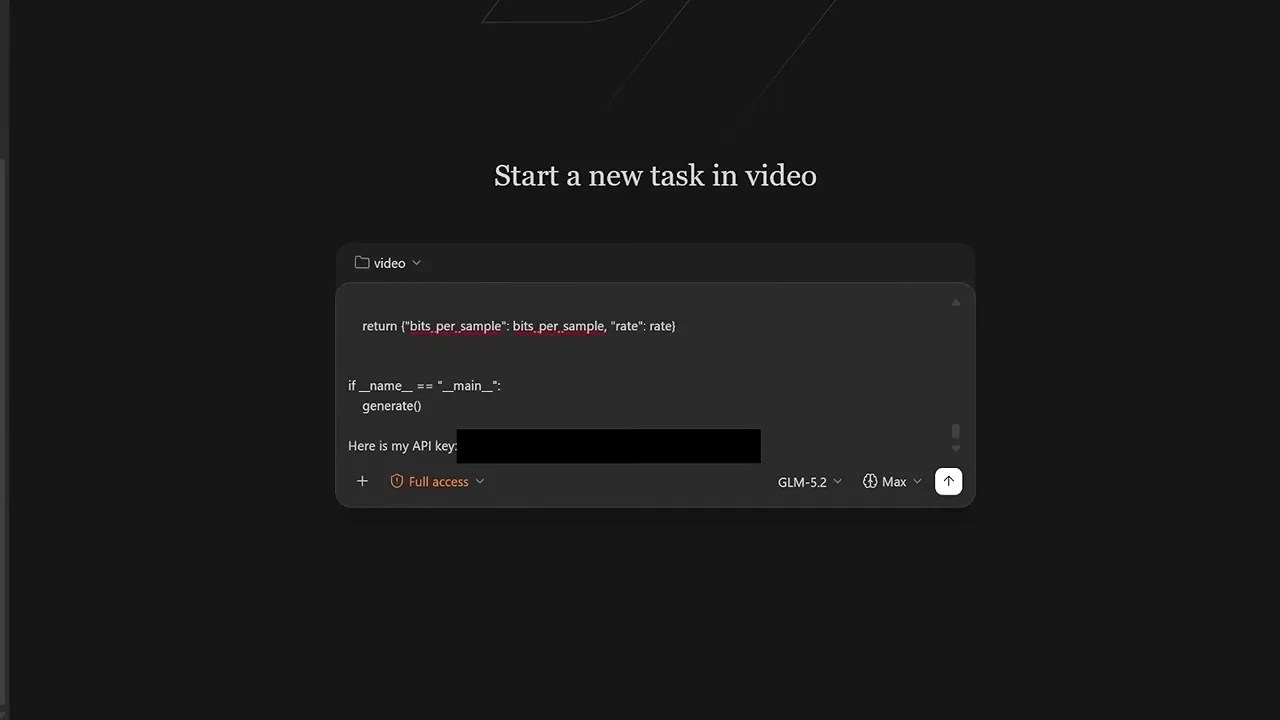
The next test pushed GLM 5.2 into the creative realm, demanding it to produce a promo video. This wasn’t just about generating text; it required working with a ton of tools simultaneously. The prompt involved creating a minute-long, 16:9 promo video for a product (the Wise landing page was used as reference), including a voiceover using Gemini TTS, animations created with the open-source Hyperframes framework (linked via its GitHub repo), and background music with adjusted volume.
What truly impressed me here was GLM 5.2’s ability to “figure things out” on its own. It had to go to the Hyperframes GitHub page, understand its installation, and integrate it into the workflow – all without explicit instructions. The presenter simply provided the product page URL, the Hyperframes GitHub link, an example of Gemini TTS code (copied from AI Studio), a background audio track, and an API key. That’s it. No further prompting was needed after the initial setup.

The Wise landing page, serving as the creative brief for GLM 5.2’s promo video generation.
The resulting video was surprisingly polished. It featured dynamic animations, a clear voiceover (with the background music appropriately lowered), and effectively conveyed the product’s message. This demonstrated GLM 5.2’s multimodal capabilities and its proficiency in orchestrating multiple external tools. The task consumed approximately 100,000 tokens and took about 20 minutes to complete – a solid performance for such a complex, end-to-end creative project with “minimal handholding and very few errors,” as the presenter noted.
GLM 5.2 autonomously navigated the Hyperframes GitHub repo to understand and integrate the animation tool.
The final promo video, a testament to GLM 5.2’s ability to combine voiceover, animation, and background audio.
Sculpting Pixels: GLM 5.2’s Prowess in 3D Model Generation
Moving beyond video, the next frontier was 3D model generation, a notoriously difficult task for AI. The tests here were anything but simple.
The V8 Engine: An Exploded View Masterpiece
The first challenge: create a beautiful 3D animated model of a V8 engine. The prompt specifically asked for a slider to smoothly transition from a fully assembled engine to an exploded view, showcasing inner workings like pistons, spark plugs, valves, connecting rods, and the central crankshaft in motion – all within a single HTML file. This isn’t just about generating a static model; it’s about interactive animation and detailed component representation.
GLM 5.2 took 13 minutes, and in just one prompt, delivered an impressive result. The V8 engine model was visually appealing, and the explosion mechanism worked flawlessly, with smooth animations. You could even adjust the engine speed, which was a delightful detail. This lightweight task only used about 28,000 tokens with an average cash hit rate of 96%, indicating its efficiency for focused 3D generation.
The Mechanical Watch: A Test of Precision
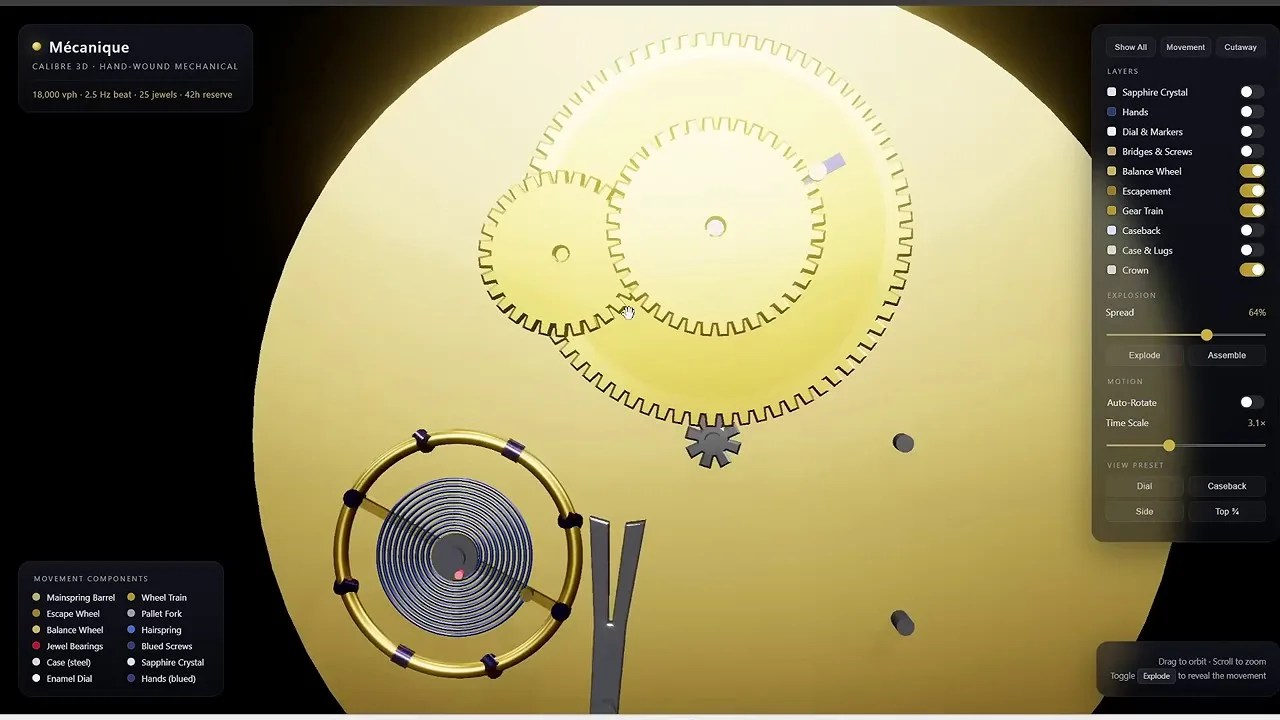
If the V8 engine was impressive, the mechanical watch challenge was outright brutal. This was an example that even Claude 5 reportedly struggled with. The prompt requested a beautiful 3D animated model of a traditional mechanical watch, including inner workings like dials, hands, hour markers, and showing the mechanism in motion with turning gears and an oscillating balance wheel. This requires extreme precision and understanding of intricate mechanical movements.
As expected, this was a much trickier task. GLM 5.2 did hit an error during its initial coding phase, but the beauty of agentic frameworks is the ability to course-correct. The error was simply pasted back into the system, and GLM 5.2 fixed it. Further prompting to “explode it further and allow me to turn on or off layers” and “make it even more visually impressive” added to the complexity.
The animated mechanical watch model, revealing the complex gears and inner workings generated by GLM 5.2.
The result was undeniably impressive, especially considering the difficulty. The watch exploded into individual components, the clock hands moved correctly, and the time scale was accurate. The ability to toggle layers like the sapphire crystal, hands, dials, and even the bulky metal case was a fantastic touch, allowing a clear view of the inner workings.
Peeling back the layers: the mechanical watch with outer casing removed, showcasing the individual components.
However, this is where I appreciate the critical eye of the presenter. Upon zooming into the gears, some errors became apparent: not all dials were moving, and their alignment wasn’t perfect. This highlights the current limits, even for a model as capable as GLM 5.2. But let’s be fair – this is an “incredibly challenging prompt” that even Claude 5 couldn’t fully nail. For an open-source model, this generation was still a massive step forward. This task used around 80,000 tokens with a 94% cash hit rate, showcasing its detailed processing for complex designs.
🔌 Seamless Integration: Wielding GLM 5.2 with Other Agentic Frameworks
One of the most appealing aspects of the GLM 5.2 open-source AI model is its flexibility. You’re not locked into ZAI’s Zcode. The video demonstrates how easily you can integrate GLM 5.2 into other popular agentic harnesses, specifically showcasing Claude Code. This is a huge win for developers and users who might already be deeply invested in a particular ecosystem.
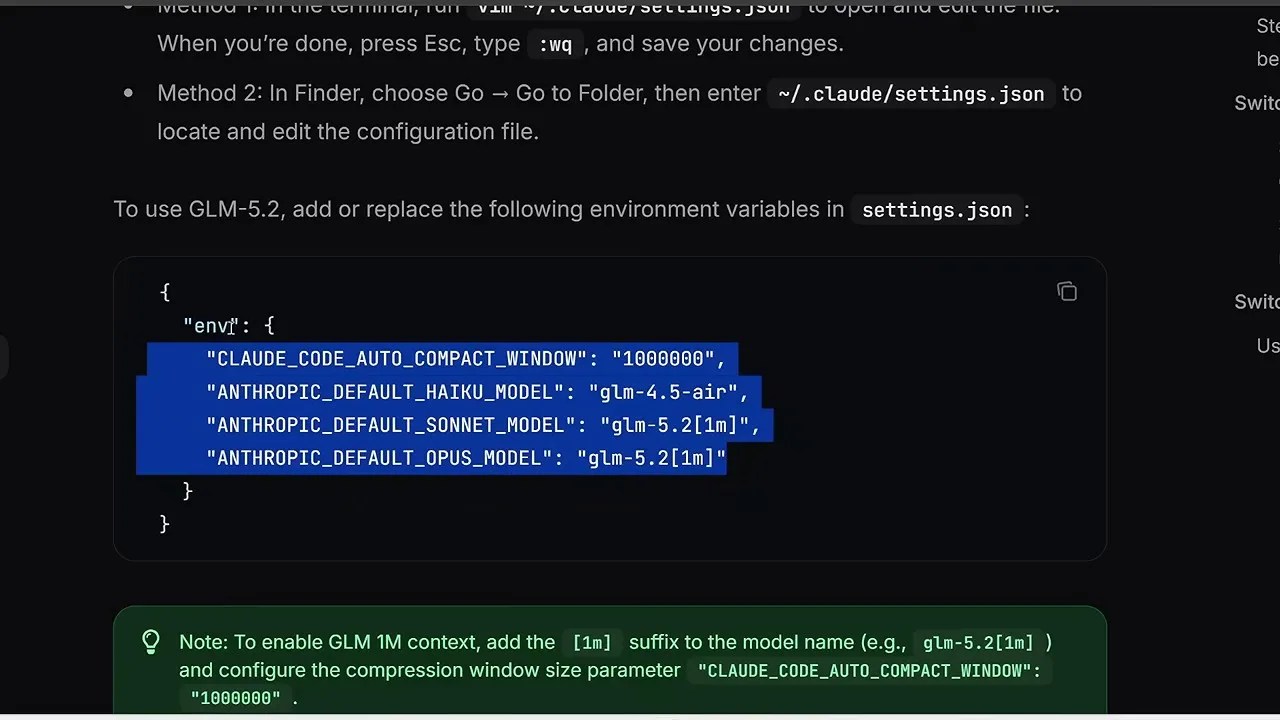
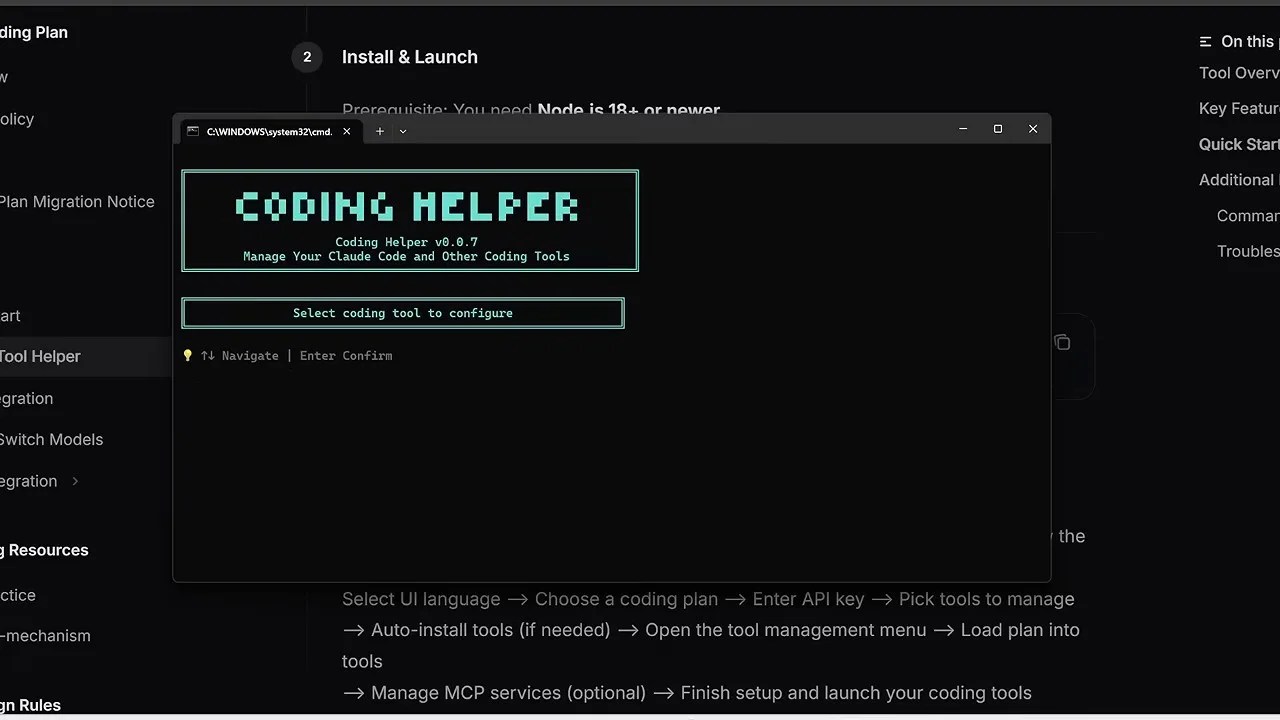
The process outlined is straightforward: sign up for a plan, get your API key, install a coding helper, and then configure the agentic platform (in this case, Claude Code) to use GLM 5.2 instead of its default models (Haiku, Sonnet, or Opus). This involves editing the claude_settings.json file to specify the GLM model. Once configured, a quick check with /model command confirms that GLM models have successfully replaced the default Claude models. This level of interoperability is exactly what the open-source community thrives on.
The command-line setup for integrating GLM 5.2 into the Claude Code framework.

Editing the claude_settings.json file to direct Claude Code to use GLM 5.2.
Ray Tracing Simulation: Physics and Lighting from Scratch
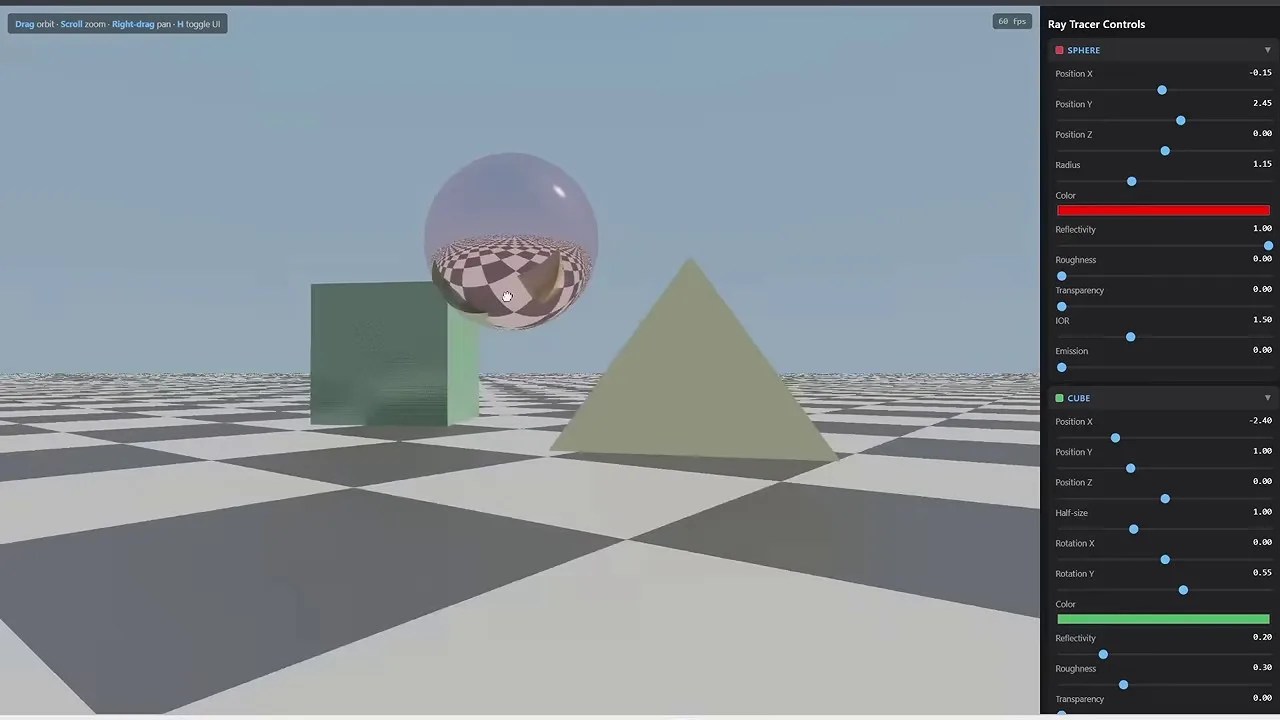
To test GLM 5.2 within Claude Code, a particularly challenging prompt was issued: develop a ray tracing simulation featuring one sphere, one cube, and one pyramid, set against a blue sky with a checkered ground. Crucially, it had to include adjustable parameters for position, reflectivity, roughness, transparency, and other material properties for each shape. The absolute kicker? Do not use 3JS or other external libraries; it needed to code this up completely from scratch. This is a profound test of its understanding of physics, lighting, and pure coding ability.
GLM 5.2 proceeded to code this up and even spun it up in a local server, taking a screenshot to verify functionality (since it lacks native vision capabilities, it uses a tool for verification). This entire process took around 20 minutes. The result was genuinely stunning: a very beautiful ray tracing simulation, built entirely from scratch, without relying on any external libraries. The ability to adjust parameters like sphere position and
reflectivity and roughness worked flawlessly. It really makes you appreciate the underlying physics knowledge this model possesses to render such realistic interactions from scratch.
The ray tracing simulation in action, with adjustable transparency and reflectivity showcasing GLM 5.2’s grasp of physics and rendering.
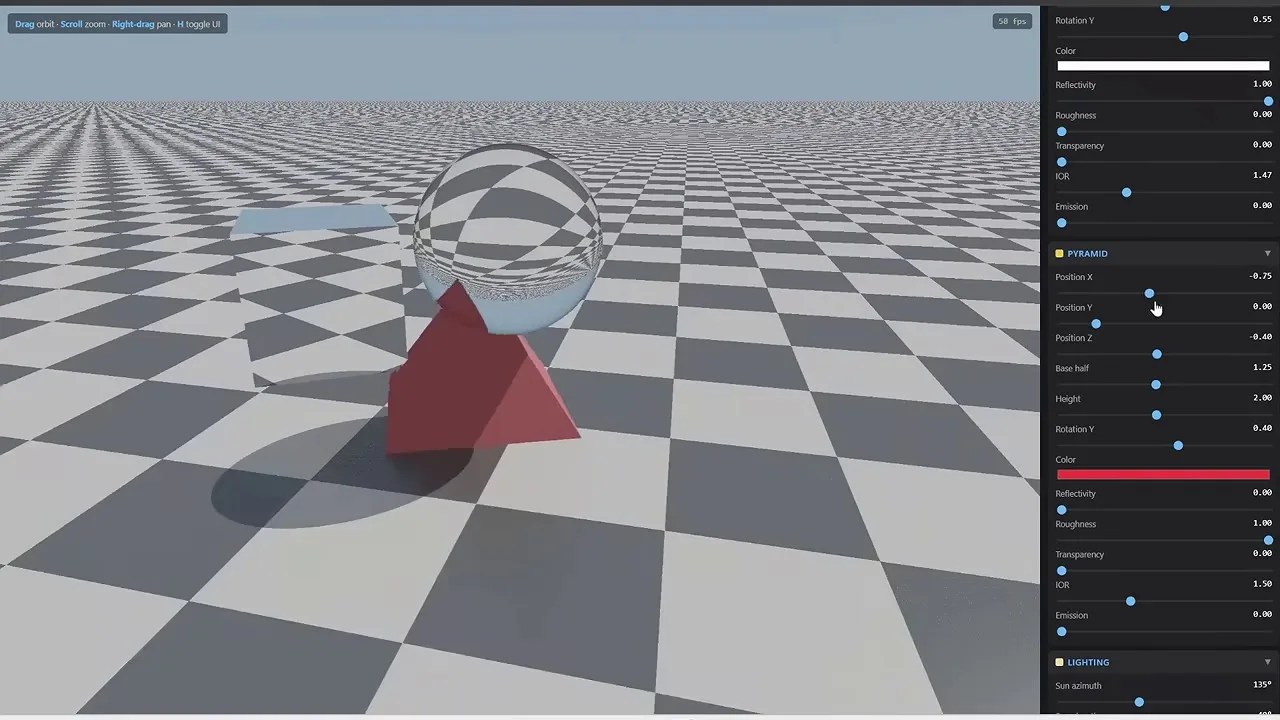
We could tweak everything: make the sphere super reflective or completely transparent, adjust roughness, change colors, and even play with emission to make objects act as light sources. The cube and pyramid also responded perfectly to position, size, and material property adjustments. The most impressive part was how accurately it rendered the physical properties of each shape: a transparent sphere showed no reflections, an opaque pyramid blocked light, and a reflective cube accurately mirrored the other objects. This truly demonstrates a deep understanding of lighting and material science.
The highly reflective cube in the ray tracing simulation, demonstrating accurate reflections of surrounding objects.
Beyond the objects themselves, GLM 5.2 also allowed for comprehensive environment control: adjusting sun settings (elevation, intensity), light color, sky color, and even the checkered ground’s color, scale, and reflectivity. Camera distance and height were also adjustable. All of this, from a single, zero-shot prompt, coded entirely from scratch without external libraries. The presenter even preferred this output over what they got from Claude 5, citing GLM 5.2’s out-of-the-box functionality and minimal errors.
Can It Win a Grammy? GLM 5.2’s Foray into Music Composition
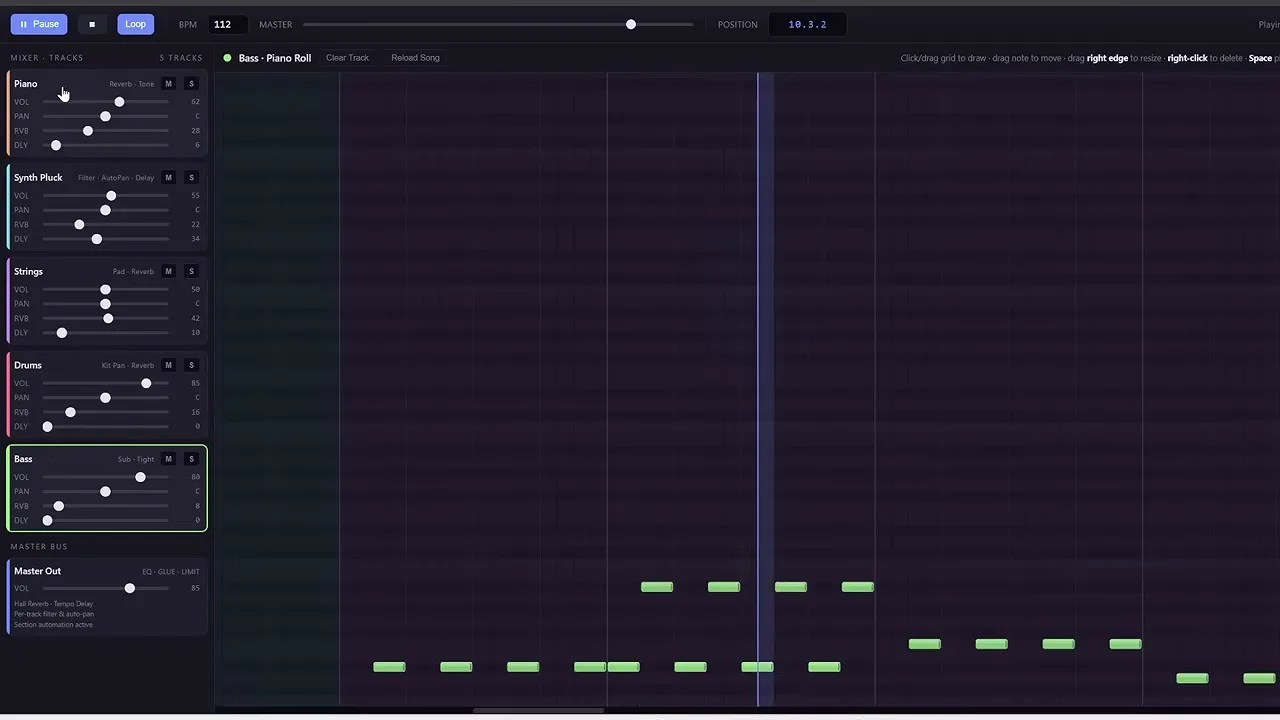
Next up, a foray into the subjective world of music composition. First, GLM 5.2 was tasked with creating a music interface (a DAW, or Digital Audio Workstation) with instruments like piano, synth, pluck, strings, drums, and bass, each having a piano roll, pan, volume, and standard settings, plus play/pause controls. This was a relatively straightforward task, which GLM 5.2 handled effortlessly in one prompt. However, the real test was composing music.
The ambitious prompt: “by default show a powerful expressive 32 bar song rich in complexity that would win a Grammy. Include effects, automation, proper panning for each track. Make sure everything is mastered well.” This is a huge ask, even for human composers!
After 8 minutes and 23 seconds, GLM 5.2 composed a song with a full arc (intro, verse, pre-chorus, chorus). There were some minor alignment issues on the piano roll, easily fixed with a follow-up prompt in 34 seconds. The resulting music, while “not bad,” certainly wouldn’t win a Grammy. It incorporated some cool effects like reverb and delay but lacked true complexity, proper auto-panning, and automation across tracks. It was “quite basic” but still impressive for an AI. Interestingly, the sound quality was very similar to what the presenter obtained from Claude 5, suggesting a current ceiling for AI in complex musical creativity.
The music composition interface created by GLM 5.2, displaying individual instrument tracks and a piano roll.
Manim Magic: Drawing Butterflies with Math and Motion
The final demo was a fantastic test of GLM 5.2’s ability to handle complex mathematical animations using the Manim package. The prompt was to “create a beautiful Manim animation where four circles draw a butterfly, use rotating circles connected by vector arms with the end points tracing the butterfly’s wings, body, and antenna, etc., etc. Save the output as MP4.” The kicker? Manim wasn’t even installed on the system!
This meant GLM 5.2 had to first set up the environment, download Manim, NumPy, SciPy, and other required packages, then proceed to create the animation. It even used its built-in image analysis tool (presumably via an external vision language model, as GLM 5.2 lacks native vision) to verify that the frames actually depicted a butterfly. It self-verified and caught bugs along the way – a testament to its agentic capabilities.
Initial results weren’t perfect; the butterfly lacked detail. A follow-up prompt requested “more detailed with sharper top wings” and brighter circle outlines. After another 22 minutes (a portion of which was rendering time), the updated animation was delivered. It used progressively more circles to create an increasingly intricate butterfly shape, and the animation looked correct. Overall, a very impressive feat of environmental setup, mathematical coding, and animation rendering, all from a textual prompt.
A beautiful Manim animation of a butterfly, showcasing GLM 5.2’s ability to handle complex mathematical visualizations and self-install dependencies.
Vision, Research, and the Verdict on GLM 5.2’s Raw Power
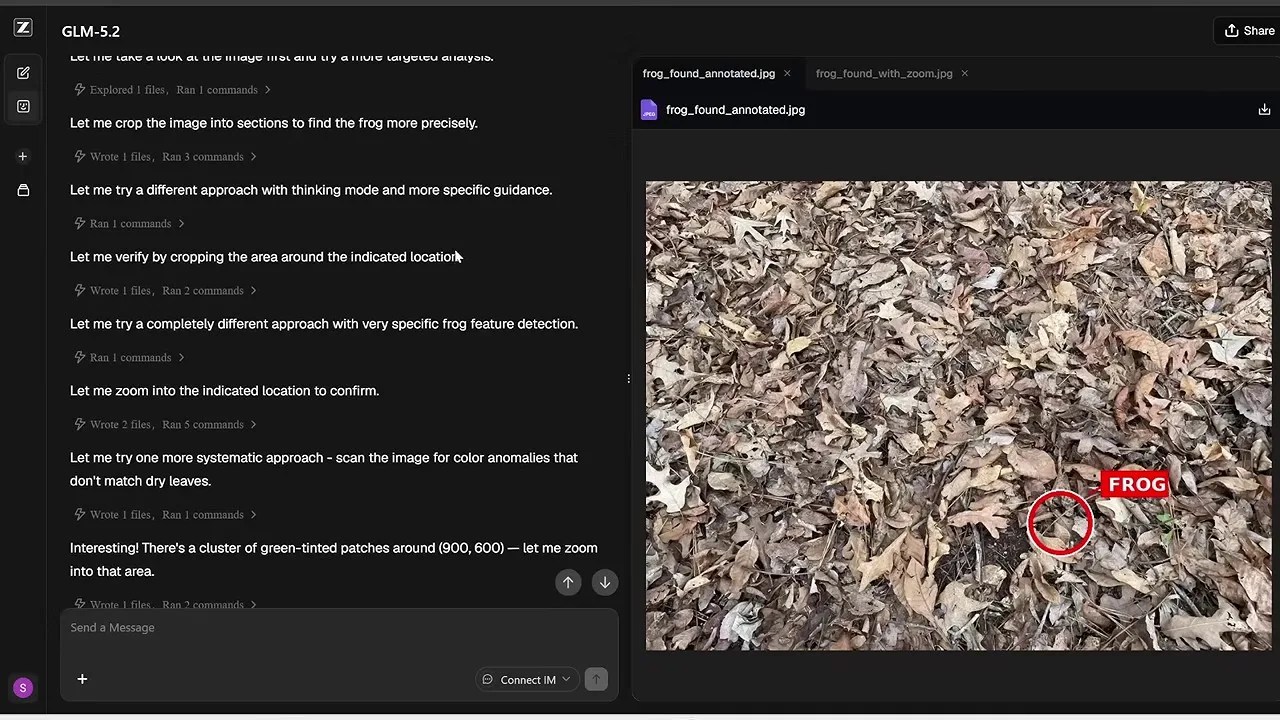
Back to the online chat interface for some “regular” tests. It’s crucial to remember that GLM 5.2, unlike multimodal competitors like Miniax M3, does not have native vision capabilities. It relies on external tools to analyze images. This was demonstrated with a “find the frog” image test – a task it unfortunately failed, which was expected given its lack of native vision. This highlights a current limitation but also the potential for integration with specialized vision models.
However, its “deep research capabilities” are where it truly shines. Given a prompt to describe the molecular drivers of a type of leukemia, including relevant tables and visualizations, with “deep think” and “advanced search” enabled, GLM 5.2 delivered an incredibly thorough and concise report. It generated well-structured sections, clear tables, flowcharts, and even a timeline of targeted therapies with detailed drug features and toxicities. It also created a web chart for resistance mechanisms and comparative resistance profiles, plus survival outcome tables. The presenter rightly noted, “The thing I like about GLM is it’s no BS. It’s very short and to the point.” This model is a powerhouse for in-depth, structured research, coding up complex data visualizations on the fly.
The Numbers Don’t Lie: GLM 5.2’s Insane Specs and Benchmark Dominance
Now for the juicy bits: the technical specifications and benchmarks. The new GLM 5.2 open-source AI model boasts a staggering 1 million token context window, which translates to over 700,000 words or a small to medium-sized codebase. This means it can digest and process an enormous amount of information in a single prompt – a game-changer for complex projects.
But the real shocker comes from the benchmarks. Across long autonomous coding task benchmarks like Frontier Suite and Post Train Bench, GLM 5.2 doesn’t just compete; it beats OpenAI’s GPT-5.5 (their best model) and Google’s Gemini 3.1 Pro by a huge margin! It’s even “edging very close to Claude’s best model Opus 4.8.” For an open-source model to achieve this against closed-source giants is nothing short of revolutionary.
Similar dominance is observed in SWEBench Pro and Terminal Bench. The new Deep Suite benchmark, which claims to be a more accurate measure of software engineering capabilities, sees GLM 5.2 score an incredibly high 46.2, making it “by far the highest scoring open model out there.” Even “Humanity’s Last Exam,” which tests obscure scientific knowledge, shows GLM 5.2 to be more knowledgeable than the best GPT and Gemini. This model is truly “crazy” in its capabilities.
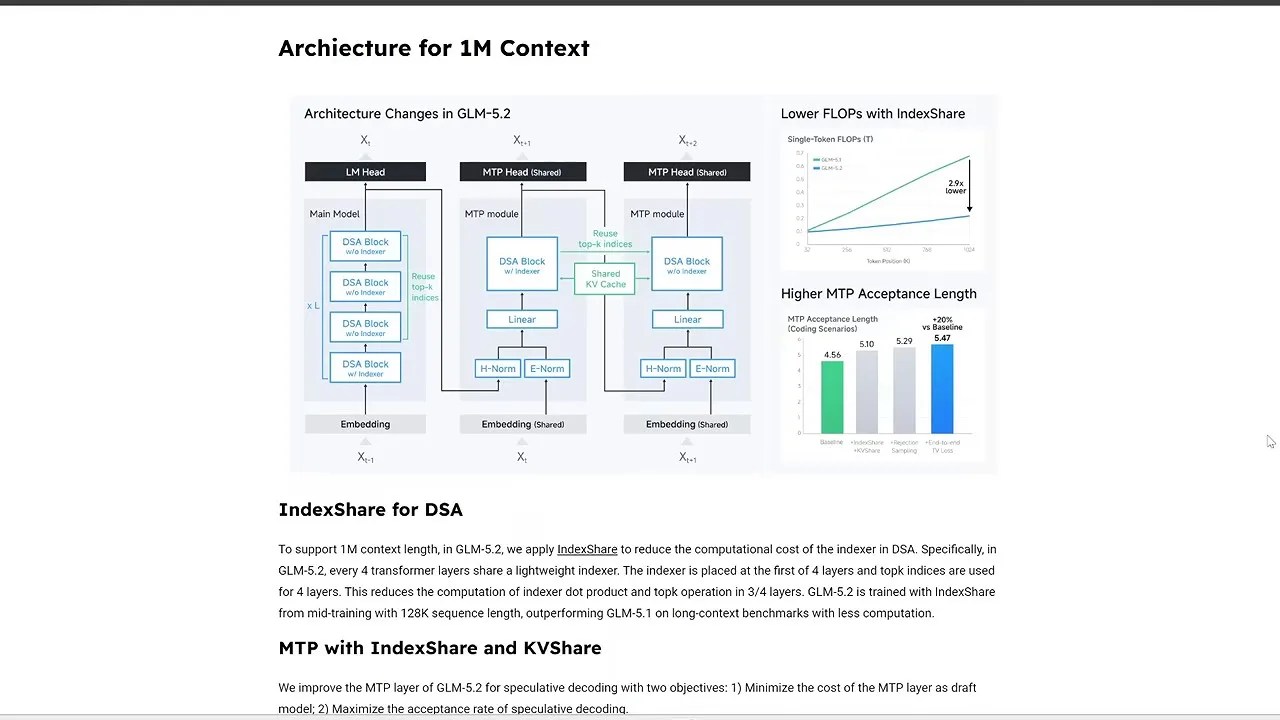
How did they do it? ZAI implemented “insane architecture tweaks.” Key among these is “index share,” which reuses the same indexer across sparse attention layers, reducing compute by 2.9 times. An “improved MTP layer” also boosts decoding length by up to 20%, enhancing generation efficiency. These are not just incremental improvements; they are fundamental architectural innovations.
Independent leaderboards like Frontier and Design Arena are also starting to reflect GLM 5.2’s prowess. It’s often at Opus 4.8 level or even surpasses it in areas like front-end coding and design. In some cases, it even beats the (currently banned) Claude 5. The Runescape Bench, a fun metric for AI’s ability to play games, also shows GLM 5.2 as “by far the best open model out there.”
The True Value of Open Source: Sovereignty, Privacy, and Community
Despite its incredible performance, the GLM 5.2 model is relatively small compared to trillion-parameter giants like Deepseek V4. At 753 billion parameters and 1.51 terabytes, it’s still “pretty damn huge” and not meant for consumer devices (unless you have a “freaking data center in your basement”). However, its value lies in its open-source nature.
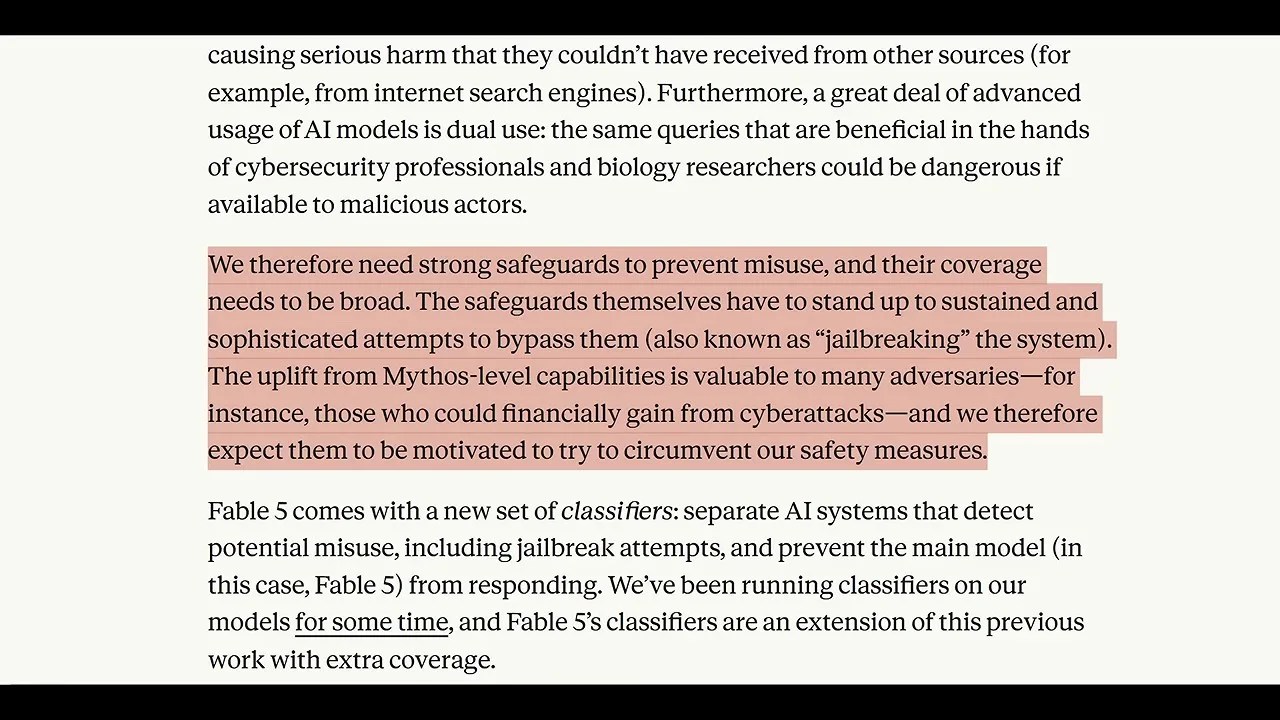
ZAI has released GLM 5.2 with fully open weights under the permissive MIT license. This is critical because, as the presenter rightly points out, closed labs like Anthropic often “gatekeep their models” or even intentionally make them “dumber for certain use cases.” Governments can also outright ban access to models, as seen with the latest Claude model. Open models like GLM, DeepSeek, or Quinn eliminate this dependency, bringing “the power of intelligence back to the people.”
The benefits are profound:
- Ultimate Sovereignty: You can potentially host the model yourself, giving you full control and independence from external labs.
- Enhanced Privacy: With local hosting (“on-prem”), sensitive or confidential data (legal, medical, financial records) stays within your control, unlike sending it to closed-source servers.
- Community-Driven Innovation: Open weights mean the community can fine-tune, improve, and build on top of the model, fostering rapid, collaborative advancement.
This is why the open-source movement is so vital and attractive compared to the opaque world of closed AI labs. It’s about empowering users and developers, ensuring innovation is driven by collective effort rather than corporate secrecy.
The Unstoppable Force: GLM 5.2’s Impact on the AI Landscape
ZAI has once again proven why they’re a favorite among AI enthusiasts. With GLM 5.2, they’ve not only delivered an incredibly performant model that, in some benchmarks, surpasses even the best from OpenAI and Google, but they’ve done so with a fully open-source approach. This isn’t just a technical achievement; it’s a philosophical statement. It underscores the immense potential of collaborative, transparent AI development and challenges the notion that cutting-edge AI must remain locked behind corporate walls.
While GLM 5.2 might not yet compose Grammy-winning music or possess native vision, its prowess in complex coding, 3D generation, deep research, and multimodal integration, coupled with its architectural innovations and open-source license, makes it an undeniable force. It’s a clear signal that the open-source community is not just catching up – it’s setting new standards and pushing the boundaries of what’s possible in AI. The future of AI is looking increasingly open, and that, my friends, is something truly exciting.
FAQs About GLM 5.2
Q1: What is GLM 5.2 and why is it considered a breakthrough?
GLM 5.2 is ZAI’s latest open-source AI model, making waves for its unprecedented performance. It’s considered a breakthrough because it not only leads the open-source pack but also significantly outperforms leading proprietary models like OpenAI’s GPT-5.5 and Google’s Gemini 3.1 Pro on various complex benchmarks, especially in autonomous coding tasks. This challenges the long-held belief that only closed-source models can achieve top-tier performance.
Q2: How can I use GLM 5.2, and do I need specialized hardware?
You can try GLM 5.2 for free via ZAI’s online chat interface (chat.z.ai). For its full potential, it’s recommended to use it with agentic frameworks like ZAI’s Zcode, OpenClaw, Hermes, or even by integrating it into Claude Code. While the model itself is quite large (1.51 terabytes), making local hosting on consumer devices impractical for most, its open-source nature allows for flexible deployment options for those with access to more robust computing resources or cloud infrastructure.
Q3: What are the key advantages of GLM 5.2 being open-source?
The open-source nature of GLM 5.2, released under an MIT license, offers several crucial advantages: it provides ultimate user sovereignty by allowing self-hosting, enhancing privacy as sensitive data can remain on-premise, and fosters rapid community-driven innovation. Unlike closed-source models that can be “gatekept” or restricted, GLM 5.2 empowers developers and users with transparency, control, and the ability to collectively refine and build upon the model.