For the last couple of years, the tech world has been locked in a breathless, almost exhausting hype cycle. Every week brings a new “groundbreaking” model, a slightly higher benchmark score, or another promise of artificial general intelligence just around the corner. But if you cut through the noise, developers on the ground are asking a much simpler, more urgent question: How does this actually help me build today?
At Microsoft Build 2026, Mustafa Suleyman—co-founder of DeepMind and now CEO of Microsoft AI—took the stage to answer exactly that. He didn’t just talk about abstract safety frameworks or distant sci-fi futures. Instead, he unveiled a formidable suite of seven new Microsoft MAI models designed specifically to be fast, cost-effective, and deeply integrated into the tools developers already live in. This isn’t just another incremental update; it’s a highly calculated, full-stack offensive aimed directly at OpenAI, Anthropic, and Google.
The Trillion-Fold Leap: Why Compute Is the New Gravity
Mustafa Suleyman began his keynote with a statistic that is frankly difficult to wrap your head around. Over the last 15 years, the sheer amount of compute power used to train frontier AI models has increased by a staggering 1 trillion-fold. That is 12 orders of magnitude of raw, brute-force computational scaling.
For years, skeptics have predicted that the industry would hit a wall—that scaling laws would eventually break down. But Suleyman made it clear that Microsoft is doubling down on this trajectory. In his view, intelligence itself has become a direct function of compute. As we prepare to throw another three orders of magnitude of computational power at frontier models over the next few years, the progress curve isn’t flattening; it’s climbing.
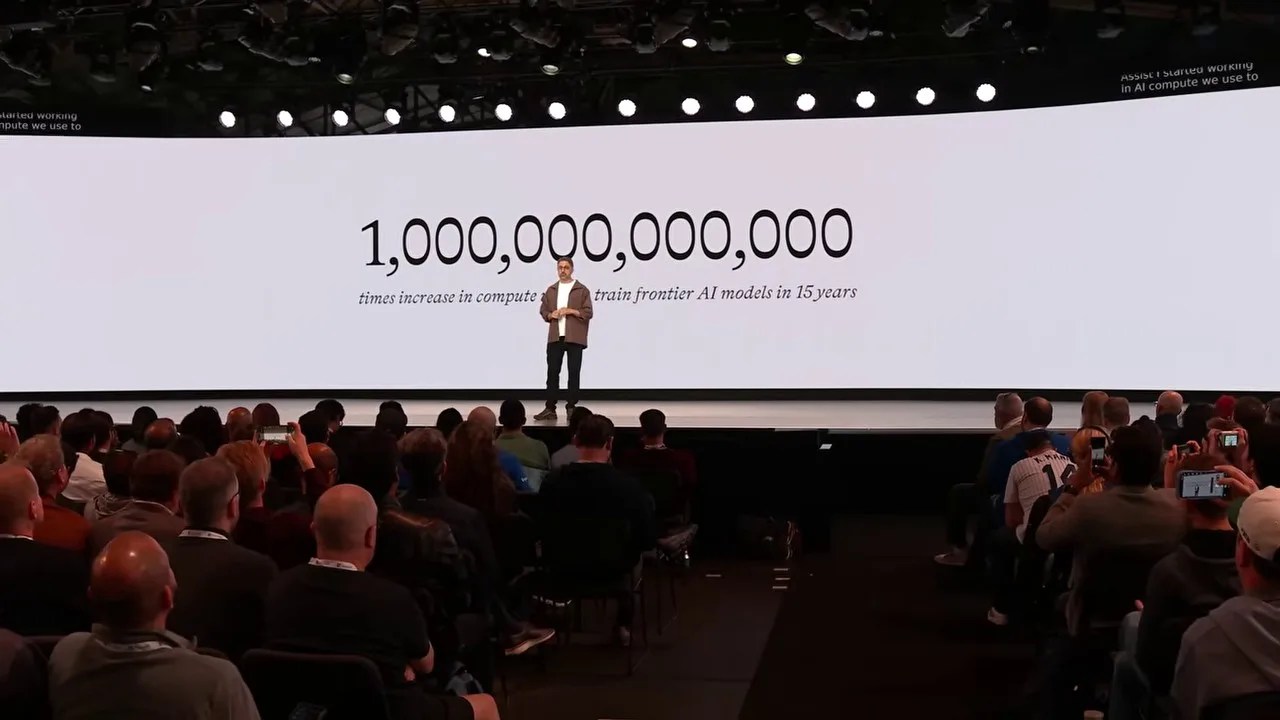
Figure 1: Mustafa Suleyman illustrating the staggering 1 trillion-fold scaling of compute power over the last 15 years.
What makes Microsoft’s approach distinct is its philosophical north star: Humanist Superintelligence. While some Silicon Valley players seem eager to build AI that replaces human workers entirely, Suleyman emphasized that these new Microsoft MAI models are intentionally designed to augment, serve, and elevate human capability. It’s a subtle but crucial positioning strategy—framing Microsoft as the responsible, developer-first platform of the agentic era.
Meet the Family: An Overview of the 7 New Models
Rather than releasing a single monolithic model to rule them all, Microsoft unveiled a highly specialized family of seven distinct models. The goal here is simple: provide developers with the exact tool they need for the specific job at hand, balancing cost, latency, and capability perfectly.
Figure 2: The new lineup of 7 Microsoft MAI models, tailored for specific production workloads.
To give you a quick bird’s-eye view of how these models stack up, I’ve compiled a quick summary table of the key announcements:
| Model Name | Type | Key Metric / Advantage | Primary Target Use Case |
|---|---|---|---|
| MAI Image 2.5 / Flash | Image Generation & Editing | #2 on leaderboard; beats Nano Banana 2 | PowerPoint, OneDrive, professional design |
| MAI Transcribe 1.5 | Speech-to-Text | 5x faster than rivals; beats Gemini & OpenAI | Teams, GitHub, Contact Centers |
| MAI Voice 2 / Flash | Text-to-Speech | Fine-grained emotional control; ultra-low latency | Real-time interactive voice agents |
| MAI Thinking 1 | Reasoning (35B MoE) | 53% on SWE Bench Pro; zero distillation | Complex coding, logic, enterprise workflows |
| MAI Code 1 Flash | Coding (5B) | 51% on SWE Bench Pro; highly efficient | VS Code, GitHub Copilot CLI |
Visual and Audio Mastery: Image 2.5, Transcribe 1.5, and Voice 2
The first wave of announcements focuses heavily on multimodal capabilities. In the visual department, Microsoft introduced MAI Image 2.5 alongside its faster sibling, MAI Image 2.5 Flash. These models are built for extreme precision and consistency in image editing—historically a weak spot for many diffusion models.
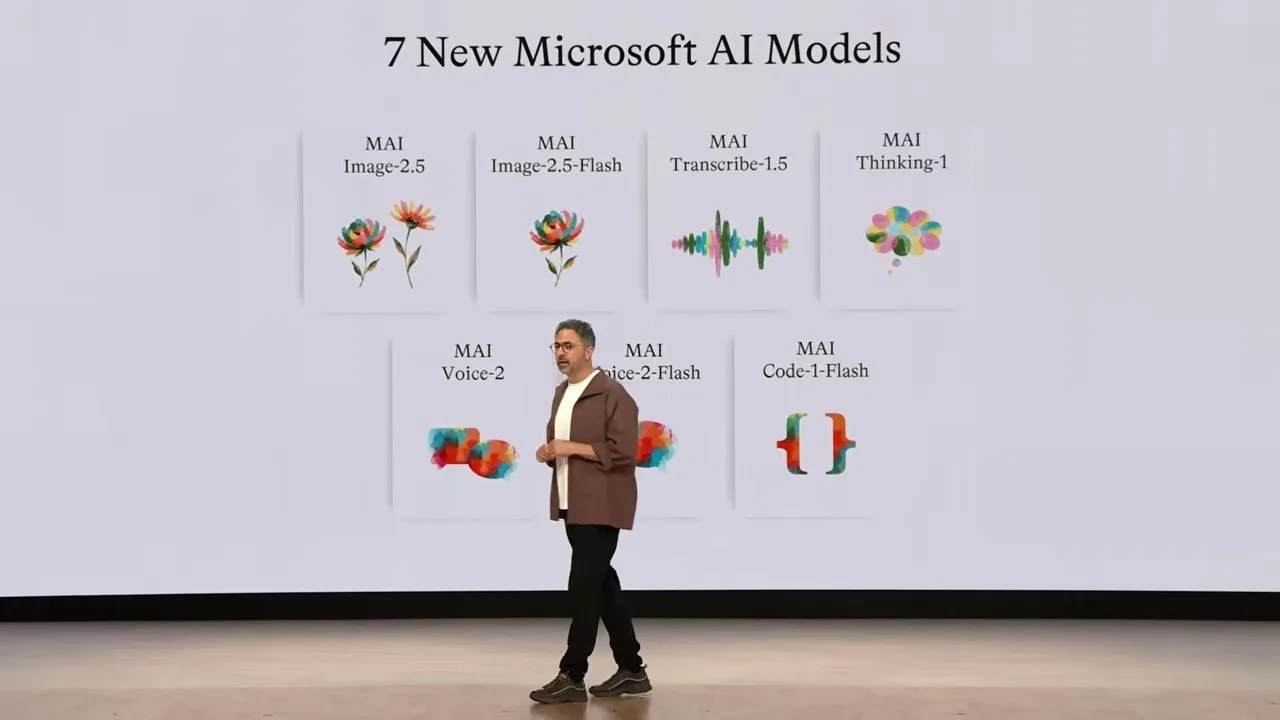
Figure 3: MAI Image 2.5 claims the #2 spot on the global leaderboard, specifically excelling at complex image editing tasks.
According to Suleyman, these models have climbed to the number two spot on the global leaderboard, even surpassing the highly-regarded “Nano Banana 2” (a quirky name on the leaderboards that developers have grown to love for image editing tasks). If you’ve ever tried to edit an AI-generated image only to have the model completely change the background style or distort the subject, you know how frustrating this can be. MAI Image 2.5 promises to fix this with professional-grade, consistent control. It’s already live in PowerPoint and rolling out to OneDrive.
But the real showstopper for enterprise developers might actually be MAI Transcribe 1.5. Audio transcription is often treated as a solved problem, but anyone running transcription at scale knows it’s a constant battle between accuracy, speed, and cost.
Figure 4: MAI Transcribe 1.5 beats out flagship models from OpenAI and Google, delivering results 5x faster.
Suleyman boldly claimed that MAI Transcribe 1.5 is the best transcription model in the world. It boasts state-of-the-art accuracy across 43 languages, outperforming the flagship models from both Gemini and OpenAI, while processing audio a whopping five times faster. For massive enterprise workloads like customer service centers or automated meeting notes in Teams, a 5x speedup translates directly to massive cost savings.
To pair with world-class transcription, Microsoft also announced MAI Voice 2 and Voice 2 Flash. This model is all about natural delivery. It features incredibly realistic prosody and fine-grained emotional control. In 2026, the tech industry is moving fast toward real-time voice agents, and Voice 2 Flash is engineered specifically for these ultra-latency-sensitive scenarios where every millisecond of delay ruins the illusion of a natural conversation.

Figure 5: MAI Voice 2 and its ultra-low latency variant, Voice 2 Flash, designed for the next generation of voice agents.
The Heavy Hitters: MAI Thinking 1 and Code 1 Flash
While voice and image models are great, the real meat of the keynote centered around reasoning and coding. This is where the battle for developer mindshare is won or lost. Microsoft’s answer is MAI Thinking 1, their first dedicated reasoning model.
Built as a 35-billion active parameter Mixture of Experts (MoE) with a massive 256k context window, MAI Thinking 1 punches far above its weight class. Side-by-side human evaluations on Surge actually preferred it over Anthropic’s Sonnet 4.6. It scored an incredible 97% on AIME 2025 and reached 53% on SWE Bench Pro—the gold standard for challenging, real-world software engineering benchmarks.
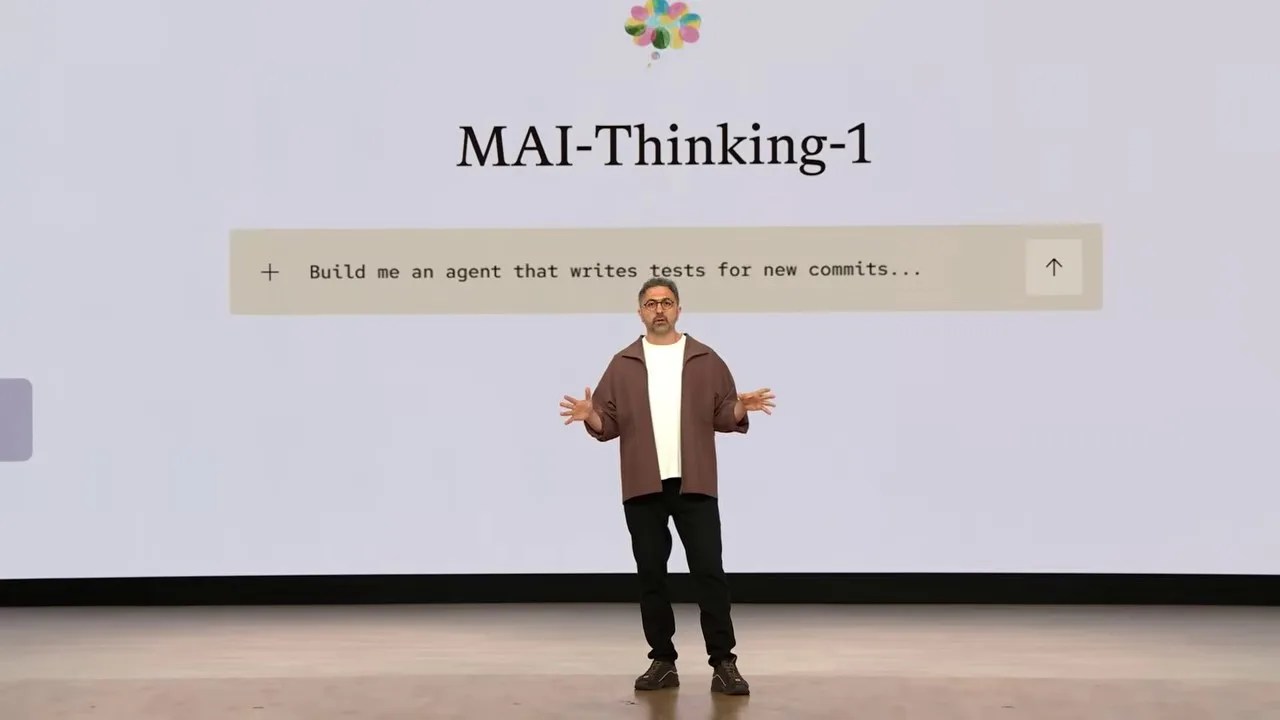
Figure 6: MAI Thinking 1 specs, highlighting its competitive performance against heavyweight models like Claude 3.5/4.0 Opus.
But the most critical detail Suleyman shared wasn’t the benchmark score; it was the model’s lineage. MAI Thinking 1 was trained with absolutely zero distillation from other frontier models, using entirely clean, commercially licensed enterprise data. In an industry currently plagued by copyright lawsuits and murky data practices, this is a massive selling point for enterprise clients who need to put models into production with absolute legal confidence.
For day-to-day coding, Microsoft also dropped a bomb on the lightweight market: MAI Code 1 Flash. Despite having only 5 billion parameters—making it incredibly cheap and lightning-fast—it still managed to score 51% on SWE Bench Pro.
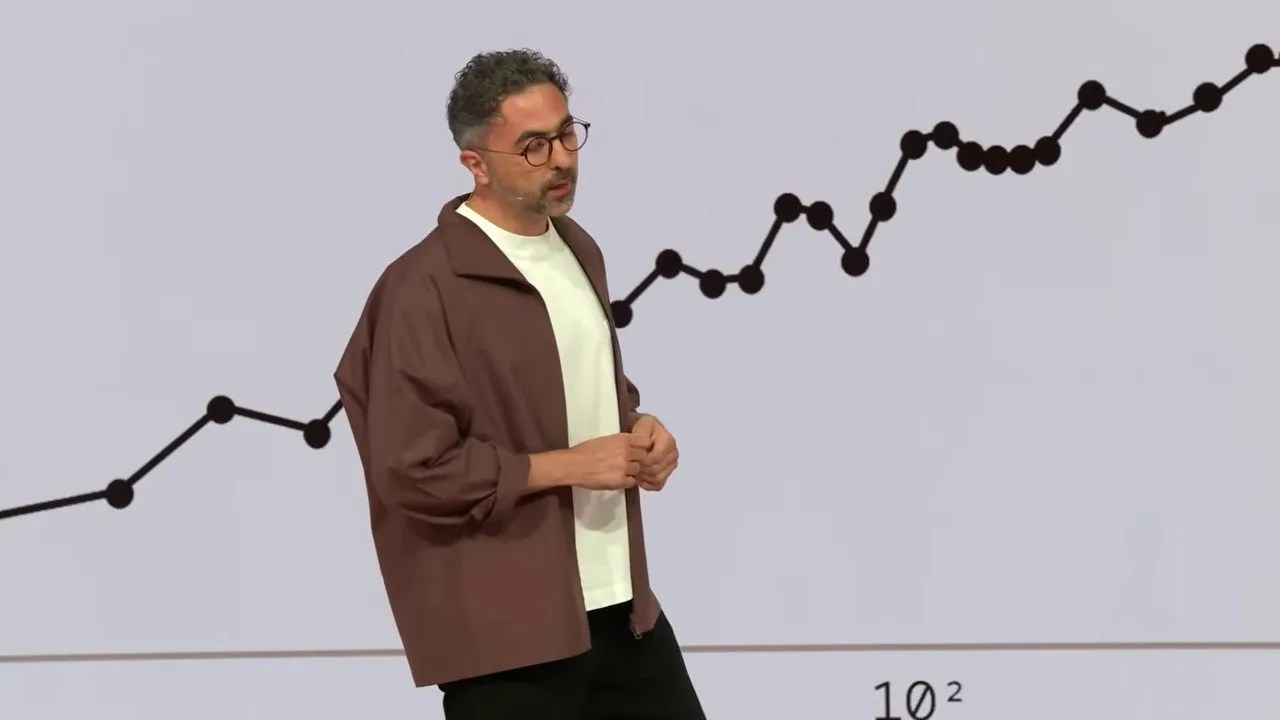
Figure 7: MAI Code 1 Flash delivers near-flagship coding performance at a fraction of the size and cost.
To put that in perspective, a 5B parameter model is running neck-and-neck on complex software tasks with models ten times its size. By optimizing it specifically for VS Code and GitHub Copilot, Microsoft is ensuring that developers get near-instantaneous code completions without the massive latency or cost associated with calling heavyweight reasoning models for every line of code.
Silicon Co-Design: The Maia 200 Secret Weapon
Software is only half the battle. To truly win the AI wars, you have to control the physical infrastructure. This is where Microsoft’s massive capital expenditure pays off. Suleyman revealed that these new Microsoft MAI models were co-designed from the ground up to run on Microsoft’s custom silicon: the Maia 200 chip.
Figure 8: The power of hardware-software co-design: Maia 200 delivers an extra 1.4x performance-per-watt boost when running MAI models end-to-end.
By optimizing MAI Thinking 1 to run end-to-end on Maia 200, Microsoft is seeing an additional 1.4x performance-per-watt gain over running them on standard hardware, even when compared against cutting-edge chips like the GB-200. At this scale, where data centers consume as much power as small cities, a 40% efficiency gain isn’t just a nice engineering achievement—it’s a massive economic moat. It allows Microsoft to offer these models on Azure AI Foundry, OpenRouter, and Fireworks at prices that will make it incredibly hard for standalone model providers to compete.
Local Power: Why the N1X and Windows Integration Matters
It’s one thing to run massive models in the cloud; it’s another to bring that intelligence directly to the edge. Suleyman dropped a major hint about the future of local computing by announcing that these highly optimized Microsoft MAI models are headed straight for the N1X—the next-generation, NPU-powered hardware architecture for Windows.
This is where Microsoft’s full-stack ownership becomes an undeniable advantage. By controlling the silicon (Maia 200), the operating system (Windows), the developer ecosystem (VS Code and GitHub), and the model architecture itself, they can deliver local inference speeds that competitors simply cannot match. Within a few months, Windows users will experience local AI performance that is incredibly fast, private, and virtually free of cloud latency.
RLEs: Stop Renting Intelligence, Start Building Your Moat
Perhaps the most strategically significant part of Suleyman’s keynote was his critique of the current “shared intelligence” model. In the early days of the AI boom, companies were content to simply plug into a centralized API. But as the market matures, enterprises are realizing a harsh truth: when you use a shared API, you are merely renting intelligence. You don’t own the underlying asset, and your hard-earned workflow data often ends up subsidizing the general intelligence of a model owned by someone else.
Microsoft’s counter-strategy relies on Reinforcement Learning Environments (RLEs). Think of RLEs as specialized, private training gyms where companies can take the base Microsoft MAI models and train them on highly specific, proprietary tasks.
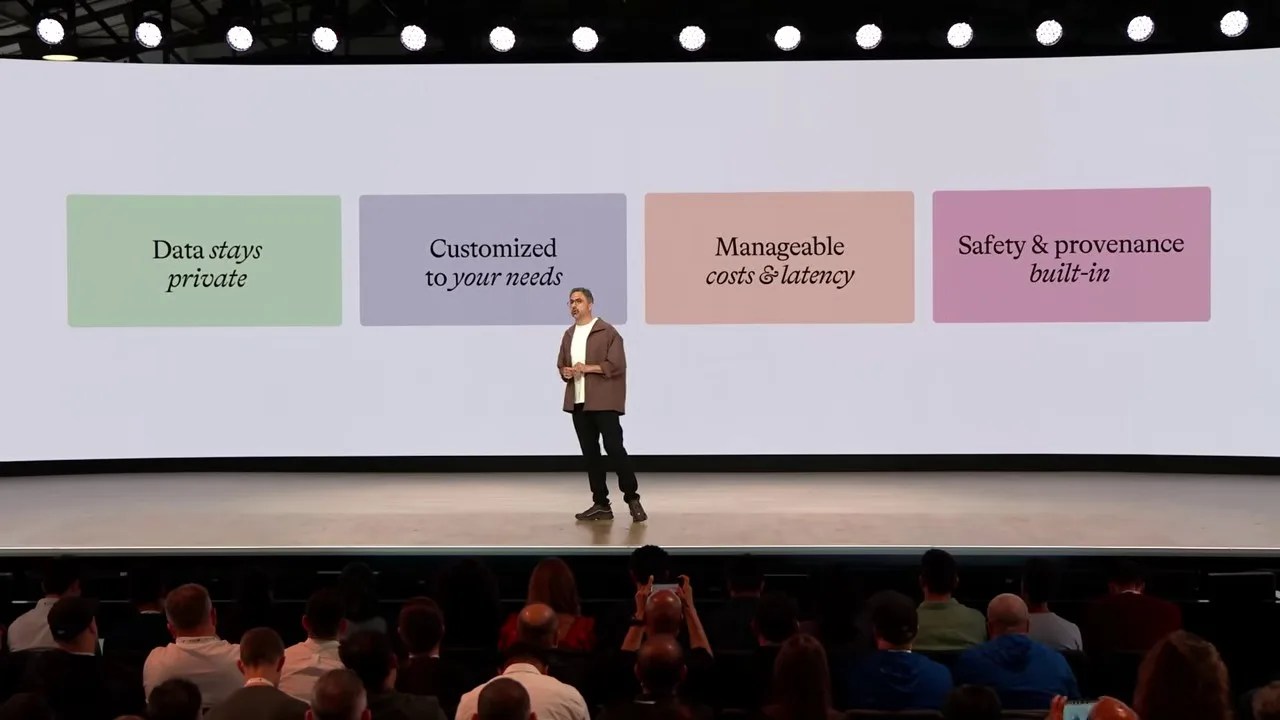
Figure 9: Reinforcement Learning Environments (RLEs) act as custom training gyms, allowing enterprises to build proprietary AI moats.
To prove this isn’t just marketing spin, Suleyman shared some eye-opening internal and external benchmarks. By using RLEs to tune their models for complex spreadsheet operations, Microsoft’s Excel-tuned MAI model achieved performance parity with OpenAI’s massive GPT-5.4—but at one-tenth of the inference cost.
The results were even more pronounced in the wild. When consulting giant McKinsey used these RLEs to tune MAI models on their proprietary advisory tasks, the resulting custom agent delivered the highest win rate on their benchmarks, actually outperforming GPT-5.5 while maintaining that same 10x cost efficiency.
This is a massive paradigm shift. Instead of paying exorbitant fees to “rent” access to a massive frontier model, enterprises can now use RLEs to build highly specialized, incredibly efficient agents. The resulting model doesn’t feed back into a public pool; it remains entirely under the customer’s control. In a world where data is the ultimate competitive advantage, these custom models become a true proprietary moat.
Healing the Future: The Mayo Clinic Co-Creation
To wrap up his keynote, Suleyman introduced what might be the most impactful real-world deployment of these new models: a deep, strategic partnership with the Mayo Clinic, widely recognized as the world’s leading healthcare organization.
Figure 10: Dr. Gianrico Farrugia, CEO of Mayo Clinic, joining Mustafa Suleyman to announce their joint venture into frontier medical modeling.
Dr. Gianrico Farrugia, CEO of the Mayo Clinic, joined Suleyman on stage to explain the vision behind the collaboration. Over the last seven years, the Mayo Clinic has built the world’s largest longitudinal, multimodal healthcare dataset, spanning genomics, clinical history, and imaging across four continents.
While existing foundation models are incredibly good at passing medical licensing exams and recalling textbook knowledge, they lack the practical, real-world clinical intuition that doctors develop over decades of actual practice. By pairing Mayo Clinic’s unparalleled dataset and clinical expertise with Microsoft’s computational power and model architecture, the two organizations plan to build a dedicated frontier model for healthcare.
This won’t just be an administrative assistant. The goal is to build a real-time clinical team member capable of predicting patient trajectories, preventing medical errors, and offering highly personalized diagnostic insights directly to physicians at the bedside. It is a bold, concrete step toward using superintelligence to solve some of humanity’s most pressing challenges.
The Era of AI on Your Terms
Mustafa Suleyman’s presentation at Build 2026 makes one thing abundantly clear: the era of the generic, centralized chatbot is drawing to a close. By launching these seven new Microsoft MAI models, Microsoft is shifting the battlefield from raw model size to practical, real-world utility.
Whether it’s editing images in PowerPoint, transcribing audio at five times the speed of competitors, running local code generation on Windows NPUs, or training highly specialized medical models with the Mayo Clinic, the focus is entirely on integration, efficiency, and control. Microsoft isn’t just selling you access to an AI; they are handing you the tools, the silicon, and the training gyms to build an AI that you own, run, and control on your own terms. It’s a compelling, developer-first vision that might just define the next phase of the AI revolution.
Frequently Asked Questions
Are the new Microsoft MAI models available for local deployment on Windows?
Yes. Microsoft has announced that these highly optimized models are being integrated directly into the Windows N1X architecture, allowing for ultra-fast, local, NPU-driven inference on Windows devices in the coming months.
What makes the Reinforcement Learning Environments (RLEs) different from traditional fine-tuning?
Traditional fine-tuning often relies on static datasets and is typically hosted on shared cloud infrastructure. Microsoft’s RLEs act as dynamic training gyms where models learn specific workflows through interactive reinforcement learning. Most importantly, the resulting intelligence and model weights remain completely proprietary to the enterprise, ensuring your data and workflows never leak to a shared model.
How do the Microsoft MAI models compare to OpenAI’s GPT-5 series on cost and efficiency?
In real-world enterprise tasks (such as Excel automation and McKinsey’s consulting benchmarks), MAI models tuned via RLEs achieved performance parity with GPT-5.4 and GPT-5.5 while being up to 10 times more cost-efficient on inference.