We are spending billions of dollars on AI chips, yet most of that hardware is sitting idle. It is the dirty little secret of the artificial intelligence boom. Tech giants boast about buying hundreds of thousands of Nvidia H100s, but behind the scenes, these GPUs are running at an abysmal 40% utilization. This is where the DeepSeek AI bottleneck solution enters the frame. Instead of demanding more raw compute power, researchers at DeepSeek asked a much smarter question: How do we actually use the power we already have? Let’s dive deep into how they solved one of the most expensive engineering problems in modern computing.
1. The Trillion-Dollar AI Lie: Why Your Expensive GPUs Are Mostly Sleeping
If you want your AI assistant to answer faster, the obvious answer is to throw more compute power at it. But as engineering teams around the world are discovering, adding more graphics cards does not automatically make the system faster. It is a shocking realization, especially considering that venture capitalists and tech conglomerates are pouring astronomical sums of money into building massive data centers.

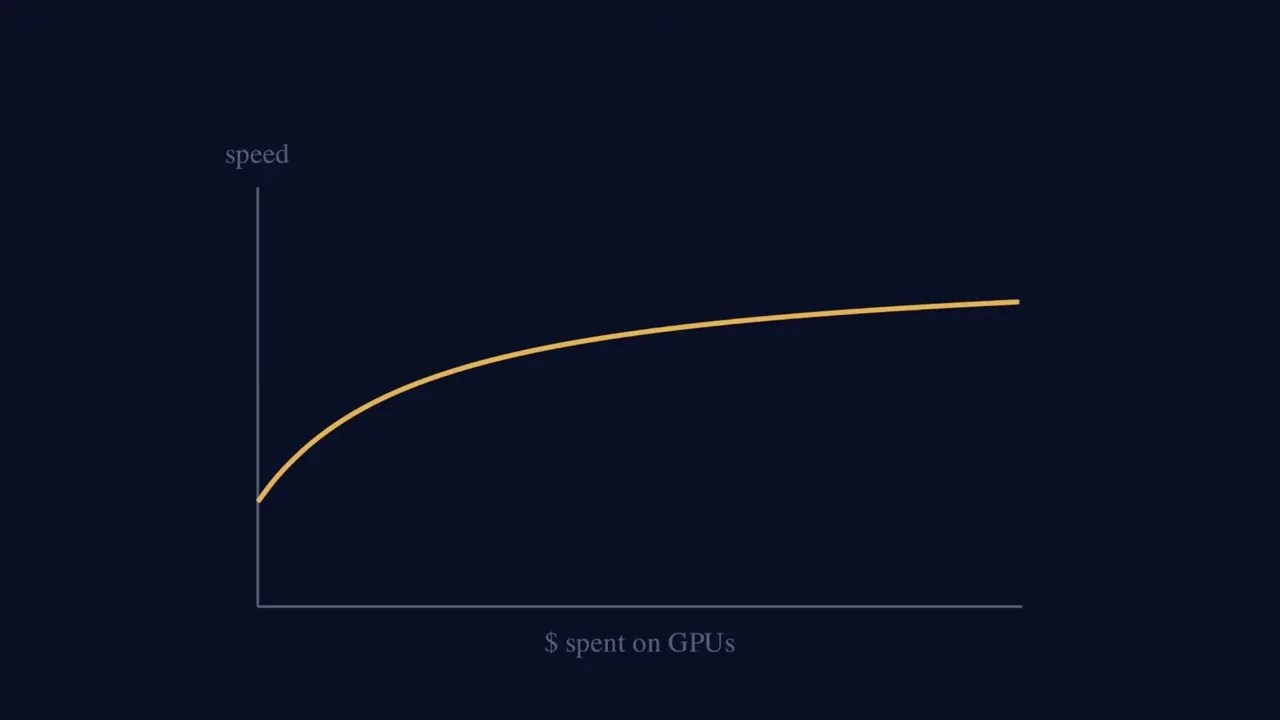
AI systems struggle to utilize the full capacity of modern compute hardware, leaving expensive chips idle.
When you run a complex AI workload, your state-of-the-art graphics cards spend more than half their time doing absolutely nothing. They sit at roughly 40% utilization, waiting for data to arrive. In any other industry, running a billion-dollar factory at 40% capacity would result in immediate firings. In the AI industry, it has simply been accepted as the cost of doing business. Until now.

Standard AI workloads often top out at a shocking 40% GPU utilization, wasting massive amounts of capital.
2. The Straw Metaphor: Why AI Keeps Forgetting the Page It Just Read
To understand why this happens, imagine reading a book, but every time you turn the page, you instantly forget all the characters. To understand the next sentence, you have to go back to page one and reread the entire book. It sounds ridiculous, but that is exactly how large language models (LLMs) operate under the hood during long conversations.
The memory loss analogy: forcing the system to constantly reread past context when processing new tokens.
Assume we have a massive brain the size of a mountain, representing our AI model. If we want to discuss a single-page document, it is easy; the brain memorizes it instantly. But as the document grows into a massive book, the physical constraints of our hardware catch up with us. The brain is hungry and capable, but the pipe feeding it information is the size of a tiny straw.
A massive AI brain trying to process a giant book faces severe physical constraints in data movement.
Because the memory bandwidth cannot keep up with the processing speed of the GPU, the processors spend most of their time waiting for data to trickle through that narrow straw. We are not bottlenecked by how fast the AI can think; we are bottlenecked by how slowly it reads.

Data bottleneck: information travels through a narrow straw, leaving the brain starving for compute tasks.
3. Prefill vs. Decoding: The Unbalanced Scale of LLM Architecture
In modern AI server clusters, tasks are split between two types of operations: prefill and decoding. Prefill machines do the heavy lifting of reading your initial prompt and the surrounding context. Their straws are completely jammed because they have to ingest massive amounts of data all at once.
On the other side of the network, we have decoding machines. These generate the output text word-by-word. Because they only generate one token at a time, their data needs are tiny. Their straws are nearly empty, and these expensive machines spend a large portion of their life cycle sitting idle.
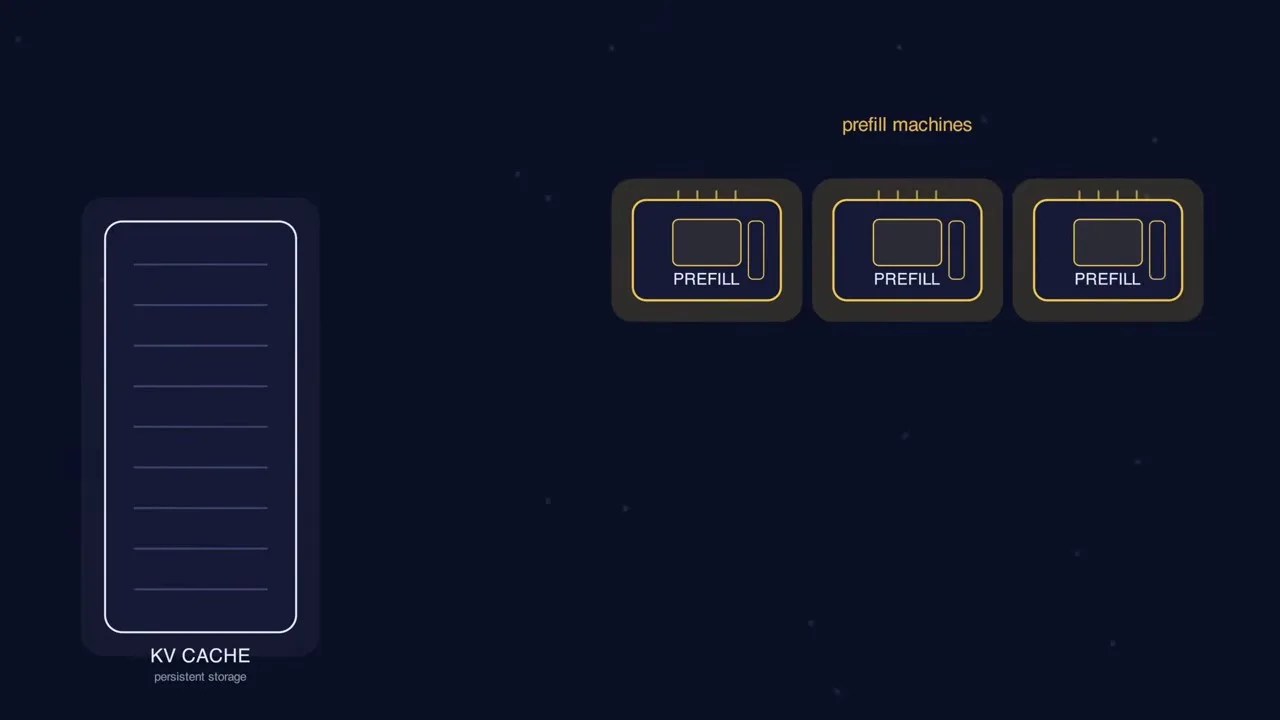
The architectural imbalance: jammed prefill machines contrasted with underutilized decoding machines.
DeepSeek’s engineers realized they could balance this scale. Why not use the idle decoding machines to assist with the heavy reading tasks of the prefill stage? By creating a secondary path, they allowed the underutilized hardware to shoulder the load. Here is how the two approaches compare:
| Feature / Scenario | Standard LLM Scheduling | DeepSeek Architecture |
|---|---|---|
| GPU Utilization | Stuck around 40% | Optimized up to 80% |
| Prefill Phase | Jammed on dedicated nodes | Distributed across idle decoding nodes |
| Network Traffic | Unmanaged, causing collisions | Prioritized (Thinking vs. Memory) |
| Long-Context Performance | Degrades rapidly, high latency | Maintains high throughput |
4. The Clever Detour and the Art of AI Traffic Control
Splitting the work sounds simple, but it introduces a major physical problem. Moving data between these machines requires sending information over the data center’s internal network. These high-speed network roads are the same pathways the AI uses to communicate while “thinking” (tensor parallelism).
If you blindly dump memory transfer data onto these roads, you solve the machine bottleneck only to create a massive network traffic jam. You end up right back where you started, waiting for data to clear.
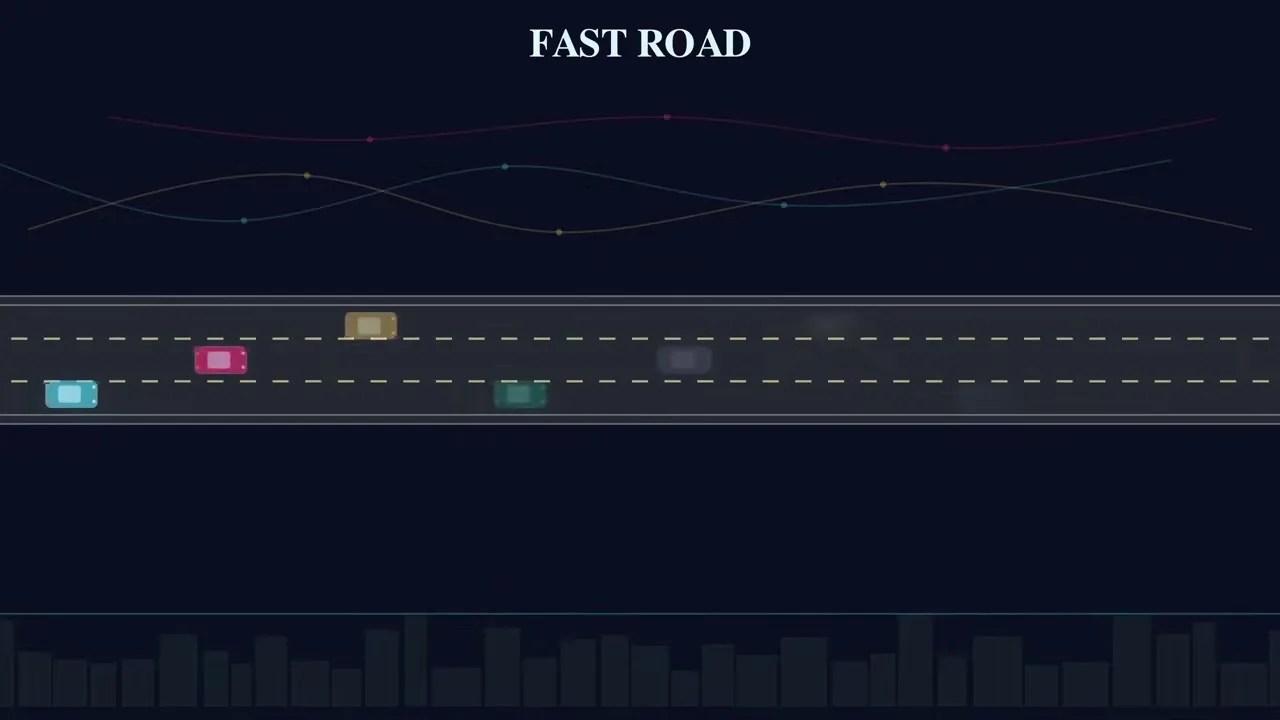
A naive detour routing memory traffic over the same high-speed network roads creates a massive digital traffic jam.
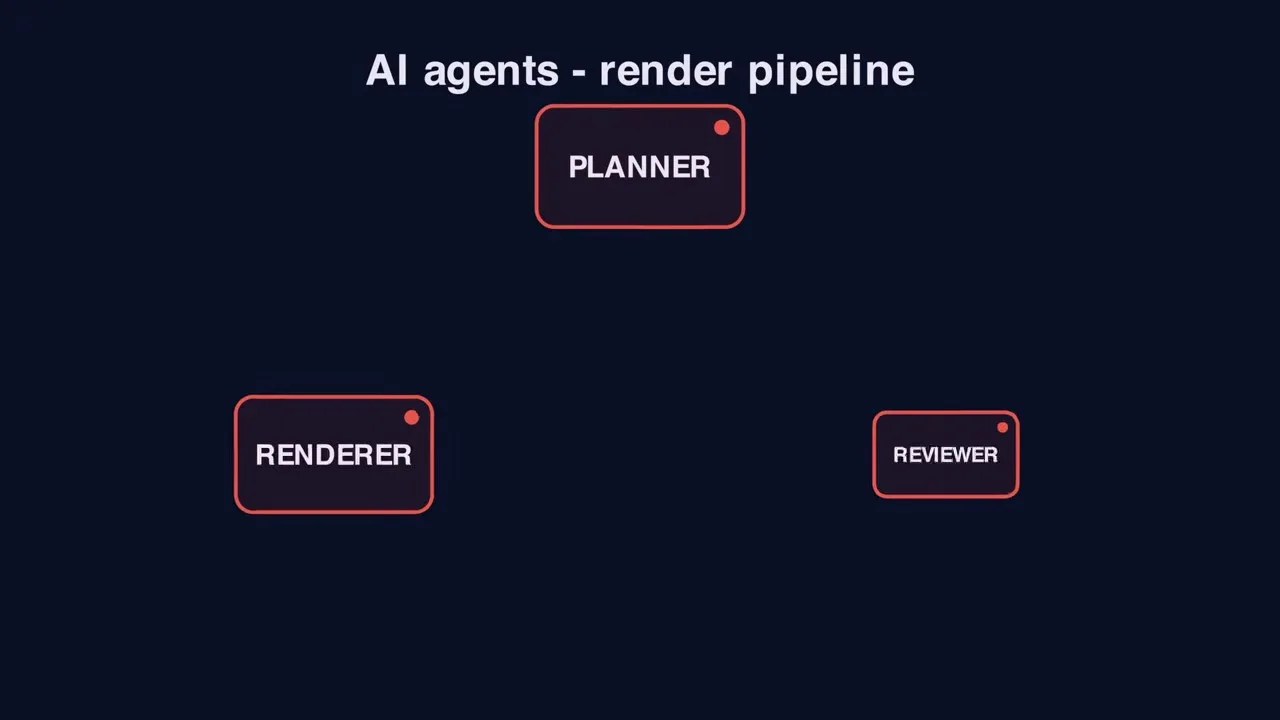
To solve this, DeepSeek implemented a brilliant traffic control system. They split the traffic into two categories: thinking traffic and memory traffic. Thinking traffic is highly time-sensitive and gets absolute priority on the network roads. Memory traffic, which is bulkier but less time-sensitive, is relegated to the leftover space (the slack bandwidth).

DeepSeek’s traffic control mechanism prioritizes critical thinking traffic while routing memory tasks through remaining bandwidth.
This is pure engineering genius. It does not require buying new, faster network cards or more expensive GPUs. Instead, it unlocks the hidden capacity of the hardware you have already paid for by coordinating the data flow with microsecond precision.
5. Doubling the Speed: Real-World Benchmarks of the DeepSeek AI Bottleneck Solution
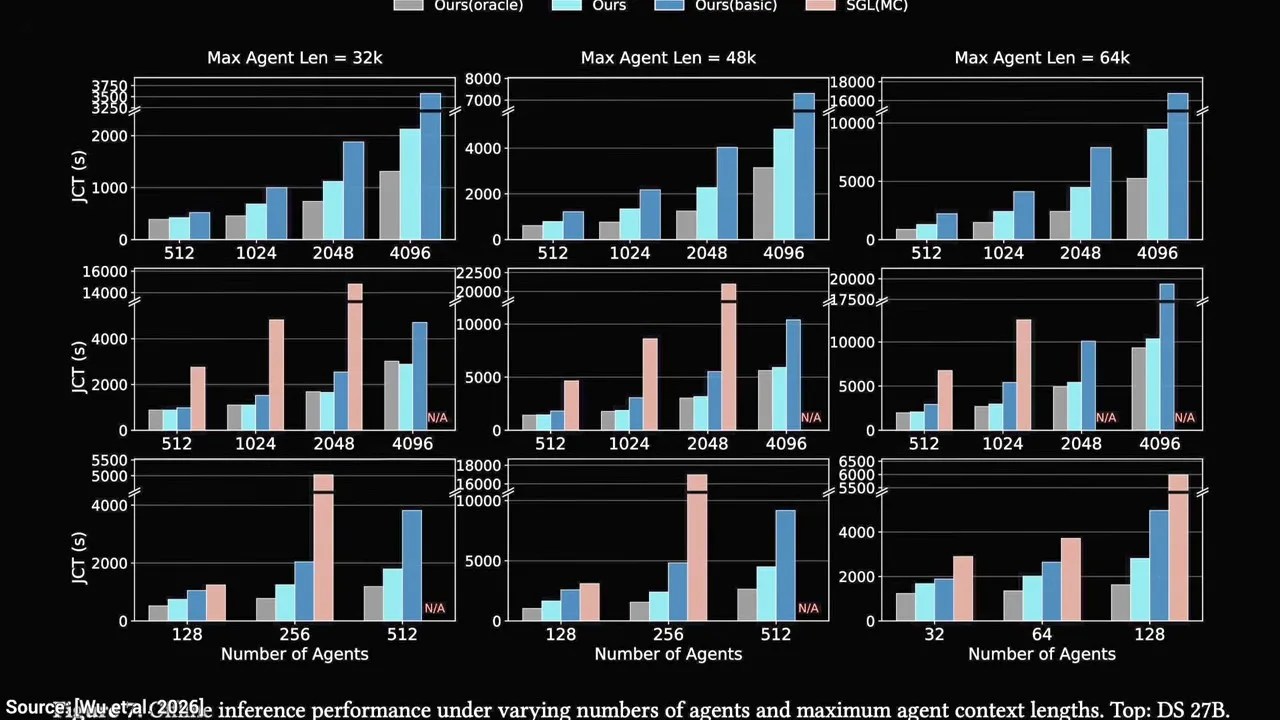
What does this mean in practice? By implementing the DeepSeek AI bottleneck solution, the team managed to push network utilization from 40% to roughly 80%. This is an astronomical leap for a single research paper. It effectively doubles the work output of a data center without changing a single piece of physical hardware.
The performance leap: doubling network utilization from 40% to 80% using DeepSeek’s routing method.
This solution is not a magic bullet that makes every simple query run twice as fast. If you are only asking an AI to write a three-word email, you will not notice a difference. However, this is specifically designed for the hardest, most expensive workloads: long-context, multi-turn conversations, and complex agentic tasks where the AI has to process thousands of pages of documentation over hours of interaction.
6. Open Science vs. Corporate Moats: Why DeepSeek’s Gift Changes Everything
In a tech landscape dominated by closed-source models and proprietary hardware wrappers, DeepSeek’s approach is incredibly refreshing. They did not keep this scheduling mechanism behind a paywall to sell as a proprietary enterprise feature. They released the research openly to the public, allowing anyone hosting large models to implement these routing improvements.

DeepSeek’s massive 671-billion-parameter model running efficiently on Lambda GPU Cloud.
When you look at massive models like DeepSeek running on infrastructure like the Lambda GPU Cloud, you realize how critical these software-level optimizations are. Running a 671-billion-parameter model is a monumental task. By optimizing how data flows between the GPUs, we can run these massive systems faster, more reliably, and at a fraction of the traditional cost. This open-science approach paves the way for cheaper, more accessible AI inference for developers worldwide.
Frequently Asked Questions
Q: Does this technique require special GPU hardware?
A: No. The beauty of DeepSeek’s solution is that it is a software-level scheduling and routing optimization. It works on existing GPU clusters and standard high-speed data center networks by managing how and when data is sent between nodes.
Q: Why do standard AI workloads only utilize 40% of GPU capacity?
A: Because of the memory bandwidth bottleneck. The GPU’s processor can compute data much faster than the system can fetch that data from memory. This leaves the processors sitting idle, waiting for the next batch of information to arrive.
Q: How does this help the average user?
A: By doubling the efficiency of AI servers, data center operators can process twice as many requests on the same hardware. Over time, this efficiency translates directly into lower API costs and faster response times for complex, long-context AI applications.