Let’s be honest: keeping up with the latest AI technology trends feels less like reading the news and more like trying to drink from a firehose while riding a roller coaster. Just when you think you’ve settled into a comfortable rhythm with your current workflows, a tech giant drops a model update, a startup raises a mind-boggling valuation, or someone figures out how to turn a flat Google Maps screenshot into a fully rendered, first-person driving video.
This week was no exception. From Anthropic’s quiet launch of Claude Opus 4.8 to Microsoft’s sneaky ascent up the image generation leaderboards, and even a bizarre 95% accurate dog translator powered by Alibaba’s Qwen model, the ecosystem is moving at breakneck speed. Let’s cut through the marketing noise, bypass the standard corporate hype, and dissect what actually matters for creators, developers, and tech enthusiasts alike.
Anthropic’s Stealth Play: The Truth About Claude Opus 4.8
Let’s start with the headline act of the week: Anthropic’s release of their new Claude Opus 4.8 model. If you were expecting a revolutionary leap that would make your jaw drop, I have to ground your expectations. This is a modest, iterative upgrade. Most casual users won’t even notice a massive difference in their day-to-day chat sessions, but under the hood, Anthropic has made some highly tactical adjustments.
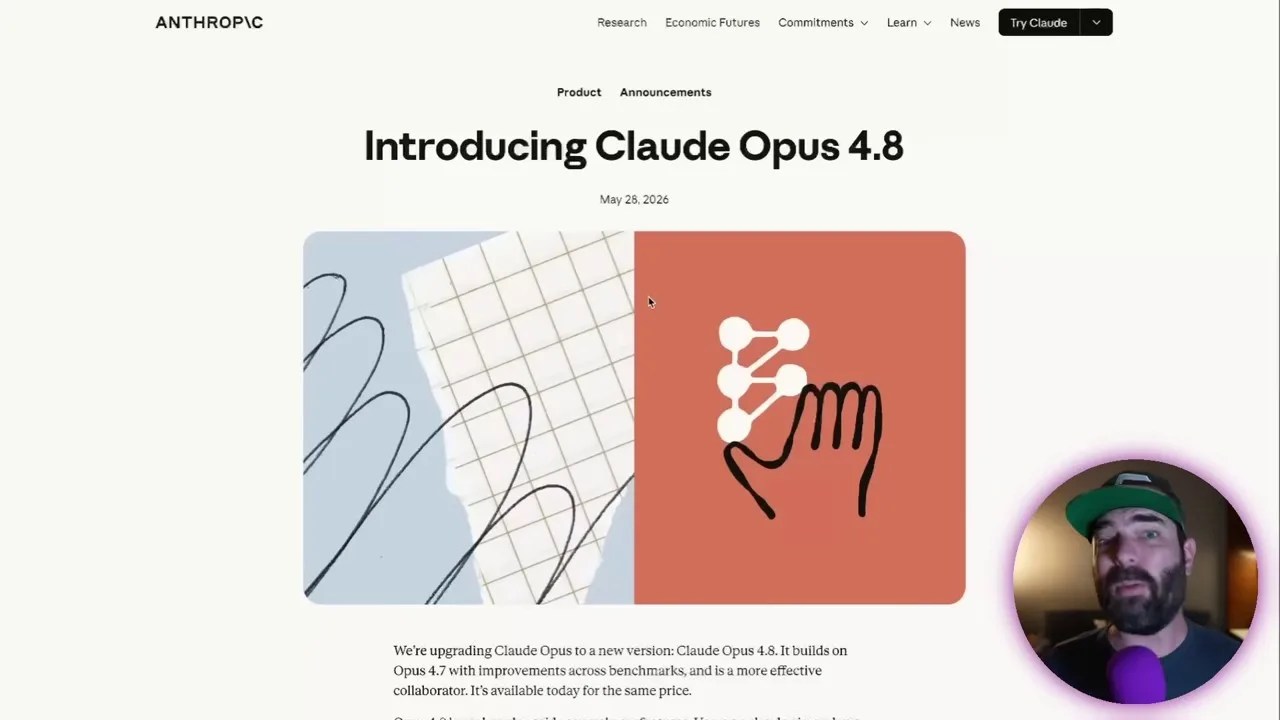
Anthropic’s official announcement of the Claude Opus 4.8 model, signaling a subtle but strategic step forward.
So, what actually changed? The benchmarks show minor nudges upward in coding proficiency, reasoning, and computer use. But the real story here is what Anthropic calls “honesty.”
One of the most frustrating aspects of using large language models is their tendency to confidently hallucinate or overstate their capabilities. Anthropic claims that Opus 4.8 is significantly better at recognizing its own limitations. It is now far more likely to flag uncertainties in its work, admit when it doesn’t have enough data, and avoid making unsupported claims. In a world where businesses are terrified of AI-induced legal liabilities, this “honesty upgrade” is a massive deal, even if it doesn’t look flashy on a standard benchmark chart.
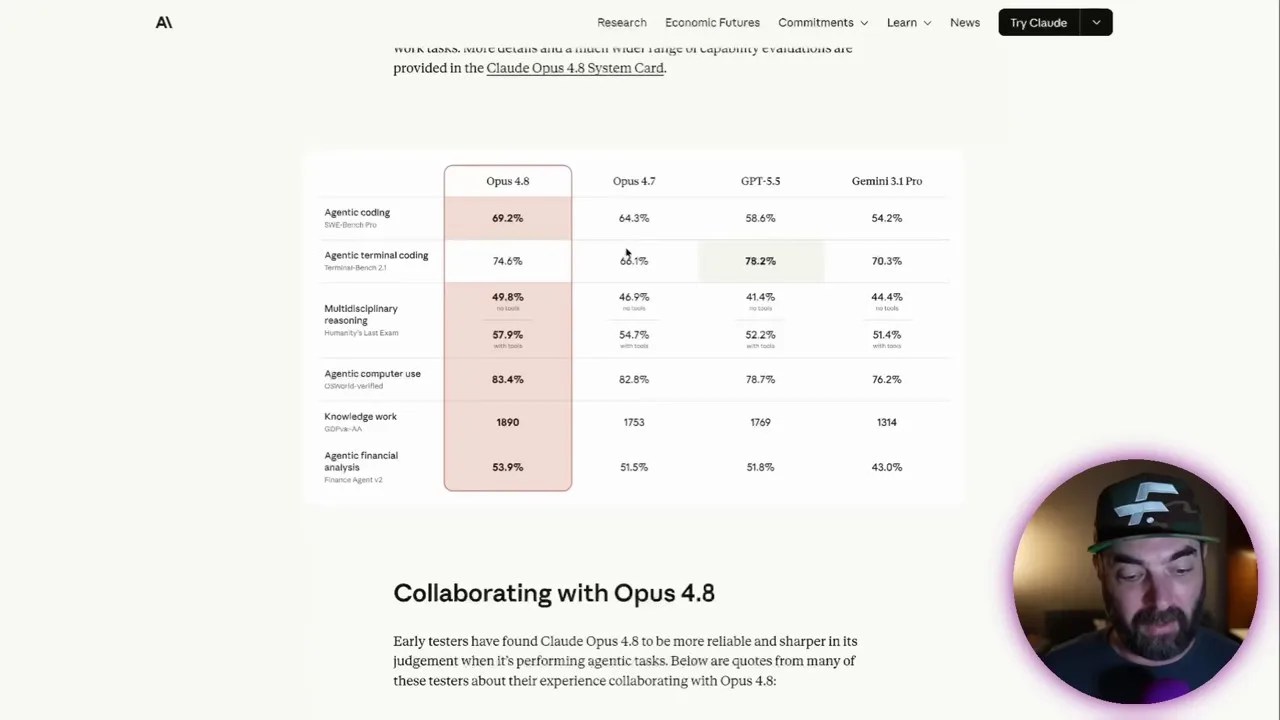
A look at the modest benchmark improvements of Claude Opus 4.8 over previous iterations.
Pricing remains identical to version 4.7, meaning you get a slightly smarter, significantly more honest model for the exact same cost. But the update that developers are actually losing their minds over isn’t just the model itself—it’s the introduction of Dynamic Workflows within Claude Code.
The Power of Parallel Sub-Agents
If you use Claude Code to build software, the new Dynamic Workflows feature is going to fundamentally change how you debug and build complex features. Instead of a single model trying to solve a massive problem linearly, Claude now operates like a seasoned software engineering team.
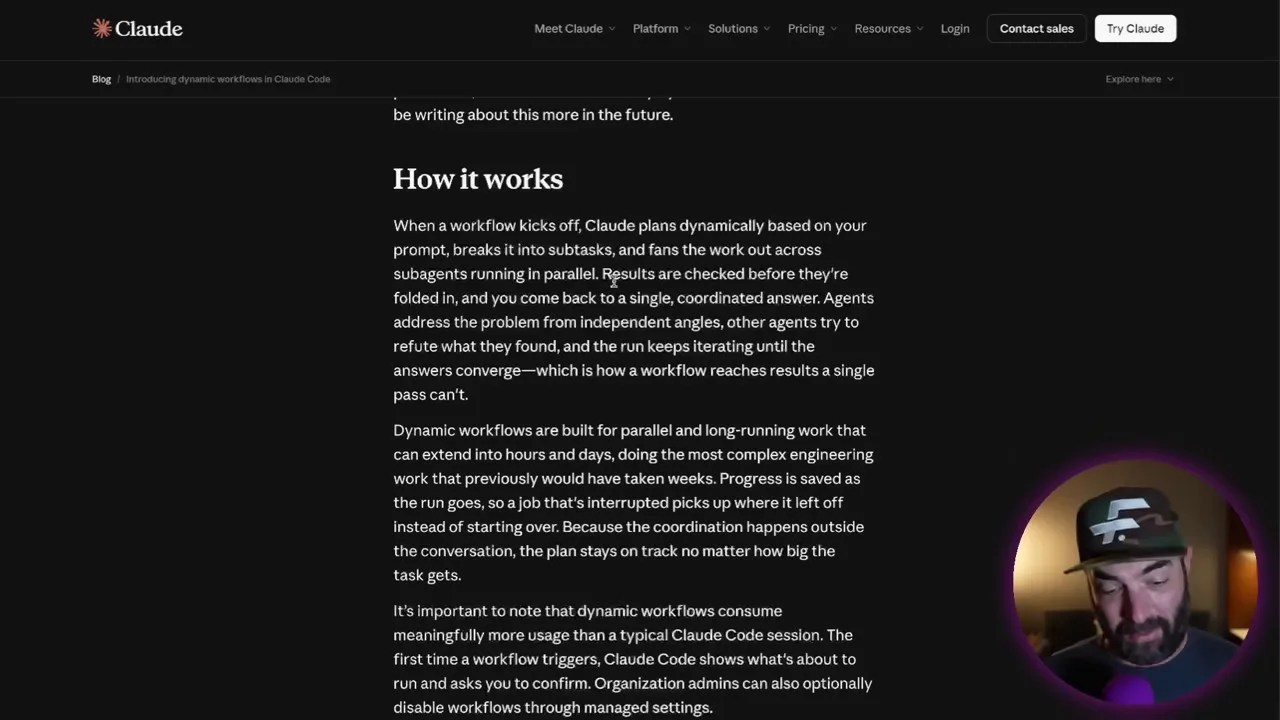
An architectural overview of how Dynamic Workflows spin off parallel agents to solve and verify coding tasks.
When you input a complex prompt, Claude dynamically plans out the project, breaks it down into distinct subtasks, and spins up multiple parallel “sub-agents.” Each agent tackles a specific part of the problem from an independent angle. Crucially, other sub-agents are assigned to actively refute and stress-test the solutions found by their peers. They iterate, argue, and double-check each other’s work until the answers converge into a single, highly verified solution. It’s a glimpse into the future of agentic workflows—autonomous, self-correcting, and highly efficient.
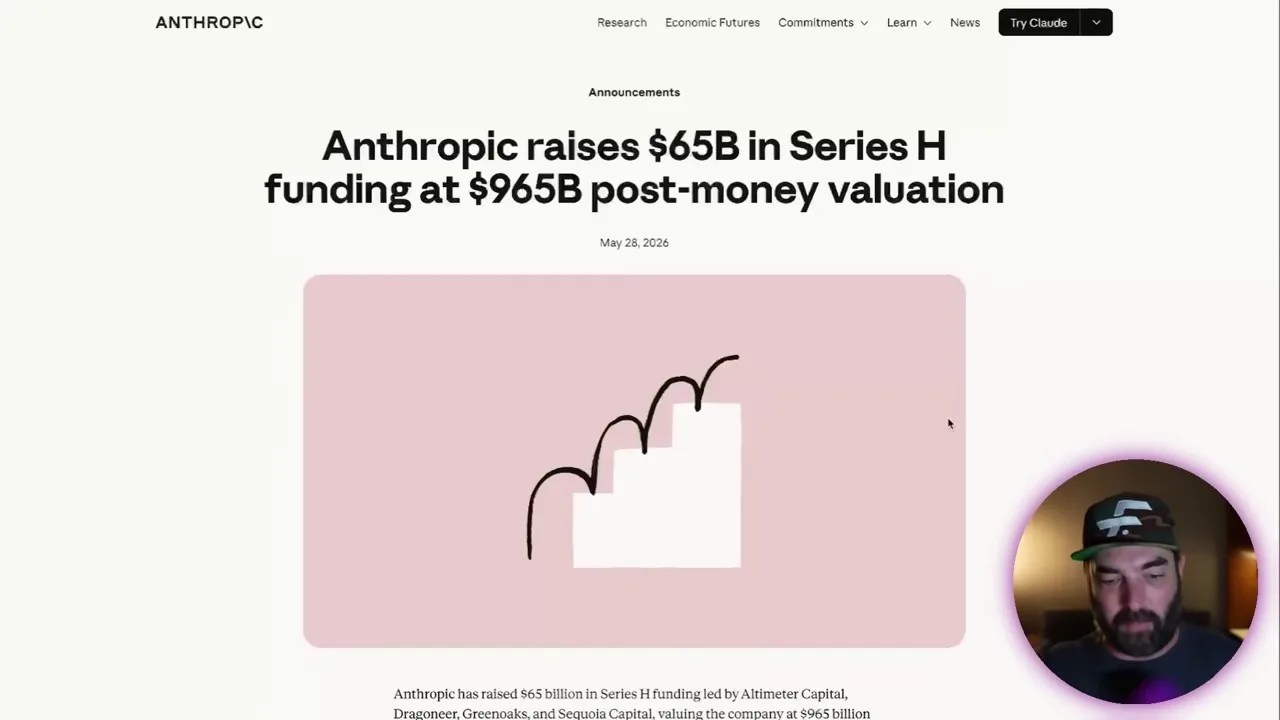
To top off their busy week, Anthropic also reportedly raised a massive $65 billion Series H funding round, pushing their private valuation to a staggering $965 billion. They are now, on paper, the most valuable startup in history, temporarily leapfrogging OpenAI. While these near-trillion-dollar valuations feel almost abstract at this point, they underscore the intense capital warfare happening behind the scenes of the latest AI technology trends.
Microsoft’s Quiet Leap: MAI Image 2.5 and Copilot’s Visual Overhaul
While OpenAI and Google dominate the visual media headlines, Microsoft has been quietly cooking up some seriously impressive image generation technology. According to the latest Arena.ai leaderboard (formerly LMSYS), Microsoft’s brand-new MAI Image 2.5 has leaped over dozens of competitors to claim the number three spot globally, sitting comfortably just behind GPT Image 2 and Gemini 3.1 Flash.
The Arena.ai leaderboard proves Microsoft’s MAI Image 2.5 is now a top-tier contender in image generation.
MAI Image 2.5 focuses heavily on three critical weaknesses that have historically plagued AI image generators: precise text rendering, complex spatial relationships, and strict instruction following. It is particularly adept at commercial design, branding concepts, and product layout.
To test this, we fed the model a relatively simple prompt: “Create a flyer for an event called Learn AI with the Wolf. The event is on July 4th, 2026. Add some relevant copy and images related to this event.”
The resulting flyer generated by MAI Image 2.5, showcasing highly accurate text alignment and thematic design.
The output is remarkably clean. It automatically inferred the theme, added festive fireworks referencing the 4th of July, cleanly integrated wolf imagery, and spelled every single word of the text perfectly without the usual garbled nonsense we’ve come to expect from lesser models.
Copilot’s New Look and Deep Perplexity Integration
In tandem with their image model upgrades, Microsoft rolled out a sleek redesign for Microsoft 365 Copilot. The prompt box is now wider, supporting rich inline formatting like bullet points directly within your input. More importantly, Copilot now seamlessly draws data from across your entire Microsoft ecosystem—emails, chats, calendar invites, and Excel files—to generate real-time charts and graphs directly inside the chat window.
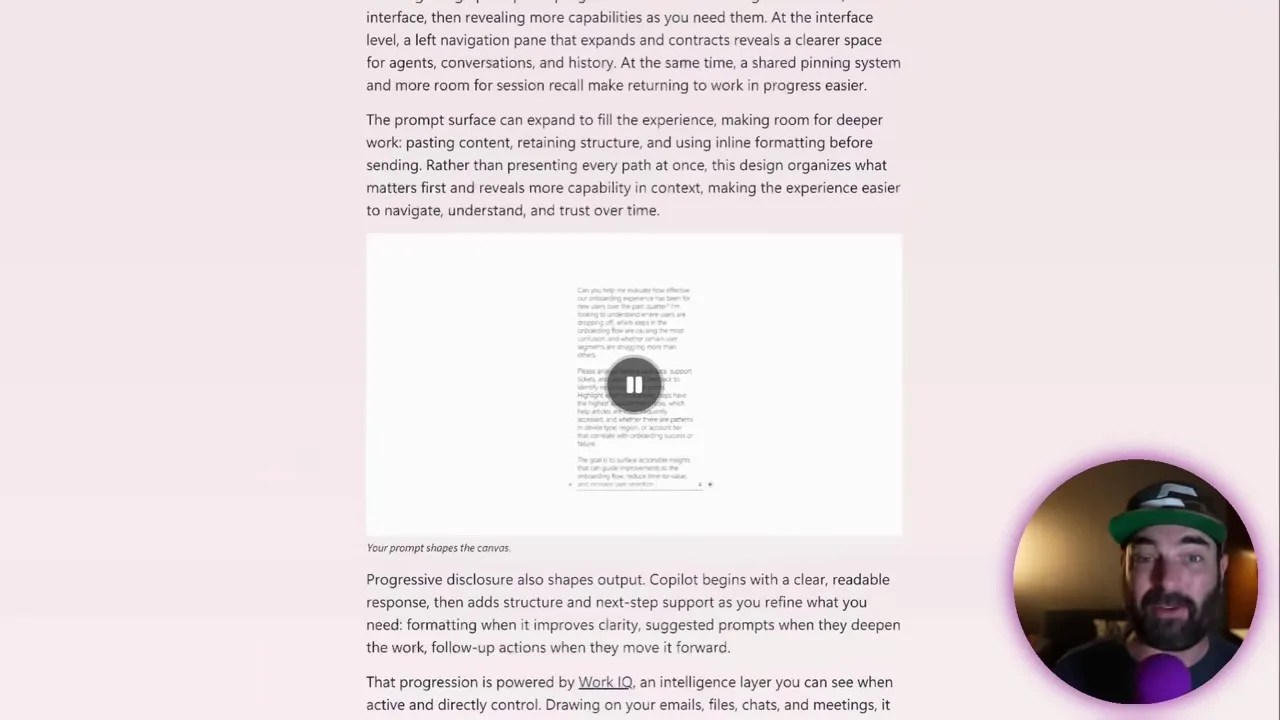
The updated Microsoft 365 Copilot UI generating inline analytical charts directly from user data.
But the real power move here is the integration of Perplexity Computer inside Microsoft Word, Excel, PowerPoint, and Outlook. While Copilot handles standard, single-turn conversational tasks, Perplexity is brought in to execute complex, multi-step agentic workflows. For instance, you can ask it to analyze a complex legal contract, compare it against your company’s standard templates, suggest tracked changes, and generate an issues list with fallback clauses—all natively within Word.
The Memory Problem: Why Hermes is Quietly Solving AI’s Biggest Flaw
If you’ve spent any time working with autonomous AI agents, you know their biggest Achilles’ heel: they are incredibly forgetful. Every time you start a new session, the agent resets to zero. It forgets your preferences, your coding style, and the context of your business.
This is why the open-source community is rallying around Hermes. Unlike standard agents, Hermes features a built-in, self-improving learning loop. It doesn’t just execute tasks; it reflects on its past experiences, refines its internal workflows over time, and builds a persistent memory database that transfers seamlessly between sessions.

Deploying a persistent Hermes agent locally or via a private virtual server to maintain complete data privacy.
By deploying Hermes on a private Virtual Private Server (VPS), developers can run these self-improving agents 24/7. Because it runs on your own infrastructure, your API keys, corporate databases, and proprietary workflows remain entirely private. Once active, Hermes can be connected to platforms like Slack, Discord, Telegram, or email to perform continuous, automated tasks—like running daily competitor analysis or monitoring code repositories—while continuously learning how to do those jobs better with every single run.
Dimensional Shifts: Leonardo’s Image-to-3D and Ethical Music Generation
The boundaries of generative media are expanding far beyond flat 2D images. Leonardo AI recently rolled out a highly anticipated Image to 3D tool, allowing creators to turn simple 2D concepts into fully rotatable 3D assets.
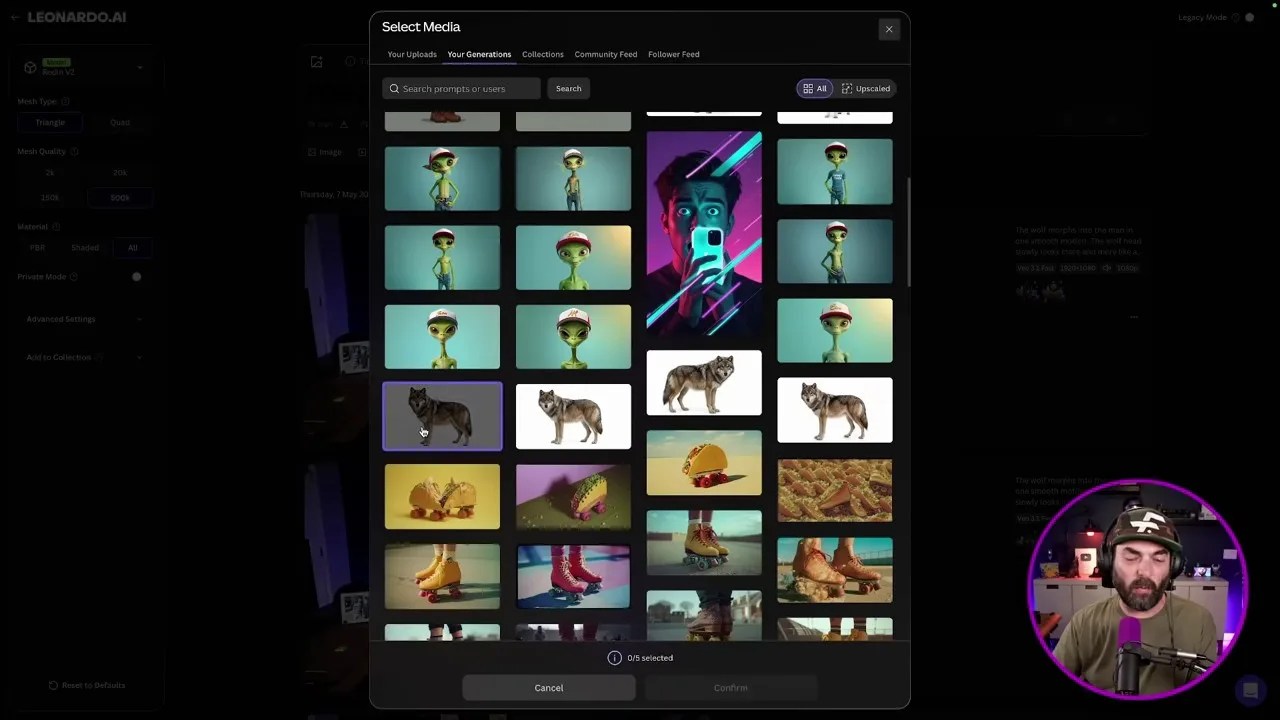
Leonardo AI’s new interface featuring the ‘Image to 3D’ button directly below the prompt box.
While the initial one-click generation can sometimes yield slightly distorted results around the back of the object, Leonardo has solved this by introducing a 3D Reference View Creator. This tool generates a detailed blueprint of your subject from multiple angles—top-down, front-facing, and rear-view. By feeding these multiple reference angles back into the 3D generator, the resulting model gains an incredible level of detail and structural integrity, making it highly viable for game developers needing rapid prop generation or e-commerce brands looking to create interactive 3D product displays.
ElevenLabs Music V2: High-Fidelity, Ethically Trained Audio
On the audio front, ElevenLabs just dropped Music V2. The generation quality is a massive step up from their previous model, producing incredibly clean vocal melodies and complex instrumental backings. But the real breakthrough isn’t just the audio quality—it’s the training data.
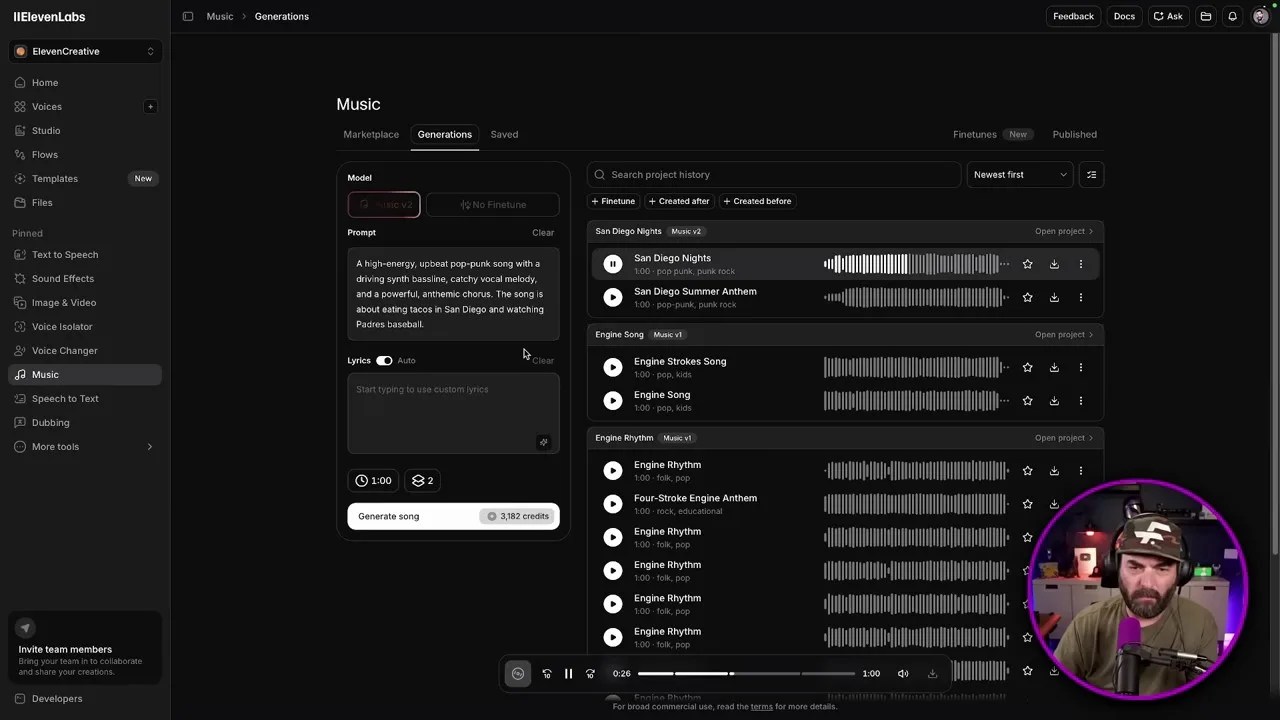
Generating high-energy tracks with ElevenLabs Music V2, built entirely on licensed and ethically sourced audio data.
Unlike other music generators that have faced massive legal backlash for scraping copyrighted artist catalogs, ElevenLabs has built Music V2 entirely on licensed, pre-cleared data. This means creators can use these tracks commercially without the looming threat of copyright strikes or ethical dilemmas. Additionally, the model displays an impressive level of real-world knowledge, accurately weaving specific local cultural references (like San Diego’s Petco Park or baseball player Fernando Tatís Jr.) directly into the lyrics when prompted.
The Omni Magic: Mapping Reality with Google Gemini
Perhaps the most mind-bending demonstration of spatial reasoning this week came from creators experimenting with Google’s Gemini Omni model. By feeding the model a simple, flat screenshot of a route drawn on Google Maps, users prompted the AI to generate a first-person, highly realistic video of a car driving along that exact path.

A side-by-side comparison of a 2D Google Maps route and the realistic first-person driving video generated by Gemini Omni.
Taking this a step further, developers have used sketched camera paths over static landscape images to generate highly realistic drone point-of-view (POV) footage. The AI accurately simulates the physics of a drone flight, banking around buildings, flying cleanly under bridges, and rendering complex architectural details in real time. For indie filmmakers and content creators, this represents a massive shift in how establishing shots and B-roll can be produced without expensive drone hardware.
Weekly AI Update Matrix
To help you quickly digest the sheer volume of announcements this week, I’ve compiled a clean, high-level summary of the major players, their latest releases, and the practical takeaways you need to know.
🎥 Watch Original Video: AI News: Claude Opus 4.8, Insane Omni Use-Case, and A Dog Translator? (by Matt Wolfe)