For the past few years, we’ve heard the same comforting lie repeated at marketing conferences and design panels: “AI can write and code, but it will never replace true human creativity.” We convinced ourselves that branding, art direction, high-end photography, and core marketing strategy were safe behind a fortress of human taste.
Well, Google just quietly blew those fortress gates wide open. Without any grand keynotes or loud press releases, they dropped a tool called Google Pomely. And yes, they made it completely free.
This isn’t just another basic prompt-to-image generator that spits out weirdly distorted graphics you still have to clean up in Photoshop. Google Pomely is a fully-realized, end-to-end creative suite designed to replace the entire starting pipeline of a marketing agency. In just a few clicks, it auto-generates your brand identity, drafts copy, arranges professional product photoshoots with hyper-realistic models, designs high-converting ad campaigns, builds a responsive landing page, and pushes the final assets directly into your advertising accounts. Let’s look at the launch screen below, which sums up this ambitious promise.
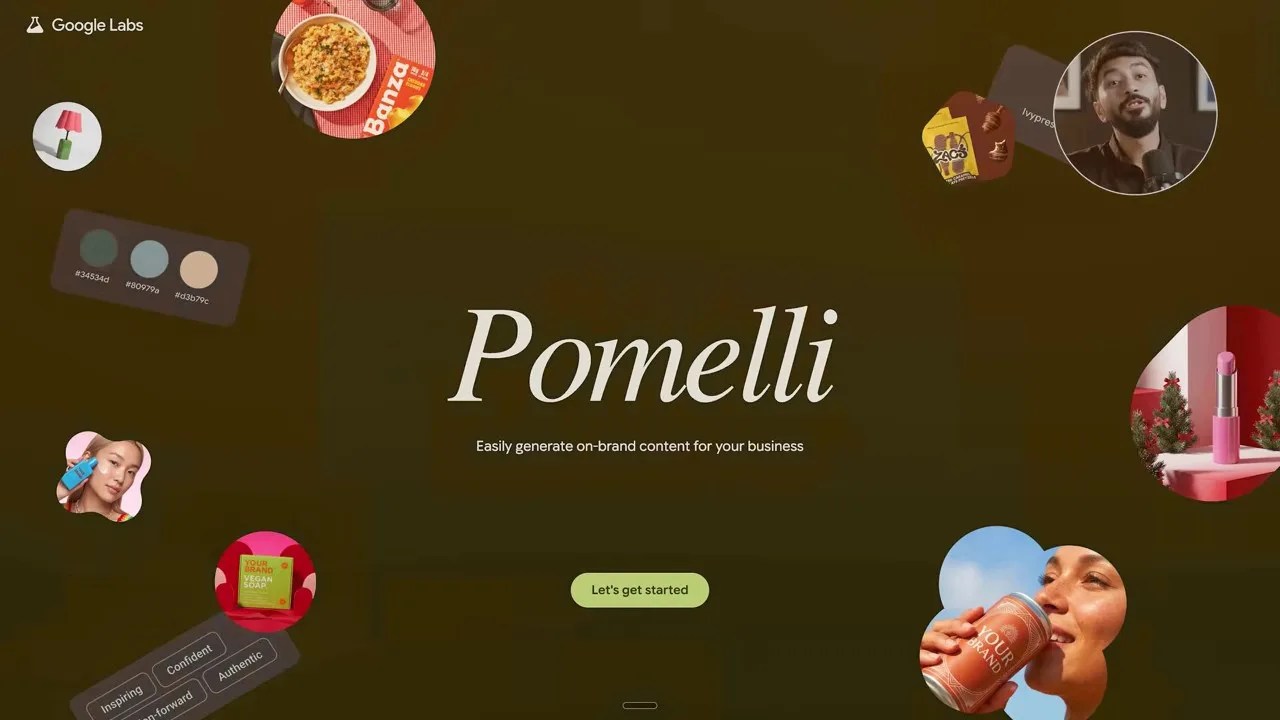
The entry point to Google’s secret marketing weapon: A remarkably clean interface for a powerhouse engine.
📌 What’s Inside This Deep-Dive:
- ➔ The Creative Suite Monopoly is Over: Say Hello to Google Pomely
- ➔ The Magic of Scraping: How Pomely Steals a Brand’s Soul
- ➔ The Four Pillars: From Scratch to Studio-Quality Assets
- ➔ The Cold Start: Launching a Brand with Absolutely Zero Assets
- ➔ Google’s Brilliant Trojan Horse: Live Ad Pipeline Integration
The Creative Suite Monopoly is Over: Say Hello to Google Pomely
Think about what it traditionally takes to launch a new product or rebrand an existing business. You need to hire a small, expensive army: a brand strategist for the messaging, a graphic designer for the visual identity, a photographer for product imagery, an ad agency to build the creatives, and a web developer to stitch it all together on a landing page. For solo founders, startups, and small business owners, this multi-week back-and-forth isn’t just expensive; it’s a momentum killer.
What makes Google Pomely fundamentally different from tools like Canva, Midjourney, or ChatGPT is context. Instead of forcing you to write endless prompts to describe your brand’s style over and over, Pomely builds what it calls a “Business DNA”.
By simply analyzing a single URL or a handful of product photos, it builds a localized, permanent understanding of your brand’s visual language, tone, and catalog. Once that DNA is established, every single asset the tool generates automatically matches your brand’s unique style.
The Magic of Scraping: How Pomely Steals a Brand’s Soul
Let’s look at how the core engine works. When you input an existing website link, the AI acts like an elite creative director auditing your company. It scrapes your exact colors, reads your typography, determines your layout grid, extracts logos, catalog images, and analyzes your copywriting tone.
The ingestion pipeline: How Pomely instantly translates a web link into a structured brand profile.
To test how robust this engine actually is, we used H&M as a guinea pig. As a massive global fashion retailer with deep product catalogs, a highly specific aesthetic, and a dense website structure, H&M is a brutal stress test for any web-scraping tool.
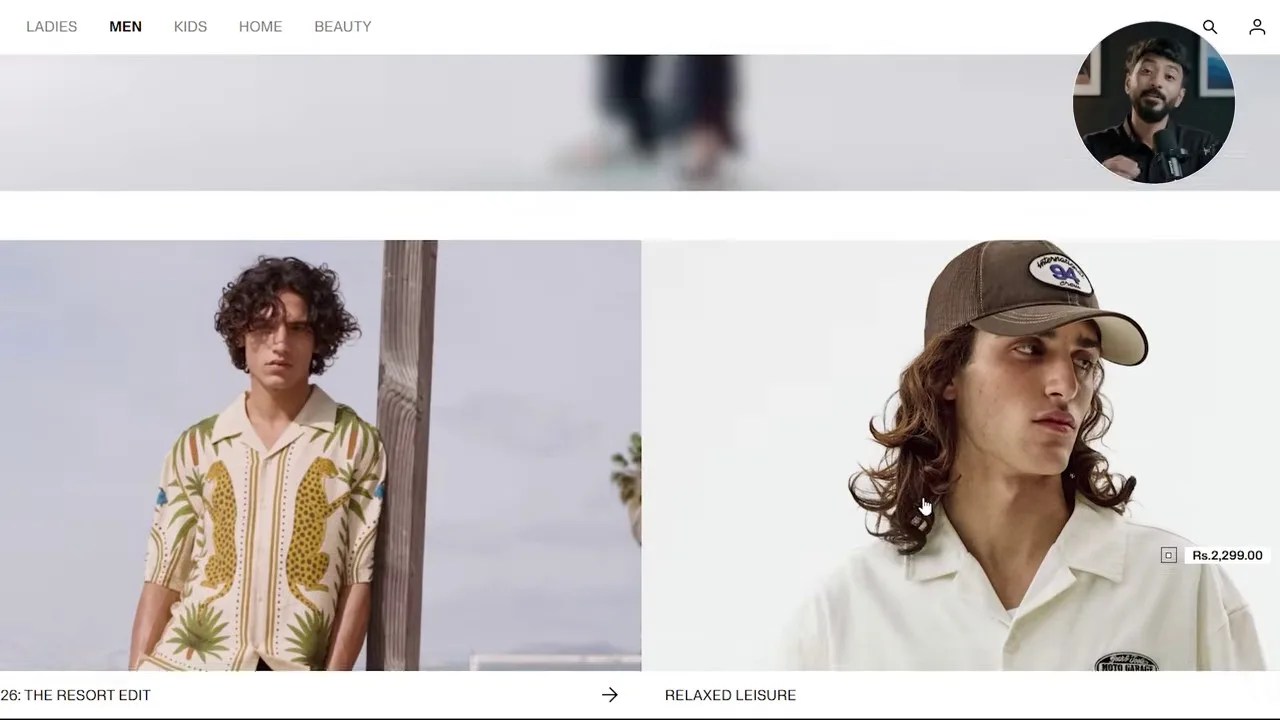
Inputting a heavy global brand URL to test if the AI can handle enterprise-grade visual structures.
After clicking continue, the tool spent a couple of minutes executing a live analysis. It didn’t just grab raw data; it interpreted the brand. It compiled the primary and secondary color hex codes, identified the clean serif and sans-serif typography, extracted H&M’s signature imagery style, and even drafted a brand tagline: “Fashion and quality at the best price in a sustainable way.”
This is wild because that tagline isn’t just a generic guess—it directly mirrors H&M’s real-world market positioning. Here is the resulting Business DNA dashboard that serves as your central command center:
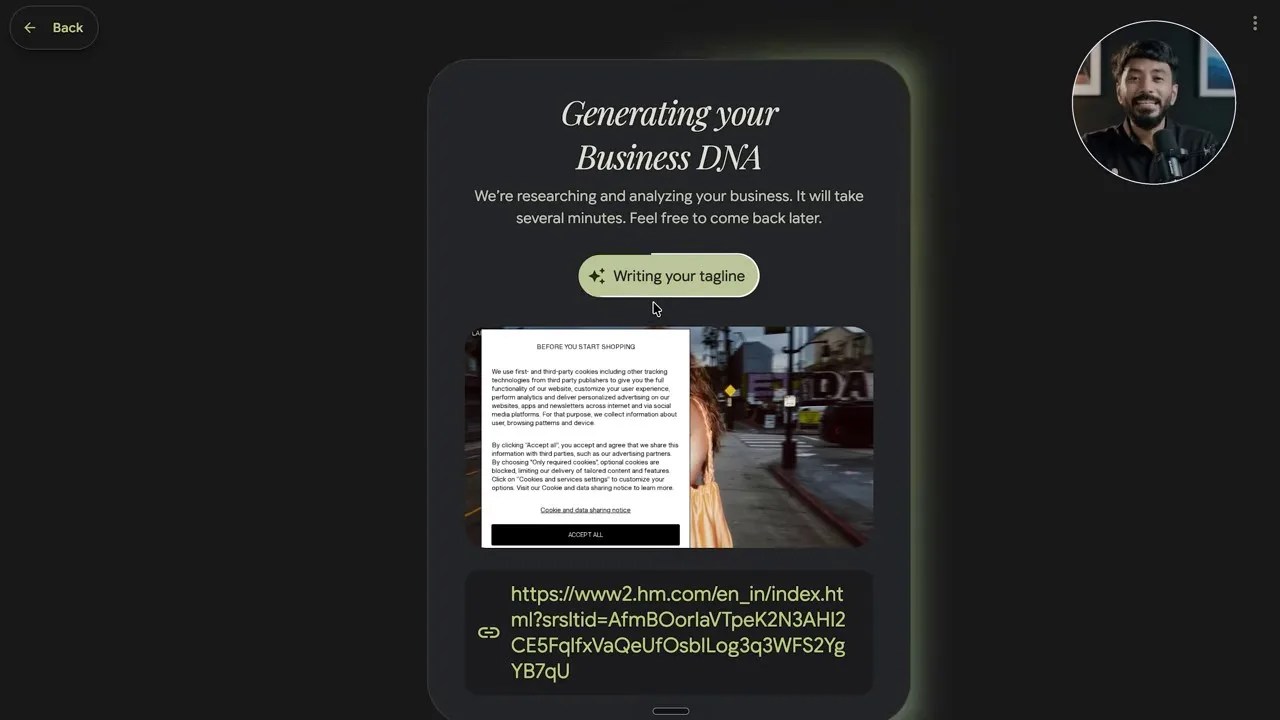
The Business DNA Dashboard: All crucial brand assets extracted and categorized cleanly without manual input.
The Four Pillars: From Scratch to Studio-Quality Assets
Once Pomely secures your brand DNA, it unlocks four distinct operational capabilities. Let’s break down how each of these pillars performs under pressure.
1. Campaign Generation & Layout Correction
Instead of staring at a blank design canvas, Pomely immediately presents you with pre-generated campaign concepts tailored to your brand values. For H&M, it served up highly relevant, seasonally appropriate concepts like “Summer starts here” and “Golden hour in every stitch.”
Selecting a concept generates multiple ready-to-post vertical ad creatives using actual product images from your scraped catalog. But here is the real feature that saved me hours of frustration: the “Fix Layout” button.
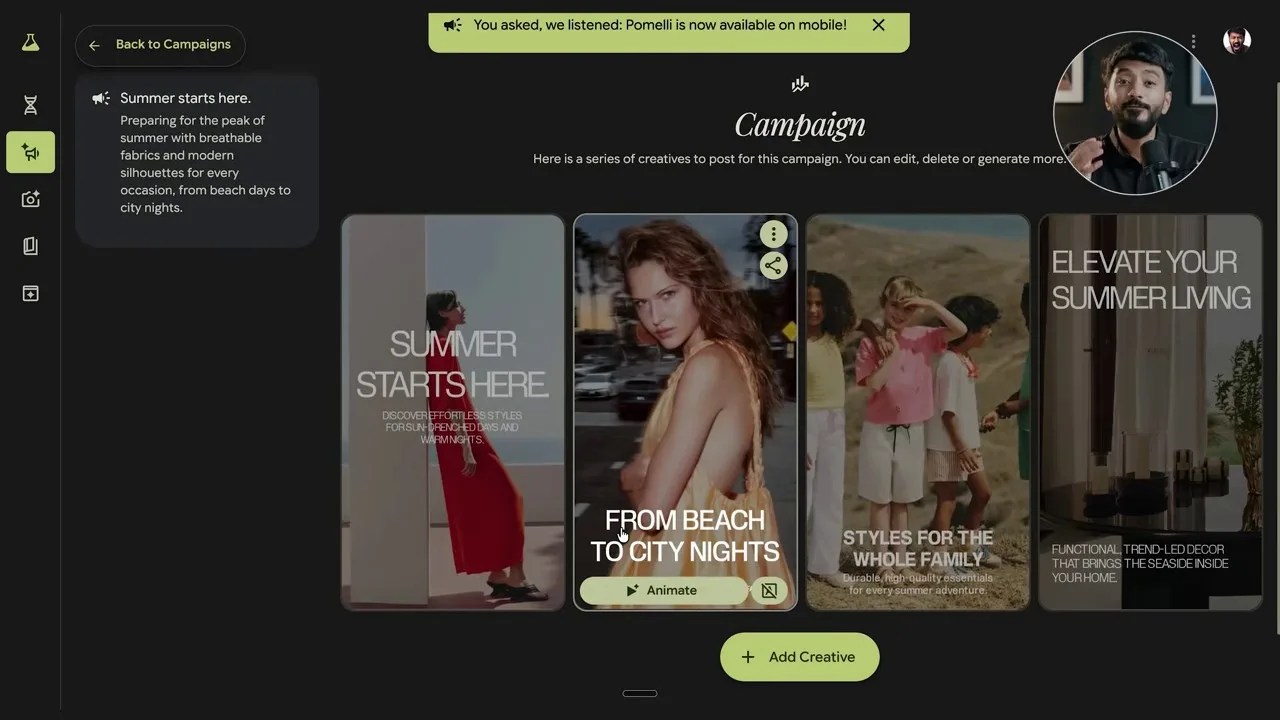
The editing bay: Fine-tuning font placement and call-to-actions with a built-in automated spacing correction engine.
Anyone who has used basic AI design generators knows they suffer from terrible layout choices—text overlapping faces, elements clipped off, or off-center buttons. Clicking “Fix Layout” forces Pomely to instantly recalculate margins, adjust font sizes, and balance the composition to make it look clean and professional.

The final output: Clean, publication-ready ad creatives generated directly from your catalog in under a minute.
2. Hyper-Realistic Model Photoshoots
Organizing a fashion or lifestyle photoshoot is traditionally a logistical nightmare. You have to book models, rent studios, manage lighting setups, and run heavy post-production edits.
Pomely circumvents this entire process with its “Model Try-On” feature. You select a flat product shot from your imported catalog, choose your target aspect ratio, and select a photo template. The AI takes the flat product and drapes it onto a photorealistic AI model in settings that match your brand’s lighting and background vibe.
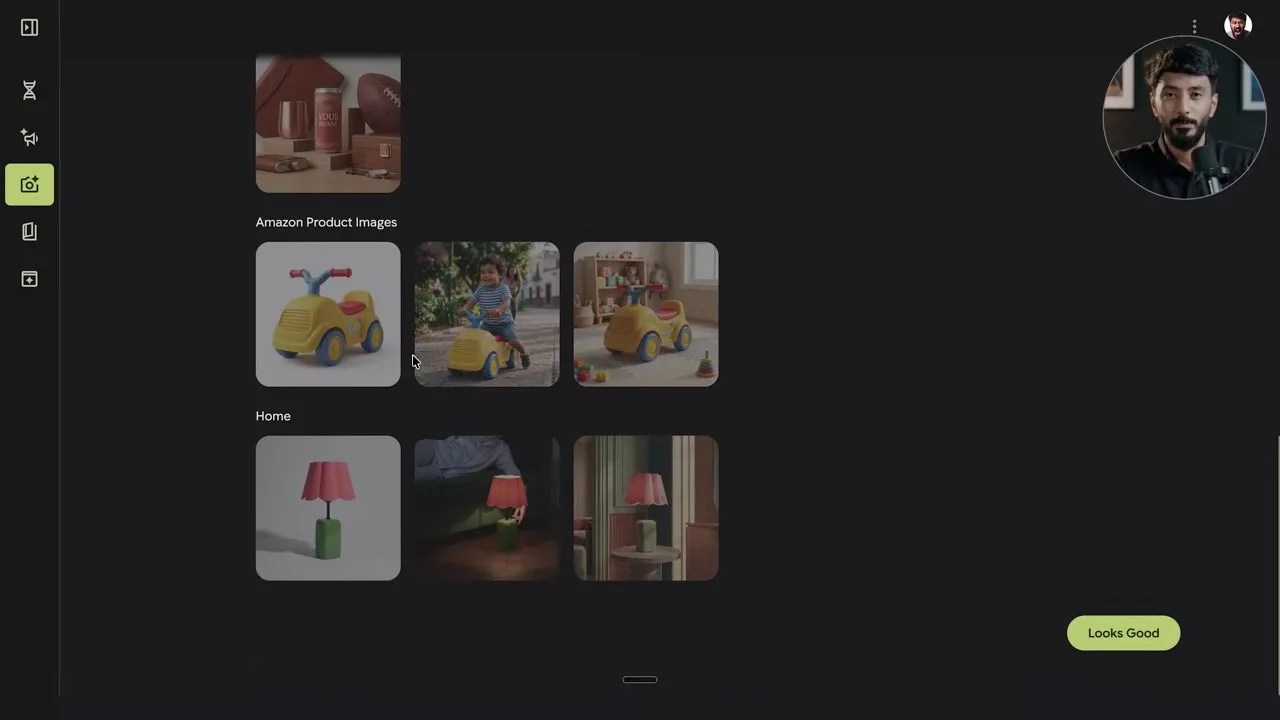
Studio-quality imagery on a zero-dollar budget: An AI-generated model wearing catalog apparel with highly realistic fabric folds.
3. Dynamic Brand Books
When you onboard a new employee or hire an external freelancer, the first thing they ask for is your brand guide. For most small companies, this document doesn’t exist because it takes days to assemble.
Pomely packages your visual DNA into a multi-page, stunningly formatted PDF or a public web link. It maps out your logo spacing rules, color palette with exact Hex codes, typography hierarchies, and tone-of-voice rules.
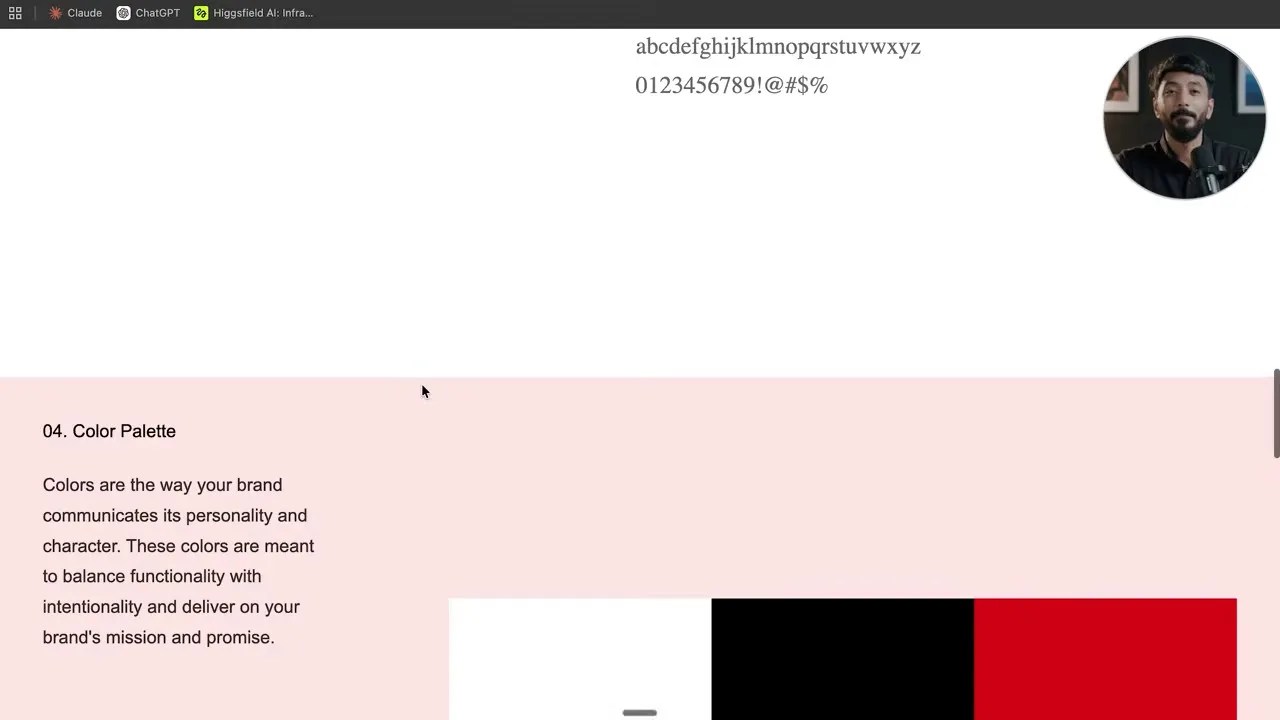
A complete, shareable brand book detailing Hex codes and logo rules, generated automatically in seconds.
4. Landing Pages That Actually Fit the Vibe
Lastly, web design. Without writing a single line of code or messing with complicated drag-and-drop web builders, Pomely constructs a complete, responsive landing page using your brand assets. The layout includes a hero banner, a curated product showcase grid, and core value propositions designed to convert traffic.
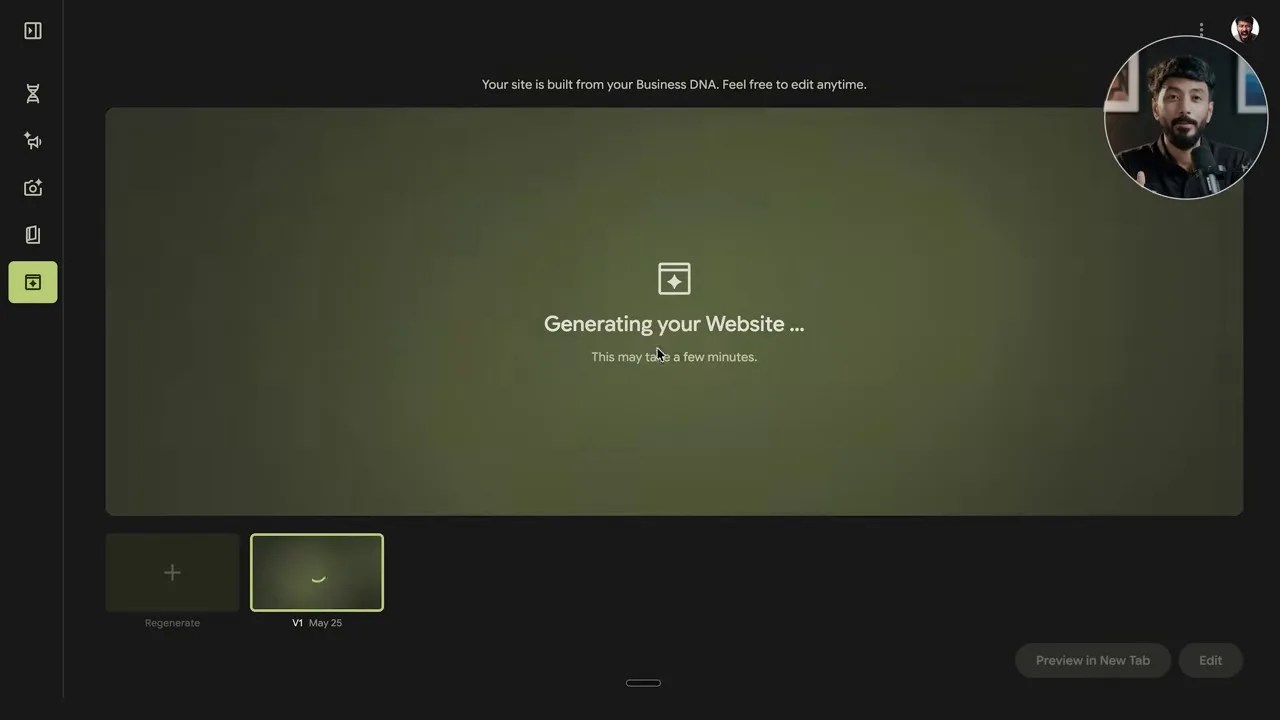
The web builder preview: A fully styled landing page that perfectly matches the established brand guidelines.
The Cold Start: Launching a Brand with Absolutely Zero Assets
But what if you are starting from complete scratch? What if you don’t have an established website or a massive brand catalog like H&M to feed the scraping tool?
To test this “cold start” scenario, we built a fictional handcrafted jewelry brand from Jaipur named Gulabi. We uploaded a handful of raw, generic photos of Kundan jewelry and entered a highly detailed chat prompt into the Pomely Agent panel. We described the target demographic (women shopping for traditional weddings), the brand aesthetic (regal, timeless, warm), and the color scheme (emerald green, royal gold, and Jaipur pink).
The result? The AI matched the qualitative prompt to the uploaded images, updated the dashboard instantly, and generated gorgeous campaign briefs tailored for Indian festivals and weddings. It even placed the uploaded flat jewelry onto photorealistic Indian models wearing matching red and magenta traditional attire. It proved that you can go from a simple business idea in your head to a fully realized visual brand in under ten minutes.
Google’s Brilliant Trojan Horse: Live Ad Pipeline Integration
At this point, you might be asking yourself: Why is Google giving this incredibly powerful tool away for free? Where is the catch?
The answer lies in the top-right corner of the dashboard under “Connected Apps.” This is Google’s ultimate masterstroke.

The integration layer: Pushing high-quality creative assets directly into your active Google Ads accounts.
By connecting your Google Ads account, the entire content-to-ad pipeline is consolidated into a single workflow. Every vertical poster, display ad, and copy variation you create inside Pomely can be pushed directly into live ad campaigns on YouTube, Google Search, and the Google Display Network.
Google doesn’t want your subscription money for design tools. They want to eliminate the operational friction that prevents you from spending money on their ad network. If you can build high-converting creatives and a clean landing page in under ten minutes for free, you are infinitely more likely to launch that ad campaign and purchase traffic. It’s a brilliant win-win strategy.
Whether you’re a solopreneur trying to look like you have an elite creative team backing you, or a veteran marketer looking to accelerate client drafts, Google Pomely is an absolute goldmine. The barriers to high-quality branding have officially dropped to zero.
🎥 Watch Original Video: Google Quietly Released The BEST Free AI For Business (Pomelli) (by Vaibhav Sisinty)