They actually did it. After years of watching AMD throw its weight around the handheld gaming market like an uncontested heavyweight champ, Intel has finally stepped into the ring with something custom-built. No more slapping hot, power-hungry laptop silicon into a tiny chassis and praying the battery doesn’t vaporize in twenty minutes. Intel has just pulled back the curtain on the Intel Arc G3 series—and they are aiming directly at AMD’s Ryzen Z dominion.
The Handheld Hegemony: Intel Arc G3 Targets AMD’s Throne
Let’s be honest: Intel’s previous attempts to power handheld consoles felt like trying to power a moped with a muscle car engine. It was heavy, hot, and thirsty. But with the new Panther Lake architecture, they are singing a different tune. Intel has introduced two distinct processors designed solely for the handheld form factor: the Arc G3 and the G3 Extreme.
These are 14-core chips, but the real differentiator is the graphics department. The Extreme model features the beefy Arc B390 GPU, boasting 12 Xe3 cores, while the standard G3 variant scales back slightly to 10 Xe3 cores. Intel is confident enough to claim that these chips can handle modern AAA titles at high settings out of the box, heavily relying on their XeSS3 AI upscaling.

The battle on paper: Intel’s G3 and G3 Extreme specifications targeting the portable gaming crown.
But before you throw your Steam Deck or ROG Ally in the trash, there’s a massive, wallet-shaped elephant in the room. While Acer’s Predator Atlas 8 is scheduled to debut this June, early leaks of an upcoming MSI handheld sporting the G3 Extreme chip suggest a price tag flirting with a staggering $2,000.
“So, the long-awaited AMD killer is, for now, mostly a wallet killer.”
The $300 Laptop Illusion: Snapdragon C and the RAM Tax
Meanwhile, Qualcomm is making a play for the absolute low-end of the market. They just announced the Snapdragon C, a chip engineered to drag Windows laptops down to a budget-friendly $300 price point, undercuting premium alternatives like Apple’s MacBook Neo.
How did they slash the cost so dramatically? By gutting the high-performance Orion cores found in the Snapdragon X series and replacing them with Kryo cores yanked straight out of their mobile phone inventory. Yes, it’s essentially two phones in a trench coat masquerading as a PC processor.

The $300 compromises: Acer’s plastic Aspire Go 15, the first machine running Qualcomm’s budget Snapdragon C.
To make matters worse, while the chip features an NPU for AI, it fails to meet Microsoft’s strict hardware threshold for Copilot Plus features. This leaves you with an “AI Laptop” that can’t actually run the highly advertised OS-level AI tricks. Additionally, with the current global memory shortage quadrupling RAM prices, the dream of sub-$500 PCs is slowly dying. Laptops like the Acer Aspire Go 15 will ship with a meager 8GB of non-upgradeable RAM. In 2025, that is a tough pill to swallow.
Ice Cold: How “Frost” Sniffs Your SSD via Browser
Just when you thought your web browser was a safe sandbox, security researchers from Austria have shattered that peace of mind. They’ve detailed a brand-new side-channel attack called Frost that allows malicious websites to spy on your system simply by observing how your SSD behaves.

A visual breakdown of the Frost side-channel exploit, utilizing neural networks to map out private user activity.
Frost works by exploiting the Origin Private File System (OPFS)—a sandbox storage area where websites can read and write data without asking for user permission. By measuring the micro-timings of read/write operations (a classic contention side-channel attack), Frost feeds this raw data into a convolutional neural network. The AI can then successfully infer exactly what other apps or websites you have active on your computer.
The saving grace? The attack is heavily restricted. The OPFS folder has to reside on the exact same physical drive as the targeted apps, and the cache files would balloon to a size so massive that most users would notice something is wrong. Thankfully, there is no evidence yet of this being exploited in the wild.
Rockets, Strikes, and Big Yacht Energy
Let’s speed things up with a quick look at the chaos unfolding elsewhere in tech:
- Steam Deck’s Price Hike Triumph: Valve raised the price of the Steam Deck by a jaw-dropping $300 in North America. The response? Gamers bought it out in less than 24 hours anyway. Epic Games CEO Tim Sweeney couldn’t resist throwing shade, suggesting the extra cash was funding Gabe Newell’s mega-yachts. At this rate, Gabe is upgrading to giga-yacht status.
- Wikipedia Editors Mutiny: Hundreds of volunteer Wikipedia editors are threatening a strike following layoffs of the crucial Community Tech Team—the group that develops custom tools for editors. A complete halt in volunteer operations could spiral the platform’s reliability downwards incredibly fast.
- Blue Origin’s Literal Burnout: Right after NASA announced a massive partnership with Jeff Bezos’s Blue Origin to build a permanent base on the Moon by 2032, things went sideways. Exactly two days post-announcement, Blue Origin’s New Glenn rocket spectacularly exploded on its Florida launchpad.

Houston, we have a very expensive problem: The aftermath of Blue Origin’s New Glenn rocket failure.
Ferrari’s First EV: When Jony Ive Designs a 1,000-Horsepower Apple Watch
Ferrari has officially taken the wraps off its first-ever electric vehicle, dubbed the Luch. It is a 1,035-horsepower, $640,000 liftback designed with the help of legendary ex-Apple designer Jony Ive.
While the raw power figures are mind-boggling, the aesthetic direction has raised quite a few eyebrows. The interior looks less like a high-end Italian racing cockpit and more like an Apple Watch that gained sentience, grew ten times its size, and slapped on a prancing horse badge.
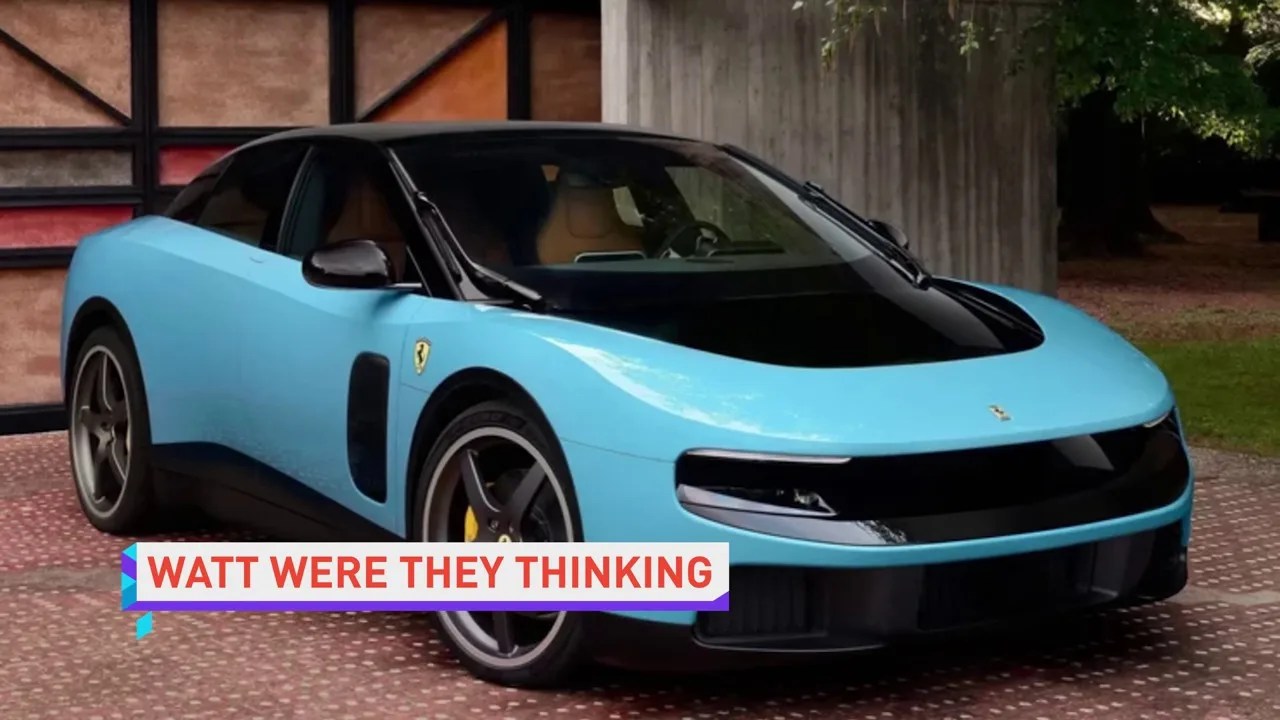
Silicon Valley meets Maranello: The highly controversial, watch-inspired interior of the $640k Ferrari Luch EV.
Wall Street was seemingly unimpressed with the design language; Ferrari’s stock dipped a solid 5% within 24 hours of the grand reveal. It seems that even one thousand horses can’t outrun a bad first impression.
As the mobile gaming space gets more crowded and EVs try to find their soul, the tech world is only getting weirder. Will the long-term viability of the Intel Arc G3 justify its premium price tag? Let me know your thoughts in the comments below.