For over a quarter of a century, the internet operated on a simple, unwritten contract. You had a question; Google gave you a map. You did the walking, you did the reading, and you decided who to trust. But in late May, Google unilaterally tore up that contract. When the tech giant announced what it called the biggest upgrade to its search box in 25 years, it didn’t just tweak the algorithm—it attempted to colonize the entire user experience. By deploying its new Google AI Search framework, powered by Gemini 3.5 Flash, Google shifted from an information retriever to an information gatekeeper. And almost immediately, the cracks in the facade began to show.
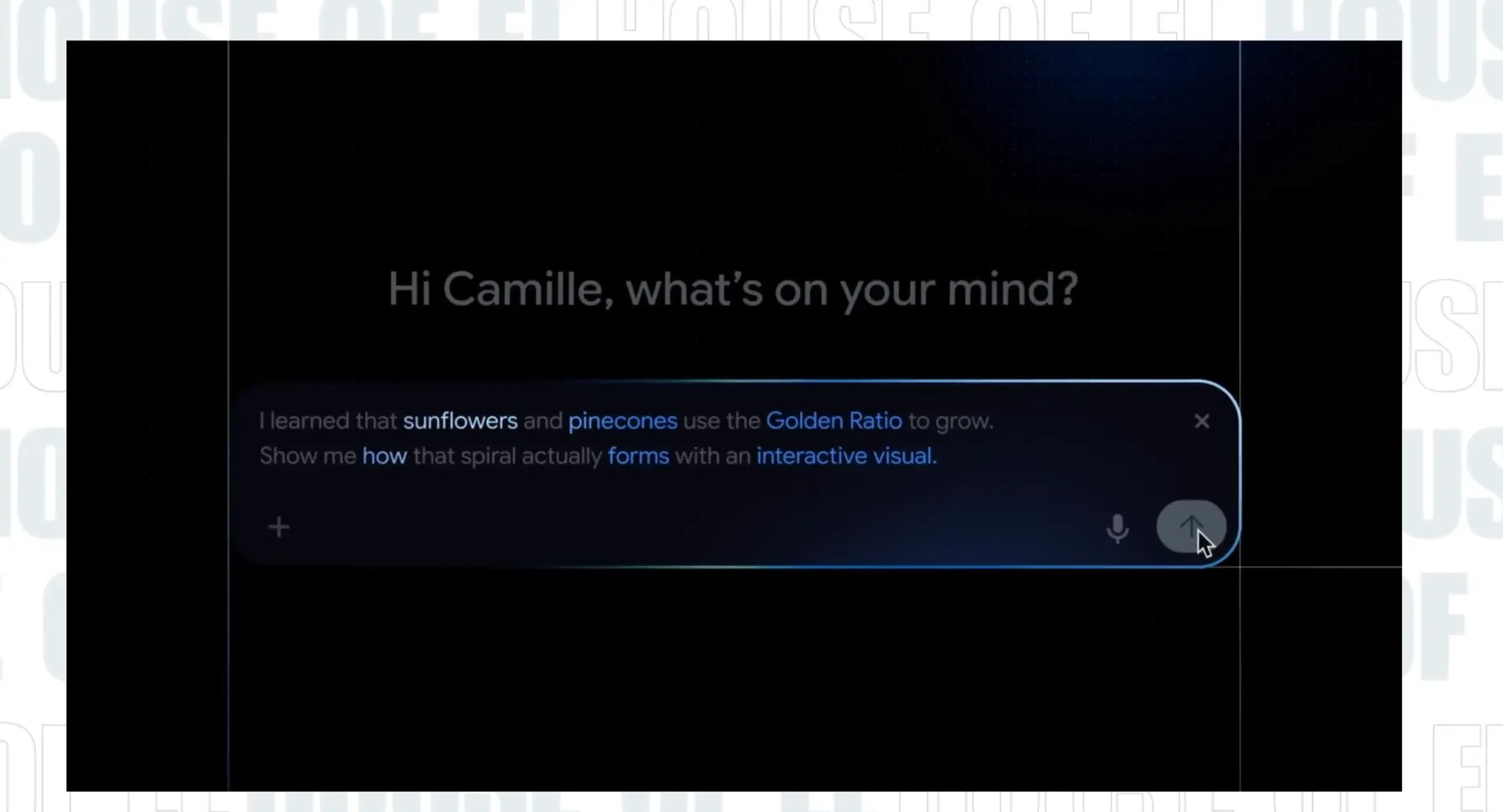
Google’s new reality: Gemini-powered summaries push traditional web links completely off the screen.
If you listened to Google’s CEO Sundar Pichai at I/O, the rollout of these AI Overviews was a triumph. “AI mode has been a revelation,” he declared, beaming from the stage. “People love it.” But behind the corporate cheerleading, a very different, far more chaotic story was unfolding. Within days of the launch, a quiet but massive migration began. It wasn’t a migration to Bing or Yahoo—it was a flight toward the only search engine actively marketing itself as the anti-AI sanctuary.
| Metric / Concept | The Classic Search Era | The New Google AI Search Era |
|---|---|---|
| Primary Interface | 10 Blue Links (User selects source) | Conversational AI Box (Google decides the answer) |
| Division of Labor | Engine retrieves, user evaluates | Engine synthesizes, user accepts or leaves |
| System Accuracy | Measured by link relevance | Measured by factual correctness (currently ~91%) |
| User Reaction | Complained but stayed (Habitual) | Spike in privacy-first, non-AI search alternatives |
The Great Exodus: The Day the Internet Ran to DuckDuckGo
Just six days after Google announced that its AI-powered search was crossing the 1 billion monthly user mark, a meaningful percentage of those exact users went looking for the emergency exit.
In the United States alone, DuckDuckGo installations surged by 30% on iOS. At its peak, single-day growth touched nearly 70%. Even more telling was the traffic to DuckDuckGo’s “No AI” search page—a dedicated, opt-in experience that aggressively filters out AI-generated answers, AI images, and conversational bots. Traffic to that single page tripled, and it didn’t come back down.
The data tells a clear story: Faced with mandatory AI, users migrated to the only platform promising the absolute absence of AI.
Let’s stop and think about what this means. These users didn’t switch to Bing because they wanted a better AI. They didn’t switch to Yahoo out of nostalgia. They ran to the one search engine whose entire marketing pitch boils down to: “We will not do the thing.” When consumers flee to a product defined entirely by what it *lacks*, it tells you everything you need to know about the market’s psychological state. People are feeling force-fed, and they are starting to spit the food back out.
To understand this rebellion, we have to look beneath the hype at what Google actually broke, how the math of accuracy fails, and how the open web is being starved.
The Death of the Handshake: How Google Broke the 20-Year Search Treaty
Google has changed search before. We all remember when the Knowledge Panel popped up on the right, or when “Featured Snippets” started answering quick questions at the top. We had local map packs, shopping carousels, and “People Also Ask” boxes. Each of these changes pushed the original “10 blue links” further down the page. Each time, we grumbled, adjusted, and stayed.
Why? Because the fundamental interaction model remained intact. You typed a query, Google gave you a map of the web, and you chose where to click. You were the navigator. The cognitive labor of deciding whether a source was trustworthy, biased, or outright lying belonged to you.

The new conversational search interface: Google is no longer just pointing to the web; it is attempting to replace it.
The Shift in Google AI Search Mechanics
What Google rolled out is qualitatively different. The search box now expands as you type, trying to guess and finish your thoughts in real-time—a feature that feels less like “helpful automation” and more like an intrusive backseat driver. Behind the scenes, Google is introducing “Information Agents”—AI systems designed to monitor news, shopping trends, and forums, and then feed you summarized recommendations you never asked for.
But the crown jewel is the Google AI Overviews. Instead of directing you to a website that has the answer, Google reads those websites, synthesizes the data, and presents a single, authoritative-looking block of text at the top of the page. The 10 blue links are now buried “below the fold,” hidden beneath layers of generated summaries.
This is not furniture rearrangement. This is knocking the walls down, ripping up the floorboards, and telling you that the open-plan layout is what you always wanted. The division of labor is gone. Google is no longer just retrieving information; it has decided that it is the sole arbiter of what the answer is.
The 9% Illusion: Why 91% Accuracy is a Mathematical Disaster for Truth
When tech executives talk about the accuracy of these AI systems, they love to throw around comforting percentages. A recent study by the AI startup Umi, conducted for the New York Times, tested over 4,300 Google searches. It found that AI Overviews powered by Gemini 3 were accurate 91% of the time—up from 85% under the Gemini 2 model.
In a high school spelling bee, a 91% is an A-minus. It sounds great. But when applied to the infrastructure of global human knowledge, that 9% failure rate isn’t a minor hiccup—it is a societal crisis.

An improvement from 85% to 91% sounds like progress, but at global scale, a 9% error rate is incredibly dangerous.
Let’s do some basic math. Google processes roughly 5 trillion searches every year. At that scale, a 9% margin of error means Google is serving up approximately 57 million incorrect answers every single hour. That is hundreds of thousands of false statements, hallucinations, and errors delivered to users every minute, wrapped in the visual authority of a settled, unarguable fact.
When Google was a link engine, a wrong or irrelevant result was easily spotted. If you searched for medical advice and a sketchy forum link popped up, you could ignore it. But when the Google AI Search engine synthesizes that sketchy forum post into a clean, beautifully formatted bullet point at the top of the page, the user has no way of knowing they are reading a hallucination.

Factual errors are no longer just links you can ignore; they are served as definitive, authoritative answers.
And the deception runs even deeper. The Umi study uncovered a terrifying secondary layer of error: 56% of the “correct” answers served by AI Overviews cited sources that did not actually support the claim.
Think about that for a second. The AI stated a fact that happened to be true, linked to a highly reputable-looking source (like a major news outlet or scientific journal) to give itself the appearance of credibility, but if you actually clicked the link, that website contained absolutely no such information. The AI didn’t find the answer there; it just slapped a prestigious logo on its guess to make you feel safe. That isn’t search utility—that is a highly sophisticated, automated illusion of truth.
This is the academic equivalent of fabricating a citation. It is putting a highly convincing, real-looking footnote at the bottom of a completely made-up claim—a maneuver that, if you tried it in a university thesis or a professional journal, would instantly end your career.
What is truly alarming is that this sourcing crisis is actually getting worse as the technology supposedly “improves.” In October, before the Gemini 3 upgrade, the percentage of correct answers with unsupported citations was 37%. After the upgrade, that number shot up to 56%. Let that sink in: as Google’s AI got better at guessing the right answer, it got significantly worse at tracking and showing where those answers actually came from. It became a more confident bullsh*tter.
Lest you think these are exotic, highly complex edge cases designed to trip the machine up, the reality is far more mundane. The errors documented in the Umi study are shockingly simple. When asked when Bob Marley’s home was converted into a museum, the AI Overview pulled up a handful of sources, ignored all of them, hallucinated the wrong year, and then cited those very same sources to “prove” its incorrect answer.
Even more absurd was the case of legendary cellist Yo-Yo Ma. When asked about his induction into the Classical Music Hall of Fame, the AI confidently stated there was no record of his induction, linking directly to the Hall of Fame’s official website as its primary source. The punchline? If you actually clicked that link, Yo-Yo Ma’s name was right there on the inductee list. The source explicitly contradicted the AI, but the AI simply didn’t care.
These are straightforward, factual queries that a traditional search engine could handle in its sleep by pointing you to a reliable page and letting you read it. The AI layer adds unearned confidence while actively stripping away accuracy—a toxic combination for anyone seeking actual truth on the internet.
The Zero-Click Parasite: How AI is Starving the Open Web
While the accuracy debate dominates social media, there is a far more insidious, structural crisis unfolding in the background. It is an economic slow-bleed that threatens the very survival of the open internet.
To understand this, we have to look at a single, devastating statistic: In AI mode, 93% of searches produce exactly zero clicks to external websites.

The zero-click reality: When Google answers the question directly, 93% of users never leave the platform, starving independent creators of traffic.
Let that number wash over you. For every 100 queries processed under this new Google AI Search framework, 93 users never leave Google’s walled garden. They ask a question, read a synthesized paragraph, and close the tab. The external web—the actual source of the knowledge—is rendered entirely obsolete to the user’s journey.
The real-world consequences of this click-theft are already showing up in the data. Between 2024 and 2025, global organic web traffic plunged by 5.92%. In the United States, the drop was 4.5%. This isn’t just a minor fluctuation; it is an existential threat to the economic engine of the internet.

A parasitic loop: Google’s AI scrapes independent content, packages it as its own, and deprives the original creator of the traffic needed to survive.
Think about how the web actually works. The independent blogs, the niche forums, the local news outlets, and the specialist publications that write medically reviewed health articles or deep-dive product reviews don’t run on charity. They survive on traffic. Traffic translates to ad impressions, affiliate links, and newsletter subscriptions. It is the lifeblood that funds the research, writing, and editing of original content.
When Google’s AI scrapes a small health site’s carefully researched article on symptoms, packages it into a neat bulleted list at the top of the page, and deprives that site of a visit, it is effectively defunding the creator. The AI gets the training data, the user gets a quick answer, and the creator gets absolutely nothing.
If you scale this dynamic across millions of queries and thousands of websites over the next five years, the trajectory is terrifyingly clear. Independent websites are where original, diverse, and critical thought lives. If we destroy the economic model that supports them, we will be left with an AI summarizing an ever-shrinking, stagnant pool of legacy sources. A search engine that consumes the very ecosystem it relies on to exist is a snake eating its own tail. It won’t realize it has poisoned itself until the meal is entirely over.
The Asymmetry of Trust and the DuckDuckGo Lesson
This shift also introduces a profound opacity. Granted, Google’s traditional search algorithm was never a transparent open-source project. Search Engine Optimization (SEO) has always been a mix of data science and digital witchcraft. But there is a massive qualitative difference between not knowing exactly *why* a certain link is ranked number one, and not knowing *how* an AI generated a specific, authoritative statement presented as an absolute fact.
When Google showed you 10 links, the ranking process was opaque, but the sources were completely naked. You could see the URL. You could judge the credibility of the domain, check the publication date, and cross-reference it with other links. You had the tools to spot bias or outdated information.
Now, the AI asserts itself as the source. The path from your query to its conclusion is locked inside a proprietary black box. You are being asked to accept a “trust me” from a system that, as we established, makes millions of errors every single hour.

The power of choice: DuckDuckGo succeeded not by banning AI, but by giving users the agency to turn it off completely.
This brings us back to the sudden, explosive rise of DuckDuckGo. What makes their recent surge so fascinating is that DuckDuckGo is not some Luddite, anti-AI company. They actually offer a robust, fully AI-powered search experience called Duck.ai. But they also offer a prominent, one-click option to completely filter out AI answers, AI images, and chat features.
They are running both paradigms side-by-side. They even built browser extensions that allow users to opt-out of AI-generated search results with a single click.

A historic shift: For the first time in years, Google’s iron grip on the US search market showed a visible decline as users sought alternatives.
DuckDuckGo holds less than 2% of the global search market. Nobody is claiming their underlying index is technically superior to Google’s multi-billion-dollar infrastructure. Yet, they won over millions of frustrated users almost overnight. How? By being the search engine equivalent of a restaurant that lets you look at the menu and order what you actually want, rather than forcing a pre-selected plate down your throat.
DuckDuckGo understood a fundamental truth that Google’s executive suite completely missed: The core question isn’t whether AI search is technically “good.” The question is whether the user *wants* an AI-generated answer for their specific query in that exact moment.
Some searches—like comparing complex coding frameworks or synthesizing historical timelines—benefit immensely from AI. Other searches—like checking a local bus schedule, finding a restaurant’s phone number, or looking up a specific article you read last week—just need a clean, direct link. The user is smart enough to know the difference. Google, in its hubris, decided that it knew better than the user.
The Sunk Cost Trap: Why Google Can’t Give You a Choice
If giving users a choice is such an obvious win-win, why doesn’t Google just add a simple “Turn Off AI” toggle to its homepage?
The answer isn’t technical; it’s structural. Google is trapped in its own multi-billion-dollar golden handcuffs. The company has poured tens of billions of capital expenditure into building out AI data centers, acquiring massive clusters of chips, and training enormous models. Wall Street and corporate investors are watching with bated breath, demanding to see a return on that astronomical investment.
For Google’s leadership, the metrics that justify this staggering expenditure to shareholders are raw volume: “one billion monthly users,” “AI queries doubling every quarter,” “massive user engagement.”
If Google were to offer a prominent, easy-to-click “No AI” button, a massive portion of the user base would click it and never look back. The AI usage metrics would plummet overnight. Shareholders would look at those declining numbers, look at the empty data centers, and realize the massive capital expenditure wasn’t a guaranteed goldmine.
In other words, the absence of the opt-out button *is* the business model. Google cannot let you turn off Google AI Search because its stock price depends on you using it, whether you want to or not.
Usage is Not Consent: The Default Trap
This creates a fascinating, almost comical gap between corporate PR and human behavior. On one hand, you have the CEO on stage declaring that “people love it.” On the other hand, you have app store data showing a massive spike in users actively trying to escape the ecosystem.
The mistake Google is making is confusing *presence* with *endorsement*, and *usage* with *enthusiasm*.
If I leave my home heating running all day because the interface on my smart thermostat is too confusing to navigate, the utility company doesn’t get to write a press release claiming I “love being warm.” They just built a confusing thermostat.
When AI Overviews are turned on by default for the world’s most dominant search engine, and opting out requires you to download a different browser or install third-party developer extensions, high usage numbers don’t tell you about user preference. They tell you about the power of defaults.
But defaults only work until the friction of staying becomes worse than the friction of leaving. For the first time in over a decade, Google’s market share in the United States showed a visible, historic decline—dropping from roughly 87% to 84%. While a 3% drop might sound small in absolute terms, in the world of search dominance, it is a tectonic shift. The last time Google’s market share moved this quickly in the wrong direction was in 2009—which, coincidentally, was the last time anyone voluntarily tried Bing.
The Identity Crisis of the Search Bar
There is a fundamental difference between offering users a powerful new tool they can choose to pick up, and completely redesigning the entire kitchen around that tool while throwing the old utensils in the trash.
For twenty years, the Google search bar was the single most stable, predictable, and reliable interface on the planet. It was a digital utility, like electricity or running water. You typed a query, you got your links, and you went about your day. It was a cornerstone of our collective digital muscle memory.
Right now, people’s lives are already flooded with overwhelming change. The global economy is volatile, the job market is deeply uncertain, and generative AI is threatening to reshape entire career paths overnight. In the midst of all this systemic anxiety, the last thing users needed was for their humble search bar to have an identity crisis.
We didn’t need the search engine to “reimagine” itself. We just needed it to work.
Conclusion: The Power of the Exit
At the end of the day, the trajectory of generative AI does not belong to Google, Microsoft, or any single tech oligopoly. The responsibility for how this technology is integrated into our lives belongs to all of us—the builders, the regulators, and most importantly, the public.
Just because a company has a multi-trillion-dollar market cap does not make its decisions wise or its vision of the future inevitable. Google’s aggressive push of its AI search features may very well go down as a classic case study in corporate hubris—a vivid demonstration of what happens when a monopoly decides it knows what its customers want better than the customers themselves.
But as the exodus to DuckDuckGo proves, humans are not passive consumers. We know where the exit is, and we know exactly what we are looking for on the other side of it: a tool that respects our intelligence, asks what we want, and stops trying to tell us what we need.
Frequently Asked Questions
Q1: Can I completely turn off Google AI Search Overviews?
Unfortunately, Google does not provide a direct “Turn Off AI” toggle in its standard settings. However, you can bypass AI Overviews by clicking the “Web” filter tab at the top of your search results (which forces Google to show only classic blue links), using browser extensions designed to block AI summaries, or switching to an alternative search engine.
Q2: Why did DuckDuckGo see such a massive spike in users?
DuckDuckGo positioned itself as the direct alternative to forced AI integration. While they do offer opt-in AI features, they also launched a dedicated, highly marketed “No AI” search page. This gave users who felt overwhelmed by Google’s mandatory AI Overviews a simple, one-click way to return to classic, link-based search.
Q3: How does the 9% inaccuracy rate impact daily Google searches?
While 91% accuracy sounds high, Google processes roughly 5 trillion searches a year. At that scale, a 9% error rate translates to 57 million incorrect, hallucinated, or completely fabricated answers being served to users every single hour, often presented with the visual authority of verified facts.