For years, Microsoft’s staggering AI empire felt like a brilliantly executed rental agreement. They poured billions into OpenAI, integrated GPT models into every nook and cranny of Azure, and aggressively pushed Copilot onto hundreds of millions of Windows users. To the casual observer, Satya Nadella had pulled off the heist of the century. But to those of us watching the balance sheets and API dependency charts, a nagging question remained: What happens when Microsoft wants to own the intellectual property, not just rent it?
At the Build 2026 conference in San Francisco, we got our answer. And it was a loud, unmistakable declaration of independence.
Microsoft shocked the tech world by unveiling seven **Microsoft new AI models** built entirely in-house, alongside a sophisticated agent framework, an ambient assistant named Scout, and a unified enterprise intelligence layer called Microsoft IQ. This isn’t just a minor product update; it is a calculated, strategic line drawn in the sand. Microsoft is telling OpenAI, Anthropic, and the rest of the industry that it is ready to run the table on its own terms.
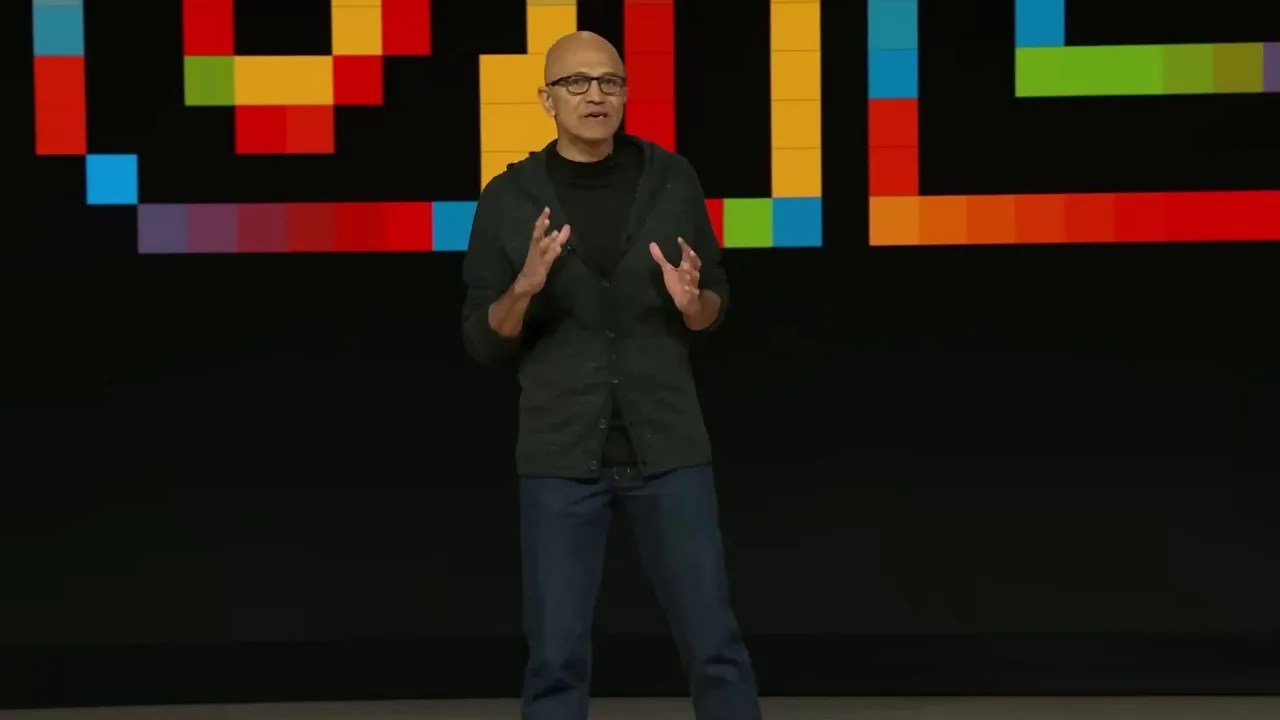
Figure 1: Microsoft’s surprise reveal of its new independent AI stack, signaling a massive shift away from third-party reliance.
Let’s cut through the marketing fluff and analyze what this tectonic shift actually means for developers, enterprises, and the fragile alliances shaping the future of silicon and software.
| Model / System | Core Specifications | Primary Target & Integration |
|---|---|---|
| MAI Thinking One | 35B Active Parameters, 128k-256k Context Window | Reasoning, complex logic, McKinsey-tested enterprise tasks |
| MAI Code 1 Flash | Ultra-low latency, optimized for syntax generation | GitHub Copilot & Visual Studio Code native integration |
| MAI Image 2.5 | Text-to-image & Image-to-image with Flash variant | PowerPoint slides design, OneDrive visual assets management |
| Microsoft IQ | Unified semantic layer (Work, Fabric, Foundry, Web IQ) | Grounding agents in corporate data with minimal hallucinations |
| Microsoft Scout | Autopilot class, always-on background agent | Microsoft 365 workflow automation under user permissions |
The Economics of Autonomy: Why Microsoft is Moving On
To understand why Satya Nadella stood on stage and declared that “the time has come for every company to move from just consuming a frontier model to fully participating at the frontier,” you have to look at the brutal reality of cloud economics.
Every single time a user queries Copilot and it routes back to an OpenAI model, a transaction cost is paid. Microsoft might be a major shareholder in OpenAI, but they do not own the underlying margins. By running their own foundational models directly on Azure, they capture the entire value chain. They control the silicon, the virtualization layer, the model weights, and the application interface. It is a margin-expansion play of epic proportions.
But it’s not just about saving pennies on API calls. It’s about risk mitigation. Relying on a single startup—even one you poured $13+ billion into—is a terrifying single point of failure for a trillion-dollar software giant. By diversifying into their own proprietary stack, Microsoft protects its enterprise customers from boardroom dramas, legal challenges over training data, and sudden shifts in partnership dynamics.
MAI Thinking One: The 35-Billion Parameter Mind
The undisputed crown jewel of this announcement is MAI Thinking One, Microsoft’s very first reasoning model built completely from scratch. Unlike many smaller models that rely on “distillation” (essentially copying the homework of larger frontier models like GPT-4 or Claude), MAI Thinking One was trained on clean, commercially licensed datasets.
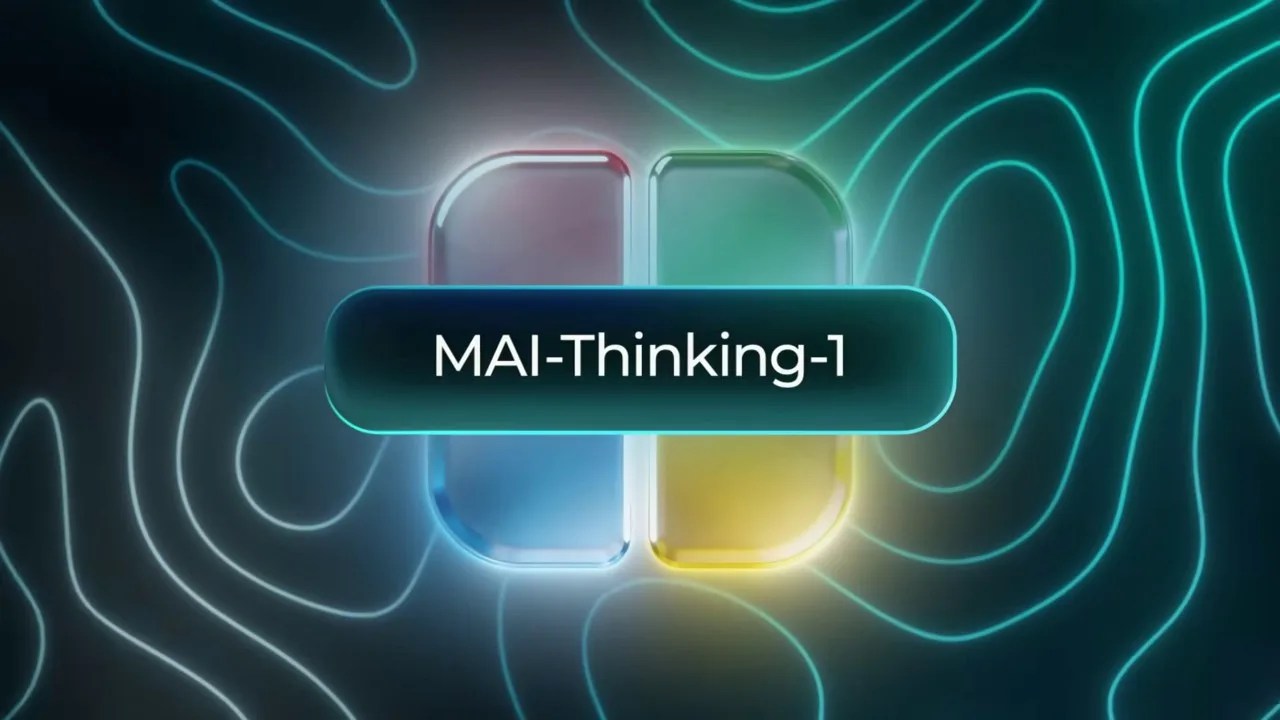
Figure 2: The structural breakdown of MAI Thinking One, showcasing its 35-billion active parameters designed for deep reasoning.
Why does the lack of distillation matter? Because for enterprise clients, legal provenance is everything. Large banks, healthcare providers, and defense contractors cannot afford the risk of copyright lawsuits or model-copying claims. By certifying that MAI Thinking One is built on clean, legally sound ground, Microsoft is giving conservative corporate buyers a massive green light.
In terms of raw horsepower, Microsoft is making some incredibly bold claims. Mustafa Suleyman, CEO of Microsoft AI, revealed that in custom tuning runs performed for the global consulting giant McKinsey, MAI Thinking One actually outperformed OpenAI’s GPT-5.5 on quality. More importantly, they project it to be roughly 10 times more cost-efficient when scaled across comparable model sizes.
With a context window floating between 128,000 and 256,000 tokens depending on the specific developer implementation, MAI Thinking One is positioned as a highly efficient, mid-sized workhorse. It doesn’t need to be a bloated, trillion-parameter monster to solve complex reasoning problems; it just needs to be smart, fast, and cheap to run on Azure silicon.
The Specialized Suite: Code, Pixels, and Voices
Microsoft isn’t just launching a single reasoning model and calling it a day. They have introduced a comprehensive, specialized family of **Microsoft new AI models** designed to handle the multi-sensory demands of modern office work.
MAI Code 1 Flash: Taking on Claude at the Source
For developers, the battle for the IDE is deeply personal. Anthropic’s Claude has recently dominated developer mindshare with its exceptional coding capabilities. Microsoft is aiming directly at that crown with MAI Code 1 Flash.
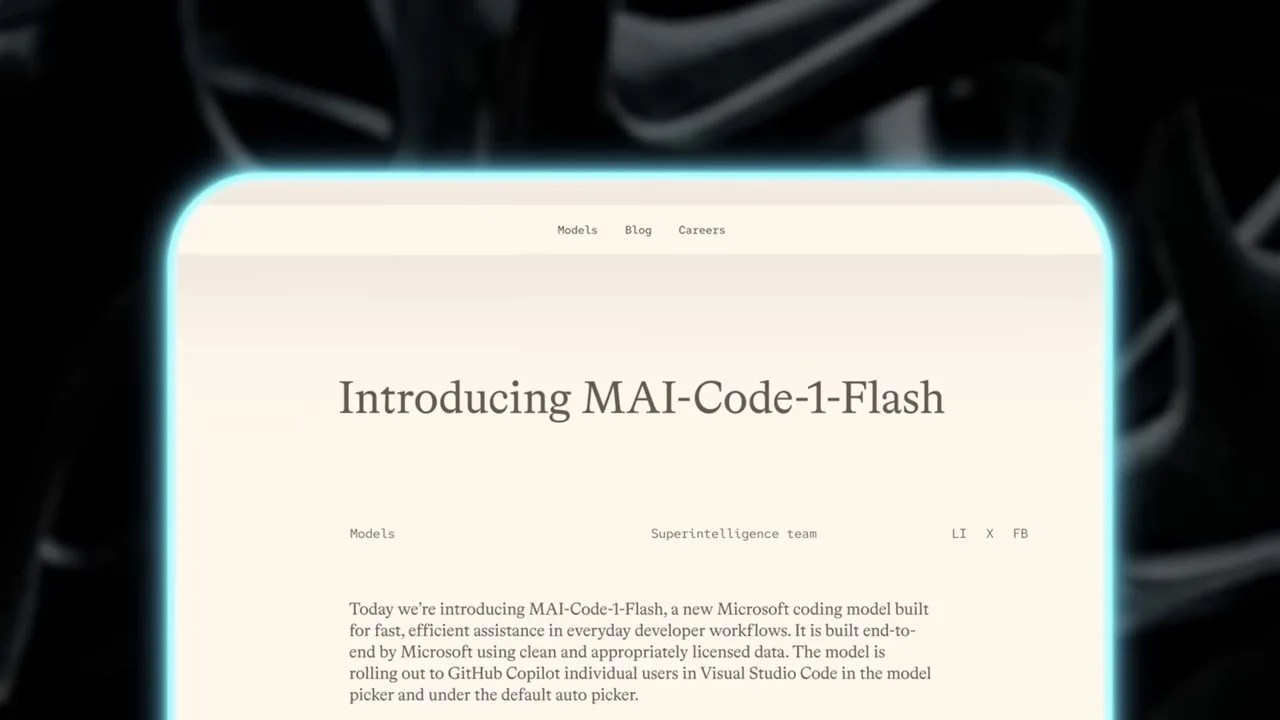
Figure 3: MAI Code 1 Flash executing real-time code generation within Visual Studio Code, bypassing external API bottlenecks.
Rather than sitting in an isolated research lab, MAI Code 1 Flash is being integrated directly into the tools developers live in: GitHub Copilot and Visual Studio Code. According to independent evaluations run by Surge, MAI Thinking One and its Flash counterpart matched Claude 3.5 Opus on grueling benchmarks like SWE-bench Pro, and were actually preferred over Claude 3.5 Sonnet in blind human evaluations. The goal here is speed: generating high-quality source code from natural language prompts without the latency lag of external APIs.
Beyond Text: The Multimodal Rollout of Microsoft New AI Models
The rest of the family addresses the rich media of corporate life:
- MAI Image 2.5 (and Flash): Deeply integrated into PowerPoint and OneDrive, this model allows users to transform raw sketches or plain text descriptions into polished, professional-grade slide graphics and marketing assets.
- MAI Transcribe 1.5: Offering real-time, high-accuracy streaming transcription across 43 languages.
- MAI Voice 2: A highly expressive speech generation model supporting over 15 additional languages, designed to give enterprise agents a natural, human-like voice.
Microsoft IQ: The Enterprise Nervous System
Even the most powerful reasoning model is useless if it doesn’t understand the context of the business it’s operating in. If you ask a generic chatbot about “the quarterly budget,” it will hallucinate or apologize. It has no idea who your manager is, what files are on your OneDrive, or how your structured SQL databases are organized.
Enter Microsoft IQ, a newly available, unified intelligence layer designed to act as the collective nervous system of an organization. IQ is built to ground AI models in actual, real-world business context, virtually eliminating the hallucination problem for enterprise agents.
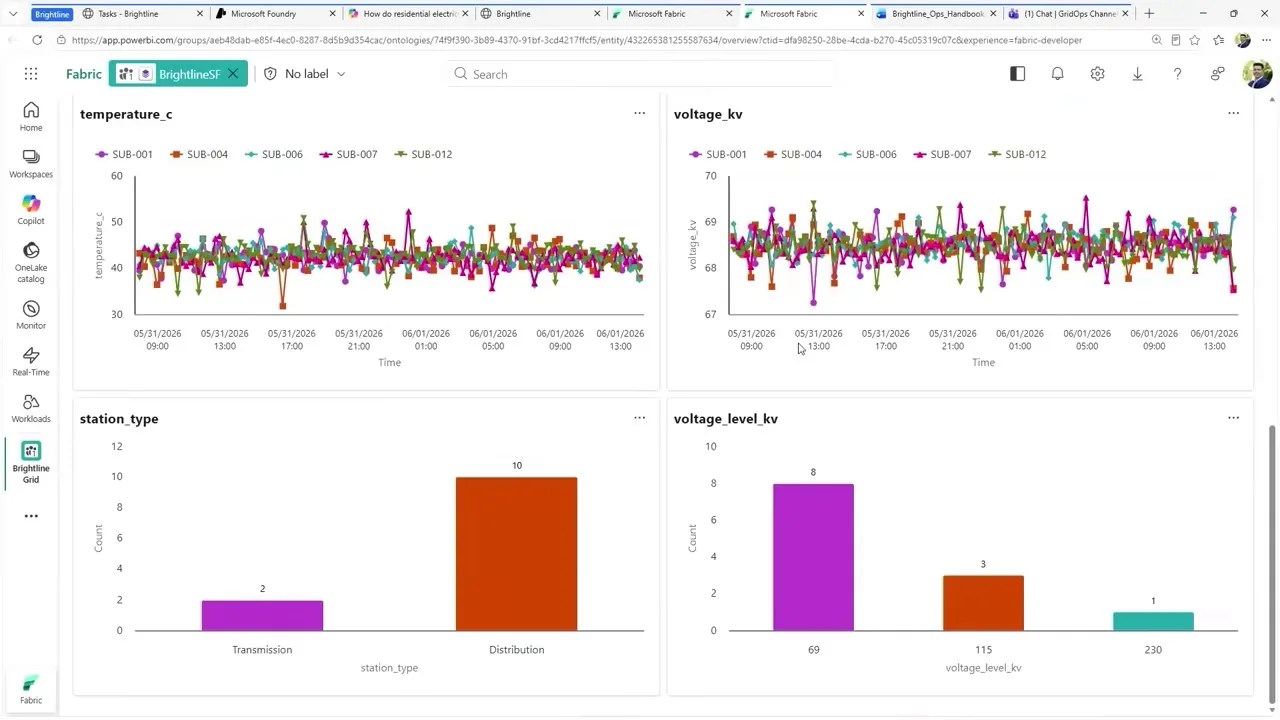
Figure 5: The structural layout of Microsoft IQ, bridging the gap between raw models and deep corporate knowledge bases.
Microsoft IQ is broken down into four distinct, highly specialized components:
- Work IQ: This layer maps the human dynamics of your company. It understands your emails, calendar invites, Teams meetings, shared documents, and the complex web of relationships between employees. APIs for Work IQ are scheduled to drop on June 16th.
- Fabric IQ: Acting as a semantic bridge for structured data, Fabric IQ translates complex databases, warehouse tables, and operational metrics into an organized ontological layer that an AI can easily query.
- Foundry IQ: This system processes the vast, messy world of unstructured corporate data—contracts, PDF policies, internal wikis, and legal agreements.
- Web IQ: To prevent agents from being trapped in an information bubble, Web IQ provides real-time grounding via high-speed web search. It is natively compatible with the Model Context Protocol (MCP) and is reportedly 2.5 times faster than competing search retrieval solutions.
Meet Scout: The Always-On Autopilot Agent
The culmination of this entire stack—the models, the coding engines, the voice synthesizers, and the semantic grounding of Microsoft IQ—comes together in a new class of software: Microsoft Scout.
Scout is what Microsoft calls an “autopilot agent.” Unlike traditional “copilots” which sit passively in a sidebar waiting for you to type a prompt, autopilots are always-on, autonomous entities. They operate in the background, monitor workflows, identify inefficiencies, and execute multi-step tasks on your behalf.
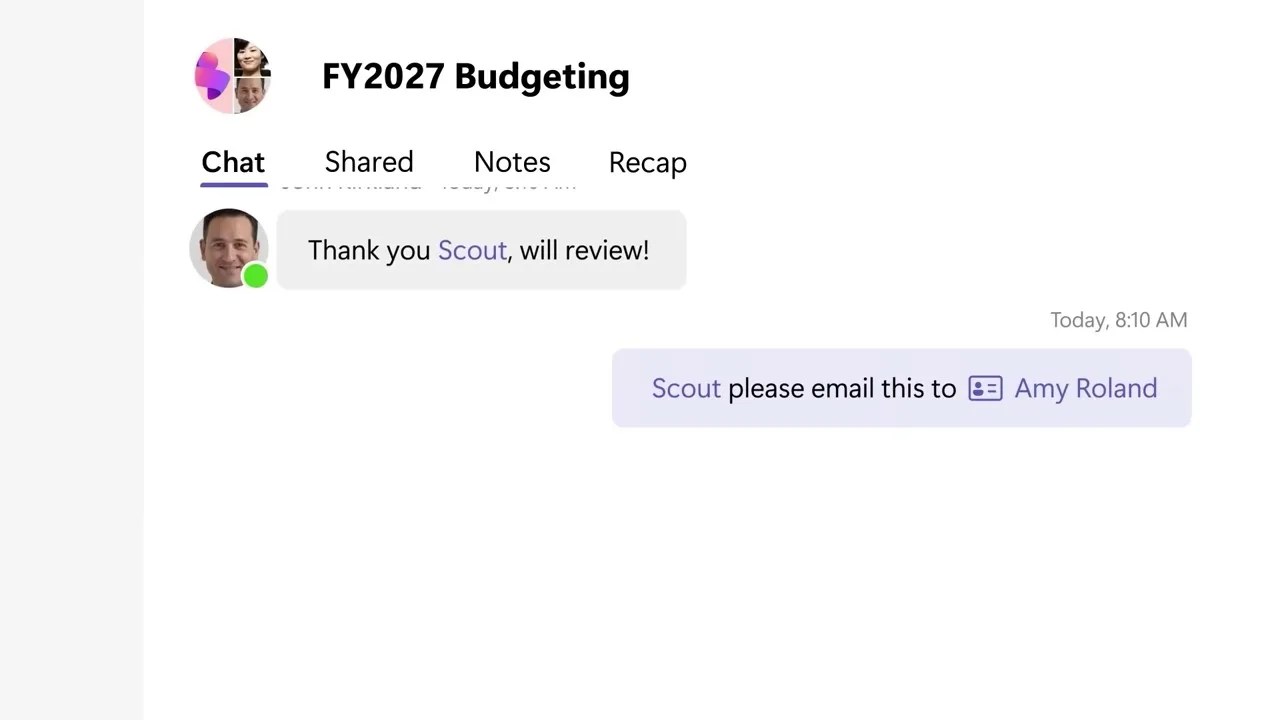
Figure 6: Microsoft Scout working autonomously in the background of Microsoft 365, executing tasks based on predefined organizational policies.
Scout has its own identity and acts with delegated authority under strict organizational permissions. Imagine an assistant that doesn’t just draft an email response, but actively monitors incoming client requests, pulls the relevant contract via Foundry IQ, cross-references the latest inventory in Fabric IQ, drafts the resolution, and queues it up for your final approval. That is the promise of Scout, and it represents the true transition from passive AI assistants to active digital colleagues.
Crucially, Scout doesn’t operate in the shadows as a generic, anonymous background service. Microsoft is solving one of the biggest headaches for enterprise IT administrators: accountability. Every single Scout agent runs under its own governed Microsoft Entra ID. This means that if Scout schedules a meeting, moves a file, or queries a database, its actions are fully logged, audited, and traced back to a specific digital identity inside the company directory. Its permissions are strictly scoped to the task at hand, and any sensitive diagnostic data is automatically redacted from system logs.
By integrating seamlessly with Outlook, Teams, OneDrive, and SharePoint, Scout acts as an organizational coordinator. It operates on OpenClaw, an open-source framework designed to give agents a persistent, always-on execution rhythm. To appease nervous compliance officers, Scout respects Microsoft Purview policies, data loss prevention (DLP) rules, and can be configured to halt and request explicit human sign-off before executing any high-stakes actions.
Code Name Mdash: Swarming the Codebase with 100+ Security Agents
While Scout is busy organizing your calendar, Microsoft is deploying agents to do something far more critical: securing your code. Under the amusingly on-brand code name Mdash (a nod to the punctuation mark AI writers love to overuse), Microsoft introduced a multi-model agentic security system that feels like science fiction.

Figure 7: Inside Mdash, where a swarm of over 100 specialized AI agents collaborate to map data flows and identify exploit chains.
Instead of relying on traditional static code scanners that merely flag syntax errors, Mdash deploys a coordinate swarm of over 100 specialized security agents directly into the developer portal. These agents work in parallel, reasoning about complex data flows, business logic flaws, and potential exploit chains. Because they operate with contextual awareness, they don’t just find vulnerabilities—they write and propose context-aware patches to fix them. This is a massive step forward in DevSecOps, leveraging agentic teamwork to solve security issues before the code ever hits production.
Majorana 2: The Audacious Leap Into Topological Quantum Computing
If you thought Microsoft’s announcements were confined to the digital realm of LLMs and agents, think again. The company took a massive detour into hard physics with the introduction of Majorana 2, their next-generation topological quantum chip.
Let’s be clear: quantum computing has long been plagued by the “fragility problem.” Qubits are notoriously unstable, collapsing at the slightest change in temperature or electromagnetic noise. While most mainstream quantum approaches measure qubit coherence lifetimes in fleeting microseconds, Microsoft claims Majorana 2 has achieved a mean qubit lifetime of 20 seconds, with some stable instances lasting up to a full minute.
Microsoft compared this stability leap to inventing a phone battery that suddenly goes from lasting a single day to running for three straight years on a single charge. It’s a dramatic analogy, but it highlights the scale of their ambition. By transitioning their material stack from aluminum to lead—which acts as an incredibly dense shield against disruptive cosmic rays—Microsoft believes they have unlocked a viable path to a commercially useful, scalable quantum computer by 2029.
Now, a healthy dose of skepticism is absolutely warranted here. Microsoft’s topological quantum journey has faced intense scrutiny in the past, including the high-profile retraction of a 2018 Nature paper. Because this new research has not yet undergone rigorous peer review, the physics community is understandably demanding more raw data. But if these claims hold up under peer evaluation, Microsoft may have just quieted its loudest critics.
Microsoft Discovery: Unleashing Agentic R&D
Interestingly, the development of the Majorana 2 chip wasn’t just a human achievement. It was heavily accelerated by Microsoft Discovery, a newly available platform that allows enterprises to deploy collaborative teams of AI agents to tackle complex research and development (R&D) problems.
Microsoft’s own quantum team used Discovery to sift through nearly twenty years of scattered, multi-format research data. The AI agents successfully mapped complex voltage parameters, automated physical measurements, and even discovered an uncalibrated temperature sensor hidden deep within fabrication logs that had been throwing off experimental results for months. By taking over the tedious, multi-variable optimization loops, Discovery allowed human physicists to focus purely on high-level theory, accelerating the R&D cycle by orders of magnitude.
The Ultimate AI Paradox: Partner, Investor, Competitor
As the dust settles on Build 2026, the broader strategic picture becomes crystal clear. We are witnessing one of the most fascinating paradoxes in business history. Microsoft has poured billions of dollars into OpenAI and Anthropic, hosts their models on Azure, and distributes them to enterprise clients worldwide. Yet, with the launch of these **Microsoft new AI models**, they have simultaneously built a parallel, highly competitive, and cheaper in-house alternative.
Microsoft is no longer content being the world’s most lucrative landlord for other companies’ intelligence. They want to own the raw materials, the processing pipelines, the application layers, and the quantum future. By building their own reasoning engines, enterprise intelligence layers, and autonomous agents, Microsoft has positioned itself as both the ultimate partner and the most dangerous competitor in the AI landscape.
For developers and enterprises, this is a massive win. It drives down costs, increases architectural choices, and provides unprecedented security. But for the startup pioneers who kicked off this AI revolution, the message from Redmond is loud, clear, and incredibly cold: Thanks for the head start, but we’ll take it from here.
Frequently Asked Questions (FAQ)
Q1: Why is Microsoft developing its own models when it already has close partnerships with OpenAI and Anthropic?
It comes down to economics, margin control, and risk reduction. Relying solely on third-party APIs means Microsoft has to share its profit margins with external startups. By training and running its own models (like MAI Thinking One) directly on Azure, Microsoft drastically lowers its operational costs, improves its margins, and ensures its enterprise products remain fully functional even if its external partners face legal, financial, or operational crises.
Q2: What makes Microsoft Scout different from a standard AI chatbot or Copilot?
Traditional copilots are reactive; they sit in a sidebar and wait for you to prompt them. Microsoft Scout is an “autopilot”—an always-on, autonomous agent that runs in the background. It has its own secure Entra ID, operates under strict organizational policies, and proactively schedules meetings, prepares briefs, and automates multi-step workflows across Microsoft 365 without needing constant user prompting.
Q3: Is the Majorana 2 quantum chip ready for commercial use?
No, not yet. Majorana 2 currently utilizes only 12 qubits, whereas a commercially viable quantum computer will require millions of stable qubits. However, its significance lies in its unprecedented stability (retaining its quantum state for 20 seconds to a minute compared to the microseconds of other systems). Microsoft expects this architectural path to yield a commercially viable quantum machine by 2029.