For over a year, OpenAI’s CEO Sam Altman championed the narrative that generative AI was a revolutionary force worth any price tag. But in a sudden, remarkable shift, Altman recently made a massive admission: generative AI costs have rapidly escalated into a major crisis for businesses. The era of frictionless, unlimited AI experimentation is hitting a brutal financial wall.
The Day the Blank Check Bounced
During a recent industry event, Sam Altman admitted that the question of cost has caught the industry completely off guard. According to Altman, up until very recently, employers and developers were perfectly happy with their spending. Then, almost overnight, the narrative shifted from “What can this tool do?” to “How on earth do we pay for this?”
As I watched this confession unfold, it became clear that the tech industry’s collective blind spot has finally been exposed. While developers were busy building incredibly complex LLM pipelines, finance departments were quietly looking at cloud computing bills with absolute horror. The speech-to-text transcript of Altman’s talk actually quoted him referencing a timeline up to “the beginning of 2026″—an obvious slip of the tongue or transcription error for early 2024—highlighting just how fast this fiscal reality check has hit the C-suite.

Sam Altman’s recent public admission signals a dramatic shift in how Silicon Valley views the economics of LLMs.
Until recently, the industry narrative was stubbornly “AI Pro Max.” Tech leaders dismissed energy consumption and hardware costs as temporary hurdles. But Altman now concedes that public and corporate criticism regarding the immense capital required to run these models is entirely fair. There is simply too much wastage occurring in the name of innovation.
The Corporate Panic: Capping Tokens and Killing Leaderboards
The warning signs didn’t start with Altman; they bubbled up from the trenches of corporate America. Over the span of just a few weeks, several major tech adopters pulled the emergency brake on their AI initiatives. When we look at how fast generative AI costs can spiral out of control, these case studies serve as a stark warning.
Take Uber, for example. The ride-sharing giant went on record admitting they completely blew through their entire annual AI budget in a mere four months. In response, they implemented a strict cap on employee AI usage, limiting token consumption to $1,500 per month per user.
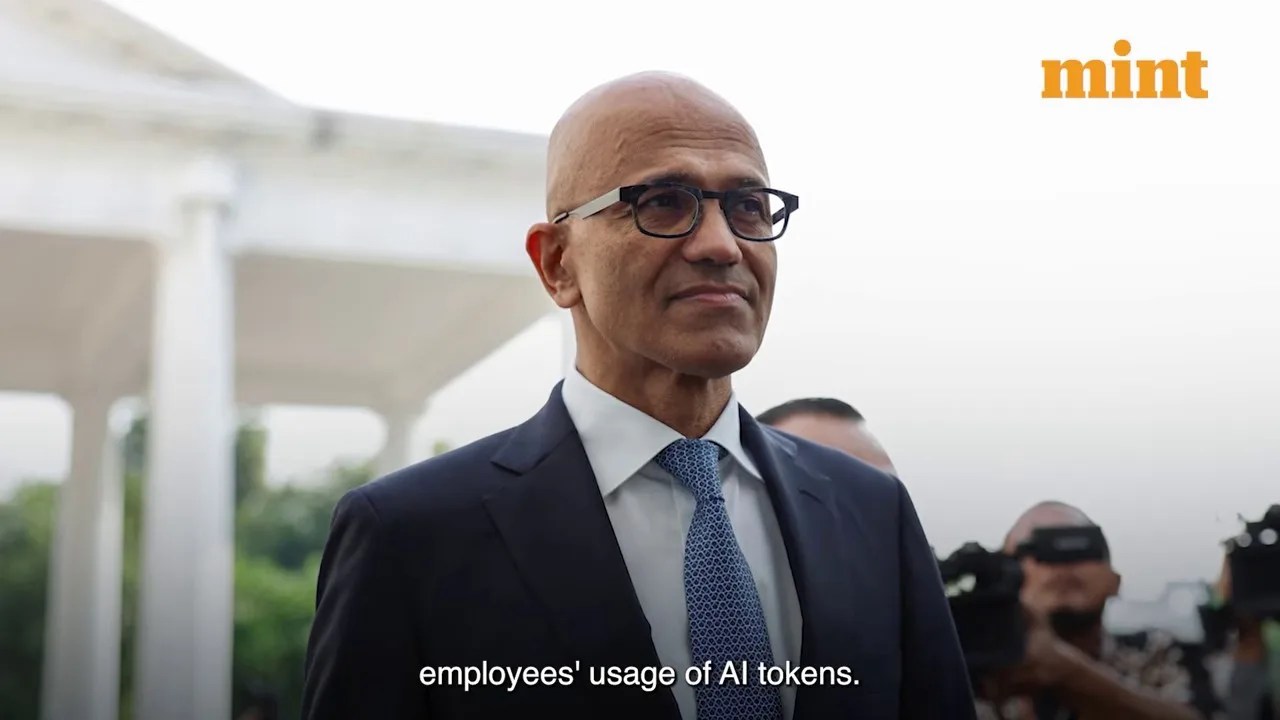
The sudden policy reversals at Uber, Microsoft, and Amazon show that even tech giants are feeling the budget pinch.
Uber isn’t alone in this sudden retreat. Microsoft has begun capping employee usage of specific AI tokens. Meanwhile, Amazon—which previously hosted internal gamified leaderboards to reward employees who integrated the most AI tools into their workflows—quietly pulled those leaderboards down. The message is clear: the blank check has been canceled.
To help visualize this sudden financial pivot, I’ve compiled a quick summary of how these corporate heavyweights are reacting to the cost crisis:
| Company | Initial Approach | The Financial Reality | Current Cost-Control Action |
|---|---|---|---|
| Uber | Aggressive, unmonitored employee adoption. | Burned through 12-month budget in 4 months. | Strict monthly cap of $1,500 in token usage per employee. |
| Microsoft | Widespread internal deployment of Copilot tools. | Unsustainable API and hardware load. | Capped employee token usage to protect margins. |
| Amazon | Gamified employee adoption with public leaderboards. | Unnecessary usage spikes driven by competition. | Dismantled leaderboards to discourage wasteful AI queries. |
The Employment Paradox: Layoffs vs. Productivity Gains
This financial squeeze isn’t happening in a vacuum; it is actively reshaping the global labor market. Interestingly, Altman walked back his previous, highly publicized warnings of an AI-induced “job apocalypse,” stating he is “delighted to have been wrong” about large-scale employment collapses.
However, the reality on the ground feels far less comforting. While we might not be seeing a sudden, catastrophic collapse, we are witnessing a slow, painful erosion of entry-level tech roles—particularly in outsourcing hubs like India.
With major IT firms like TCS and Infosys reporting slower headcount growth alongside the rise of automated coding tools, finding a high-quality tech job is becoming significantly harder. Companies are turning to AI as a quick fix to lower operational costs, even before they fully understand if the technology actually benefits their bottom line in the long run.
On the other side of this debate stands Nvidia CEO Jensen Huang. His argument is simple: AI increases productivity, which drives higher revenues, which ultimately leads to *more* hiring to support that growth.
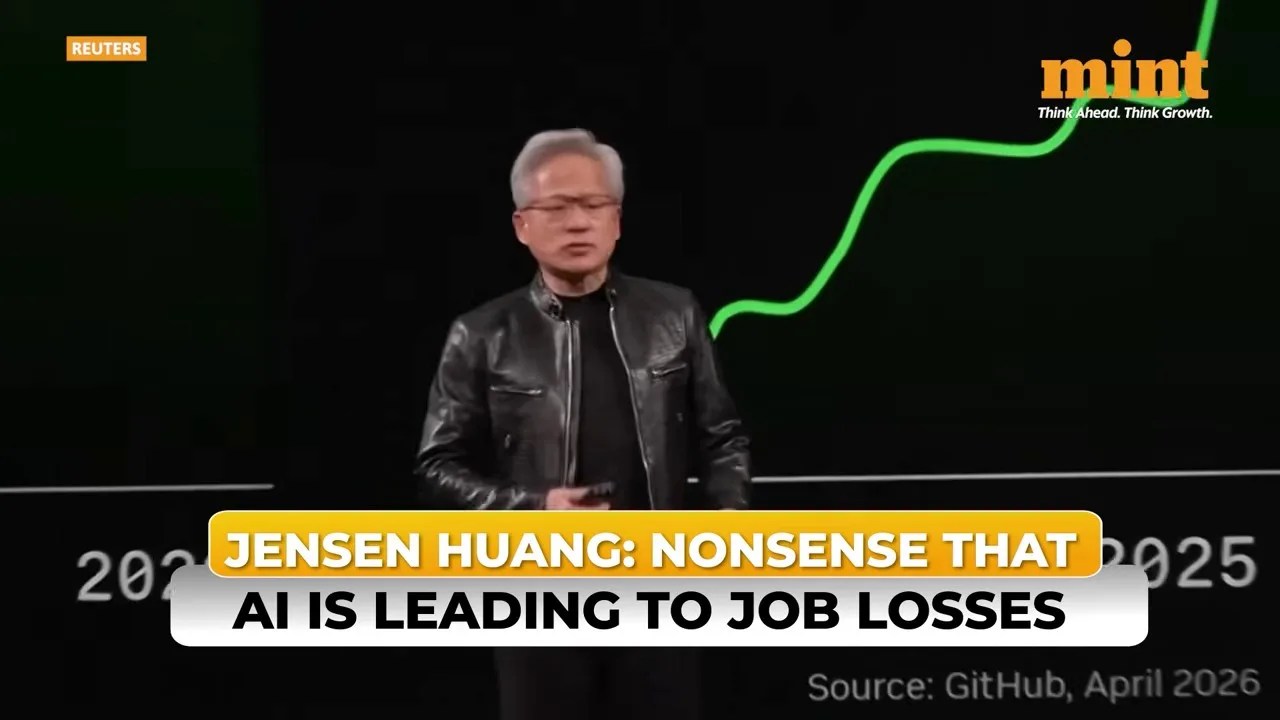
Jensen Huang presents a highly optimistic outlook, though the transition period remains turbulent for workers.
But there is a dangerous gap in Huang’s logic. The transition is not seamless. The vast majority of the global workforce lacks the highly specialized skills required to thrive in an AI-augmented economy. Until that skills gap is closed, the “quick-fix” adoption of AI will continue to cause localized disruption and hiring freezes.
The Cold Hard Truth Behind Rising Generative AI Costs
Why are these models so expensive? It comes down to basic math. Running a standard database query costs a fraction of a cent. Generating a single response from a model like GPT-4 or Claude 3.5 Sonnet requires massive GPU clusters working in parallel, consuming immense amounts of electricity and water for cooling. When thousands of employees use these systems to summarize basic emails or draft routine Slack messages, the cost-to-value ratio completely falls apart.
Surviving the Hype: Amara’s Law and the Long Game
How do we make sense of this sudden swing from absolute euphoria to budget panic? Many industry experts point to Amara’s Law, a concept coined by American futurist Roy Amara.
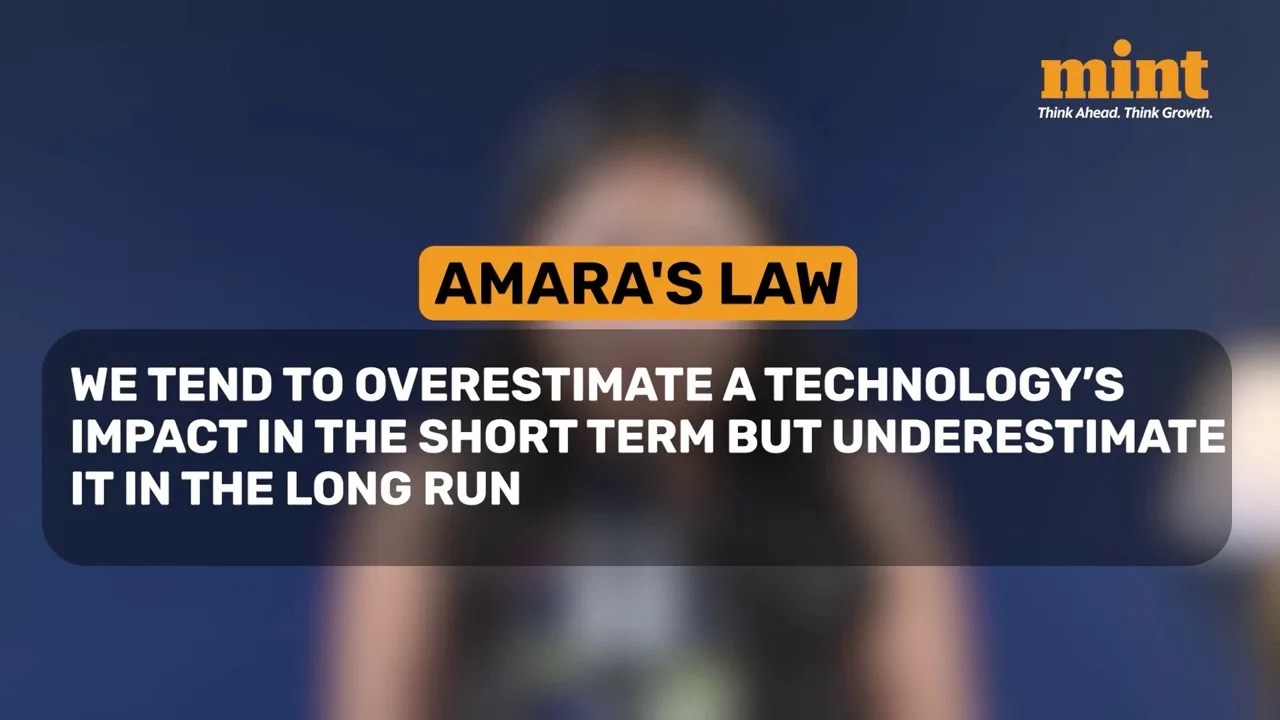
Amara’s Law perfectly maps the emotional and financial trajectory of the current generative AI wave.
We are currently living through the painful correction phase of the short-term curve. The market wildly overestimated how quickly AI would completely replace human workforces and reshape every business model overnight. Now that the realization of high operational costs and limited near-term ROI has set in, we are seeing a necessary pullback.
But we must not make the mistake of underestimating AI’s long-term impact. Once the hype dies down, the compounding, quiet integration of efficient AI systems will fundamentally reshape our society. The key to surviving this transition—both as a business and an individual—is balance.
Stop trying to force AI into workflows where it doesn’t belong just because it’s trendy. Use it efficiently, keep an eye on your API spend, and focus on building genuine, human-centric skills that no algorithm can replicate.
Frequently Asked Questions (FAQ)
Q1: Why did companies suddenly realize generative AI costs were too high?
Initially, companies treated AI as an experimental R&D expense with unmonitored budgets. As tools were rolled out to thousands of employees for daily tasks, the compounding cost of API tokens and cloud compute became unsustainable, forcing CFOs to step in and mandate strict budget caps.
Q2: What is Amara’s Law and how does it apply to the AI bubble?
Amara’s Law states that we tend to overestimate a technology’s impact in the short term and underestimate it in the long term. With AI, the initial expectation of instant, radical workplace transformation missed the mark, leading to a cost-driven correction. However, the long-term, quiet integration of AI will still deeply reshape society.
Q3: How are companies like Uber and Microsoft limiting their AI expenses?
Companies are taking direct measures such as capping employee token usage (e.g., Uber’s $1,500 monthly limit), restricting access to premium models, and dismantling gamified systems that encouraged unnecessary AI queries.