The landscape of Artificial Intelligence has been shifting at a breakneck pace, but what unfolded at Google I/O 2026 is nothing short of a paradigm shift. Google didn’t just announce a few incremental model updates; they dropped a series of massive technological advancements that fundamentally redefine how humans and software interact with AI. From jaw-dropping token processing metrics to true native multimodal “world models” and 24/7 autonomous agents running in the cloud, Google is staking its claim to lead the Agentic Era.
In this comprehensive, deep-dive analysis, we will unpack the monumental announcements from Google I/O 2026, exploring the technical architecture, benchmarking performance, developer tools, and consumer products that will soon reshape our daily digital lives. Whether you are a software developer, an enterprise leader, or an AI enthusiast, these changes will affect how you work, code, and search the web forever.
1. Exponential Scale: Processing Quadrillions of Tokens
To understand the sheer magnitude of Google’s current operational scale, we must first look at the infrastructure data. The growth curve of Google’s AI workloads is steep enough to cause vertigo. Just two years ago, Google was processing an already-impressive 9.7 trillion tokens per month across its vast suite of services. By the previous year’s I/O event, that metric surged to 480 trillion. Today, Google has crossed an astronomical threshold, processing over 3.2 quadrillion tokens per month.
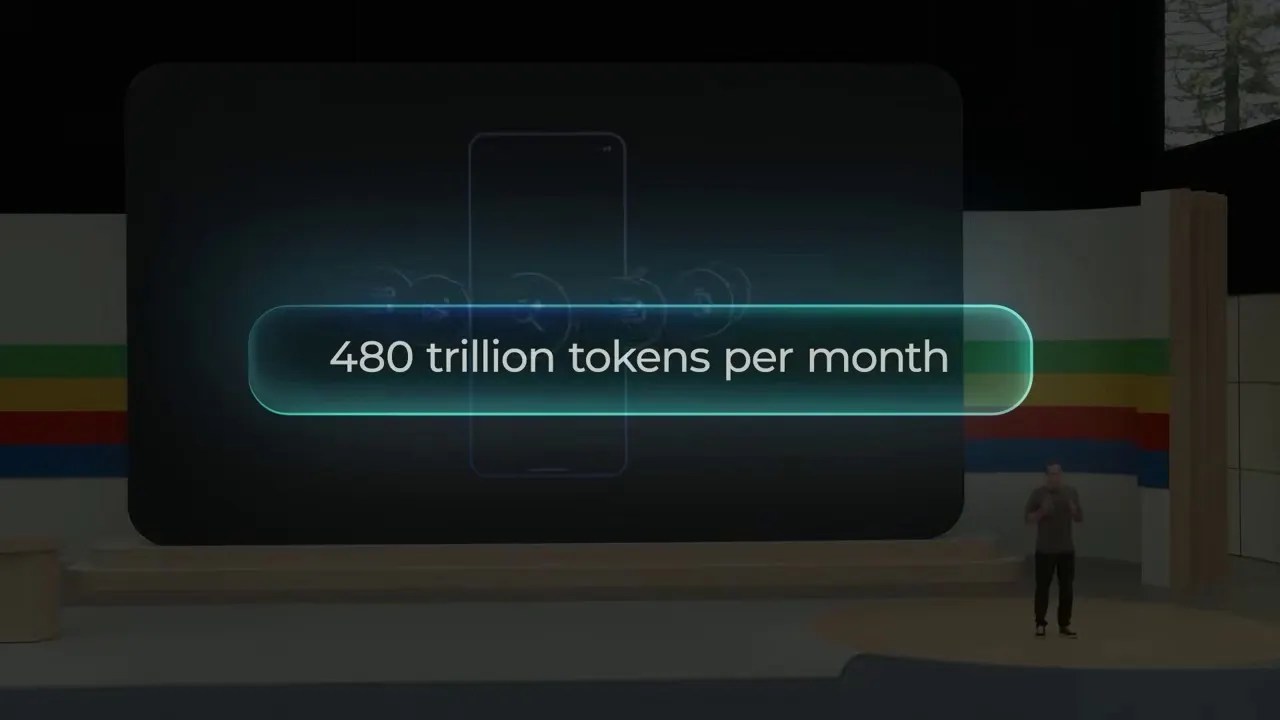
Figure 1: Google’s exponential token processing trajectory, showcasing an unprecedented 7x year-over-year increase in monthly processing volume.
This 7x year-over-year explosion represents more than just raw computational throughput; it indicates a massive, mainstream migration to AI-first workflows. This scale is reflected directly in consumer adoption numbers:
- The Gemini app has grown from 400 million monthly active users last year to over 900 million active users today, more than doubling in 12 months.
- Daily user requests within the Gemini ecosystem have multiplied by more than 7x over the same period.
- AI Overviews in Google Search now serve 2.5 billion monthly active users globally.
- Google’s dedicated new AI Search Mode has crossed the 1 billion user threshold in its debut year.
These figures prove that artificial intelligence is no longer a collection of niche, tech-enthusiast tools. It has successfully integrated into the fabric of global daily internet usage.
2. Gemini 3.5 Flash: Redefining Speed, Efficiency, and Cost
The headliner of the model announcements is Gemini 3.5 Flash. Previously, the “Flash” designation denoted a lightweight, highly optimized model meant for low-latency tasks at the expense of advanced reasoning capabilities. That trade-off is officially dead. Gemini 3.5 Flash is punching directly into the heavyweight division, competing with, and occasionally beating, existing flagship models.
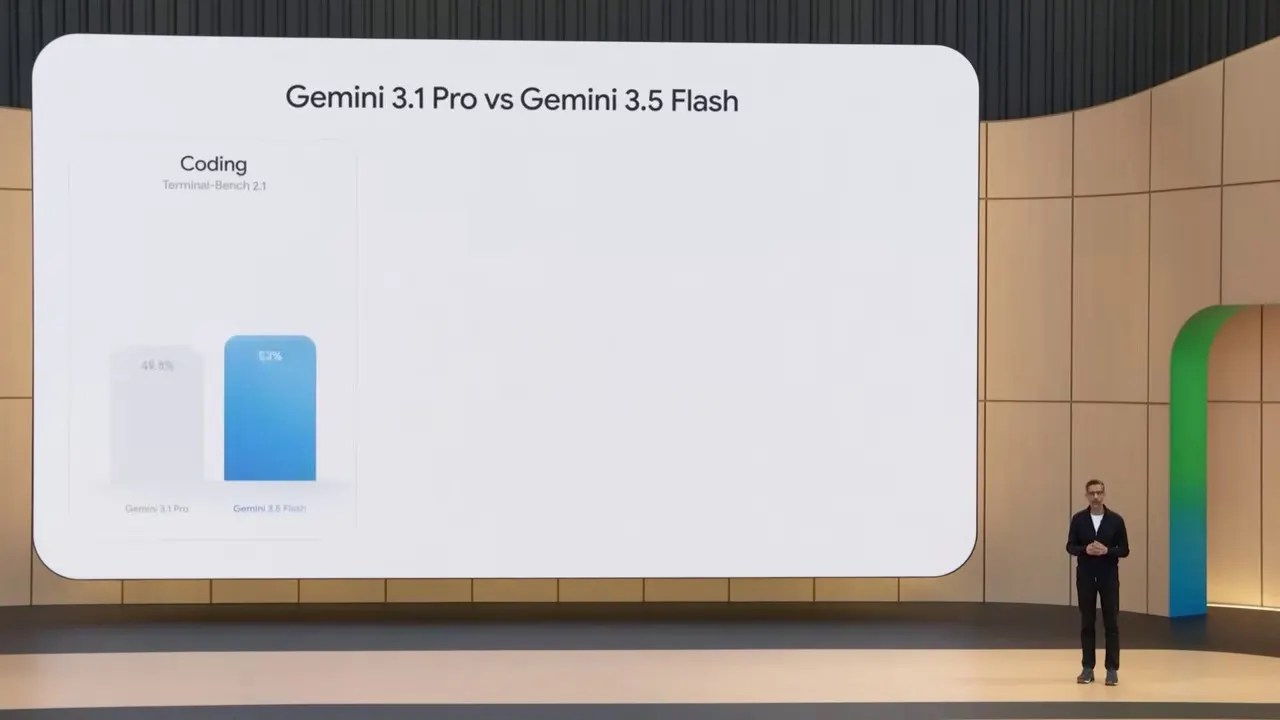
Figure 2: Benchmark evaluation of Gemini 3.5 Flash, outperforming Gemini 3.1 Pro and rival flagship models in coding, logic, and reasoning tasks.
Let’s look closely at the benchmark results highlighted during the keynote:
- Terminal Bench 2.1 (Coding): Gemini 3.5 Flash scored an outstanding 76.2%, easily outpacing Gemini 3.1 Pro’s 70.3%.
- GDP Val AA (Elo Rating): Flash achieved an Elo rating of 1,656 compared to Gemini 3.1 Pro’s 1,314.
- MCP Atlas: It hit 83.6%, leaving Gemini 3.1 Pro behind at 78.2%.
- CharkSif (Complex Reasoning): Gemini 3.5 Flash set a new high-efficiency benchmark of 84.2%.
What is truly disruptive is that Gemini 3.5 Flash isn’t just rivaling past-generation Pro models; it is holding its own against current frontier flagships like OpenAI’s GPT-5.5 and Anthropic’s Claude 4.7. It achieves these scores while running at 4 times the output speed of comparable models. Independent analysis places Gemini 3.5 Flash at approximately 280 tokens per second, compared to the 60 to 70 tokens per second average of larger frontier models.
“If top companies processing roughly one trillion tokens a day shifted 80% of their workloads from other frontier models to Gemini 3.5 Flash, they would save over a billion dollars annually.”
— Sundar Pichai, CEO of Google
By offering frontier-level capability at less than half—and sometimes up to a third—of the cost of traditional high-end models, Google is initiating an aggressive pricing strategy. This allows enterprise clients to transition heavy computational tasks to Flash without sacrificing quality, unlocking enormous financial resources for reinvestment.
3. Gemini Omni: The Emergence of True Multimodal “World Models”
While Gemini 3.5 Flash represents a major win for computational efficiency, Gemini Omni represents an architectural breakthrough. Described by Google DeepMind’s Demis Hassabis as a pivotal step toward Artificial General Intelligence (AGI), Omni is built from the ground up as a native “world model.”
Unlike traditional AI pipelines that use separate, chained models to process voice-to-text, analyze text, and then synthesize audio or video, Gemini Omni’s training architecture is natively multimodal. It processes text, audio, images, and video simultaneously. Because it learns the complex cross-relationships between these different data types, it possesses an inherent understanding of physical, spatial, and temporal dynamics.

Figure 3: Gemini Omni demonstrating its scientific accuracy by modeling complex biological structures, like protein folding sequences, in real time.
During the key presentation, Google demonstrated Omni’s scientific capabilities with an intricate video simulation of protein folding. Instead of simply generating a generic animation, Omni calculated the precise folding mechanics of amino acid chains as they twisted into alpha helices and beta sheets. Crucially, the accompanying audio narration was perfectly synchronized down to the millisecond with the visual transitions, demonstrating how the model links sound, timing, and visual physics together.
This physical consistency is further highlighted by Omni’s understanding of environmental physics. In a world model, objects have mass, gravity applies consistently, and materials behave naturally. If a simulated marble rolls down a complex track, it follows correct physical vectors. If a leaf plucks a harp string, the resulting synthesized sound occurs at the exact frame of contact.

Figure 4: The natural language editing interface of Gemini Omni Flash, demonstrating seamless object manipulation and physical state changes.
This native understanding of physical properties translates into highly intuitive, real-time video editing. Through conversational prompts, users can perform complex, iterative video modifications without losing continuity. Key features of this editing workflow include:
- Contextual Scene Retention: Omni remembers the structure, lighting, and characters of a video clip across multiple edits.
- Physical State Transitions: Users can command the model to turn a solid marble sculpture into floating bubbles, or make a physical mirror ripple like water when touched, maintaining accurate light reflections.
- Coherent Multi-Asset Generation: Creation of highly stylized visual sequences, complete with professional lower thirds, smooth musical transitions, and consistent brand assets.
Gemini Omni Flash is rolling out immediately to Google AI Plus, Pro, and Ultra subscribers. It will expand to consumer platforms like YouTube Shorts and the YouTube Create app for free, with dedicated API access for developers following shortly.
4. SynthID and the Push for Global AI Transparency
With great generative power comes deep responsibility. As AI-generated content becomes indistinguishable from reality, the threat of deepfakes and misinformation grows. To counter this, Google is spearheading a global, cross-industry transparency initiative based on its proprietary SynthID watermarking technology.
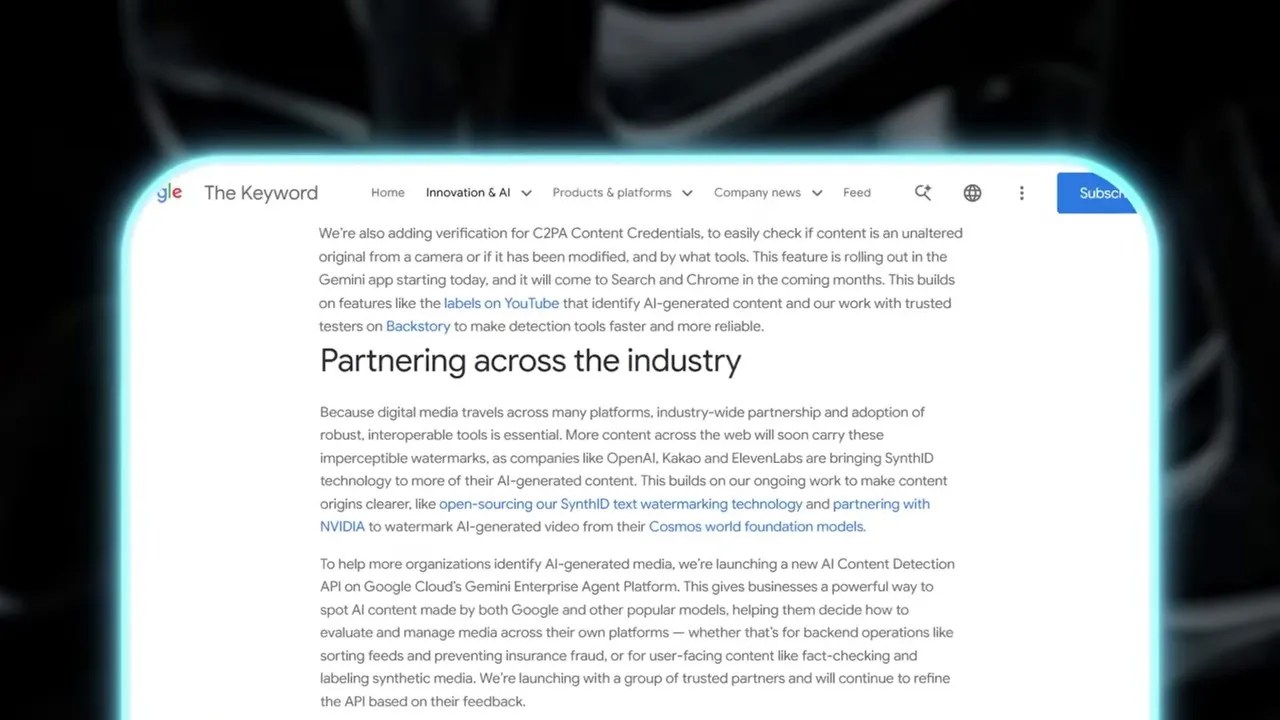
Figure 5: Google’s collaborative expansion of SynthID content credentials, joined by leading AI and software organizations to establish a unified transparency standard.
SynthID places an imperceptible, highly resilient digital watermark directly into the structural metadata of images, audio, video, and text. This watermark survives compression, cropping, and format conversions, but remains instantly verifiable through Google Search, Gemini in Chrome, and the Gemini app. To date, SynthID has successfully watermarked over 100 billion images and videos, as well as 60 years’ worth of historical audio assets.
To establish this as an industry-wide protocol, Google has secured critical alliances with major AI competitors. Industry leaders including OpenAI, Kakao, ElevenLabs, and Nvidia have formally integrated SynthID into their respective pipelines. This cross-platform coalition represents a vital step toward safeguarding the integrity of the digital media ecosystem.
5. Crucial Hardware Infrastructure: Eighth-Gen TPUs (8T and 8I)
To sustain these massive AI models, Google continues to invest heavily in specialized hardware. At I/O 2026, the company unveiled its eighth-generation Tensor Processing Units (TPUs), introducing a specialized dual-chip design tailored for different parts of the AI lifecycle.
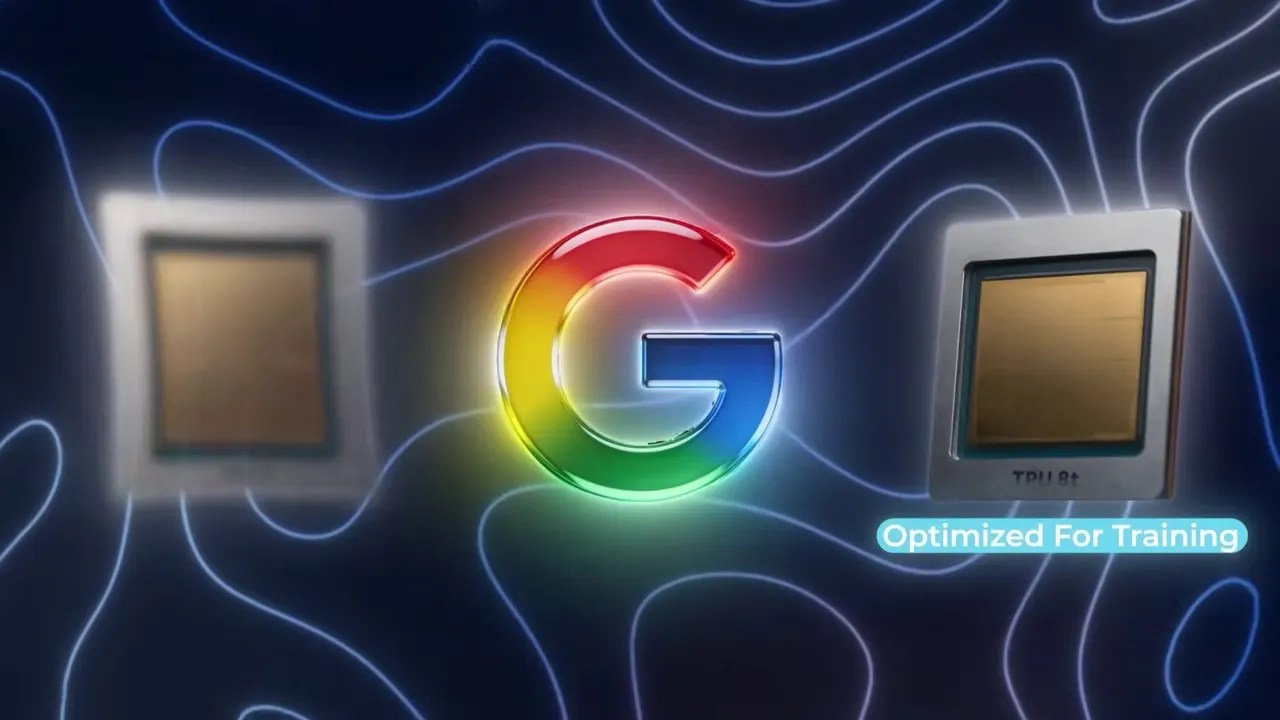
Figure 6: Sieve-level architectural layout of Google’s custom-built 8th Generation TPUs, highlighting separate paths for training (8T) and inference (8I).
This generation marks a shift to application-specific silicon architectures:
- TPU 8T (Training-Optimized): Designed specifically to handle the massive compute loads of model training, the TPU 8T boasts nearly 3x the raw computing power of its predecessor.
- TPU 8I (Inference-Optimized): Built for production workloads, the 8I chip focuses on lowering latency, delivering fast response times for live agent interactions and consumer search queries.
Furthermore, Google’s development of the JAX framework and Pathways architecture has freed training clusters from the limits of a single physical location. Google can now distribute model training workloads across a global network of data centers, scaling across more than one million interconnected TPUs. This massive global cluster allows Google to train next-generation frontier models in weeks instead of months.
These architectural advances are backed by massive capital expenditures. Google’s annual infrastructure CapEx has risen from $31 billion in 2022 to an estimated $180 billion to $190 billion in 2026, highlighting the scale of their commitment to leading the hardware race.
6. Anti-gravity 2.0 & Google AI Studio: The Ultimate Developer Sandbox
To put this computational power into the hands of developers, Google announced major upgrades to its software ecosystem, centered around Anti-gravity 2.0 and Google AI Studio.
Anti-gravity 2.0 has grown from an experimental coding environment into a comprehensive platform for building, running, and managing autonomous AI agents. It features a standalone desktop application that serves as an orchestration hub, allowing developers to manage multiple specialized agents working on complex tasks in parallel.

Figure 7: The Anti-gravity 2.0 desktop suite, designed for orchestrating, debugging, and deploying production-grade autonomous AI agents.
To power this workspace, Google developed a specialized, ultra-fast version of Gemini 3.5 Flash for Anti-gravity. This engine runs at an incredible 12 times the speed of competitor frontier models, allowing agents to ingest, analyze, and modify massive codebases in real time.
Figure 8: Google AI Studio’s streamlined development workspace, showcasing direct Kotlin integration and export pipelines.
At the same time, Google AI Studio has received several major upgrades to help developers build and deploy applications quickly:
- Native Kotlin Support: Enables smooth, first-party Android application development directly within the AI Studio environment.
- Google Workspace & Firebase Integrations: Allows developers to pull data securely from Workspace apps and connect directly to backend Firebase databases.
- One-Click Deployment: Developers can deploy their web applications instantly to Google Cloud Run, or export full projects directly to Anti-gravity 2.0 with a single click.
- Managed Agents API: Removes infrastructure hassle by provisioning fully isolated remote sandboxes with a single API call, allowing developers to run agent workloads without managing servers.
7. Empowering the Android and Web Ecosystem
Google is also rolling out specialized developer tools to bring agentic workflows directly to mobile and web development.
Android Developer Tooling
For mobile engineers, the new stable Android CLI allows AI agents to interface directly with Android Studio. This enables agents to perform complex, multi-step engineering tasks, such as downloading specific SDK versions, compiling applications, and running end-to-end emulator testing without developer intervention.
Google has also open-sourced Android Skills—a library designed to help LLMs follow development best practices, such as migrating legacy code to modern Jetpack Compose. In addition, they introduced a powerful **migration agent** in Android Studio. This tool can ingest source code from React Native, web frameworks, or iOS, and convert it into a native Kotlin Android application in hours instead of weeks.
Modernizing the Open Web: WebMCP
To bring these capabilities to the web, Google proposed WebMCP, a new open-web standard. WebMCP allows web applications to expose structured tools (like JavaScript functions and HTML forms) directly to browser-based AI agents. This enables agents to execute online tasks with much higher speed, precision, and reliability.
The experimental WebMCP origin trial is scheduled to begin in Chrome 149, with native Gemini integration in Chrome following soon after. Developers can also use the new HTML in Canvas API, which allows them to render standard DOM elements directly inside a WebGL or WebGPU canvas, keeping rich 3D environments searchable, accessible, and interactive for AI agents.
8. Gemini Spark and Android Halo: Consumer Agents in Action
While the developer tools are impressive, the most immediate impact for everyday users will come from Gemini Spark, Google’s new personal AI companion. Powered by Gemini 3.5, Gemini Spark runs 24/7 on dedicated virtual machines in Google Cloud, allowing it to complete complex, long-running tasks in the background.

Figure 9: Gemini Spark integrated with the upcoming Android Halo UI, showing real-time updates for background tasks and personal organization.
Unlike simple voice assistants, Gemini Spark acts as a proactive agent. It integrates with Google’s ecosystem and over 30 third-party platforms (including Adobe, Dropbox, and Uber) via the Model Context Protocol (MCP). It can perform complex tasks on your behalf, such as compiling emails and documents to draft an executive update, organizing your calendar, and coordinating travel plans.
On mobile, this experience is powered by Android Halo, a dedicated user interface element arriving later this year. Android Halo displays real-time updates and progress tracking for your background AI tasks, keeping you informed without cluttering your screen.
9. Google Pix, Docs Live, and Intelligent Eyewear
Google is also integrating its agentic technology into creative, productivity, and wearable products, making AI assistance a natural part of daily life.
Creative Image Editing with Google Pix
For creative tasks, Google introduced Google Pix, an advanced image editing tool built on the latest Nano Banana model. Unlike traditional photo editors that treat images as a single layer of pixels, Google Pix treats every element within an image as an independent 3D object.
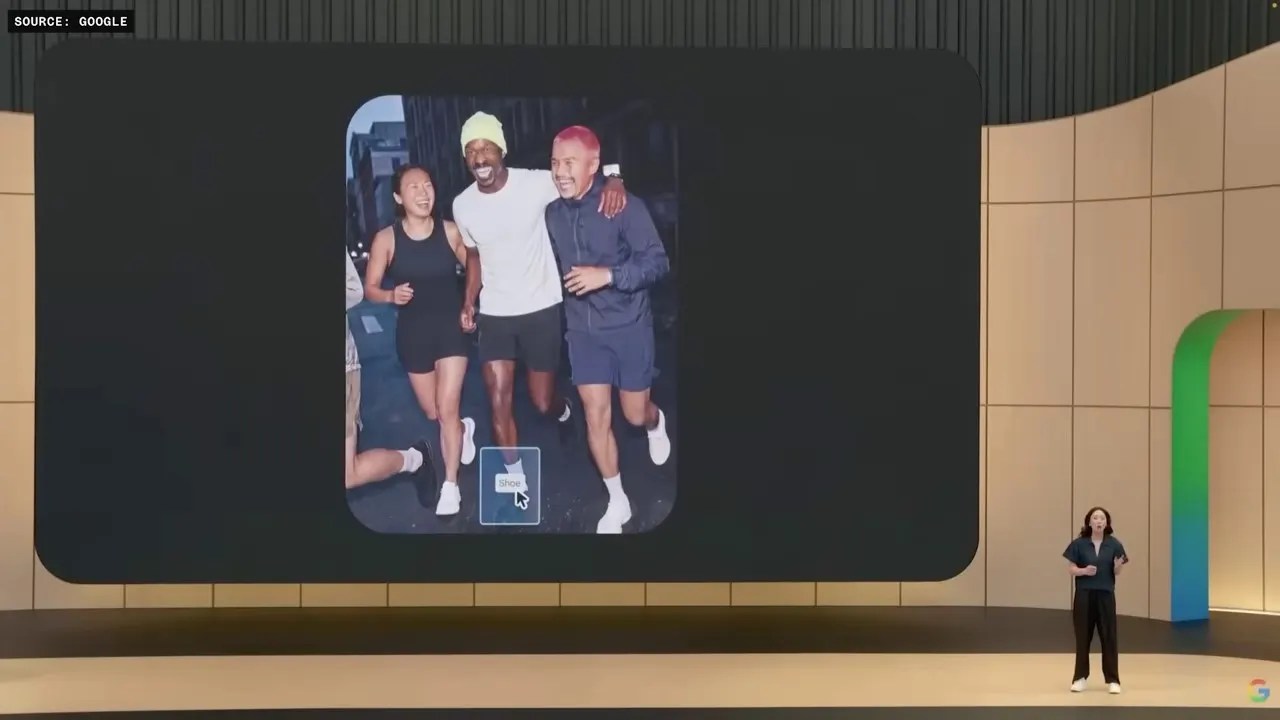
Figure 10: Google Pix in action, demonstrating the ability to select, isolate, and modify individual objects within an image while maintaining accurate lighting and depth.
This object-level understanding allows users to isolate, swap, and modify specific details of an image with simple text prompts. You can change a subject’s clothing, alter the weather in a background, or reposition objects within a frame, and the model will automatically recalculate shadows, reflections, and depth of field to keep the image looking natural.
Docs Live and Conversational Search
Google is also changing how we interact with productivity tools through features like Docs Live. Instead of typing out structured drafts or prompts, users can speak naturally to brainstorm and organize their thoughts. Gemini will capture the audio stream, structure the ideas, and generate a formatted document in real time.
Similarly, the upcoming Ask YouTube feature changes how we consume video content. Users can ask complex questions about long videos, and the tool will immediately jump to the most relevant segment, saving time spent scrubbing through timelines manually.
Wearable AI: Intelligent Eyewear
Finally, Google is taking Gemini out of our screens and into the physical world with its new Intelligent Eyewear initiative. Partnering with stylish brands like Gentle Monster and Warby Parker, Google is launching a line of audio-enabled smart glasses this fall.
Equipped with low-profile cameras and microphones, these glasses connect users directly to Gemini. Wearers can ask questions about what they see in real time, receive turn-by-turn walking directions, make hands-free calls, and get live audio translations, all through a natural voice interface. Display-integrated glasses that overlay visual information directly onto the wearer’s field of view are also in development for a future release.
10. Conclusion and Key Takeaways
Google I/O 2026 has made one thing clear: the race for conversational AI is evolving into a race for autonomous, agentic systems. By combining massive global computing infrastructure, high-efficiency models like Gemini 3.5 Flash, native multimodal world models, and a robust suite of developer tools, Google is positioning itself to lead this next wave of technology.
Key Takeaways for Your Strategy:
- The Agentic Shift is Real: AI is moving from a passive, prompt-and-response tool to an active assistant capable of planning and executing multi-step tasks in the background.
- Efficiency Rules: High-performance, low-cost models like Gemini 3.5 Flash are making frontier-grade AI capabilities accessible and affordable for businesses of all sizes.
- Native Multimodality is the New Standard: World models that understand the relationships between text, audio, video, and physical laws will unlock new creative and analytical possibilities.
- Standardization is Growing: Industry-wide adoption of protocols like SynthID and WebMCP will be essential for building a secure, transparent, and connected AI ecosystem.
As these new models and tools roll out over the coming weeks and months, the way we design software, search for information, and manage our daily work will shift dramatically. The era of autonomous AI agents has arrived—and it is time to build.