Let’s be completely honest: the speed of artificial intelligence is starting to feel slightly disrespectful to our collective cognitive bandwidth. Just when you think the dust has settled after a major release cycle, the entire ecosystem undergoes another tremor. I’ve spent the last few days dissecting the absolute avalanche of new releases, papers, and open-source codebases, and I’m here to bring you my raw, unfiltered breakdown of the latest AI developments that actually matter. We are talking about everything from Anthropic’s new crown jewel to physical models that make humanoid robots smarter in minutes. Grab a coffee; we have a lot to unpack.
1. The LLM War: Claude Opus 4.8 vs. GPT-5.5
Every time Anthropic or OpenAI drops a decimal point update, the benchmark charts start flying around social media like trading cards. Anthropic’s self-reported numbers for their newly minted Claude Opus 4.8 claim a solid victory over OpenAI’s flagship model, GPT-5.5, in core categories like agentic coding, reasoning, and financial analysis. But as someone who looks at these numbers with a healthy dose of skepticism, I wanted to see how this translates to realistic software engineering challenges.
To evaluate these giants, we need to look beyond sterile academic test sets that have likely leaked into their training data anyway. This brings us to Deep Suite, a newly released benchmark designed to simulate real-world developer suffering. Instead of asking AI to solve pristine algorithmic riddles, Deep Suite throws models into the deep end of 91 active, messy, open-source repositories written in TypeScript, Rust, Go, Python, and JavaScript.
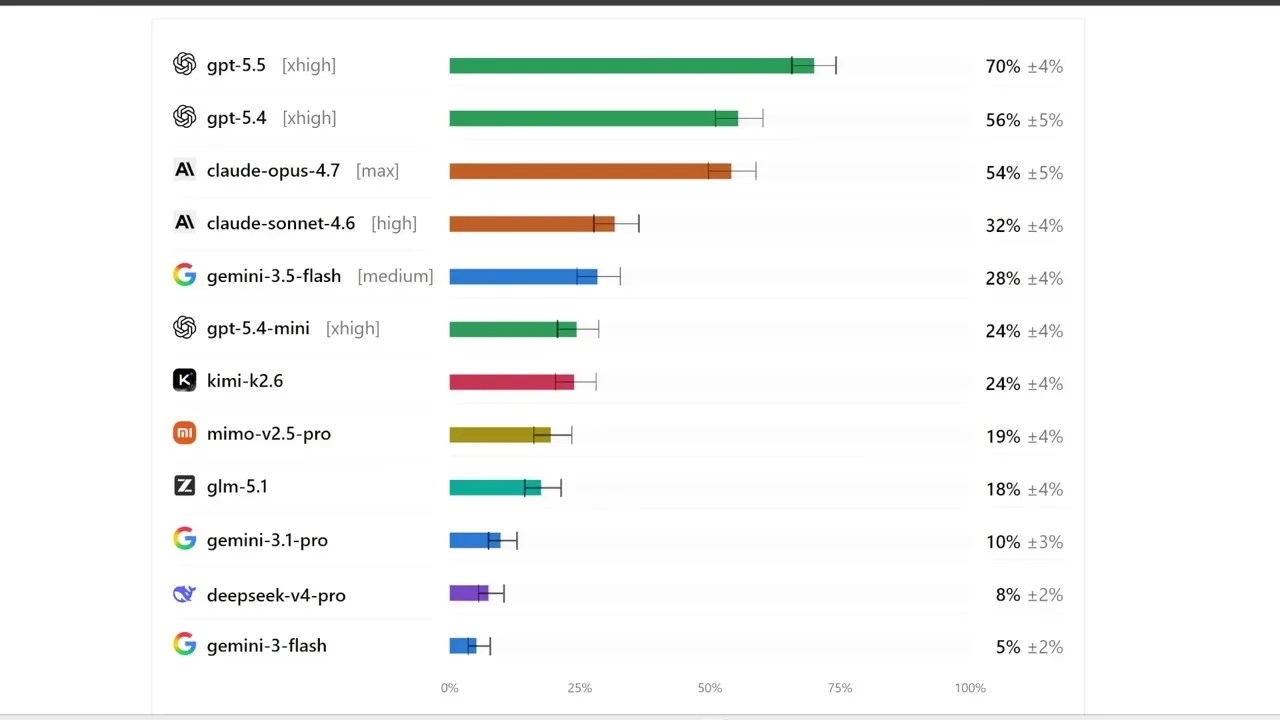
Deep Suite benchmark results: Testing how LLMs handle messy, multi-file codebases in real-world scenarios.
Looking at the Deep Suite data, GPT-5.5 still maintains its lead in actual execution accuracy, followed closely by the Claude family. What makes Deep Suite fascinating is that the prompts are short and realistic, requiring the agent to autonomously explore the codebase, locate where the change belongs, execute the patch, and verify that nothing else breaks. It’s a brutal reality check for open-source alternatives like Kimi or GLM, which struggle to survive these multi-file codebases.
But Anthropic has played a very clever card with Claude Opus 4.8: honesty. The model is reportedly trained to aggressively flag its own uncertainties instead of hallucinating confidently. It is four times less likely to allow silent bugs to slip through its code and will actively push back on flawed plans during agentic workflows.
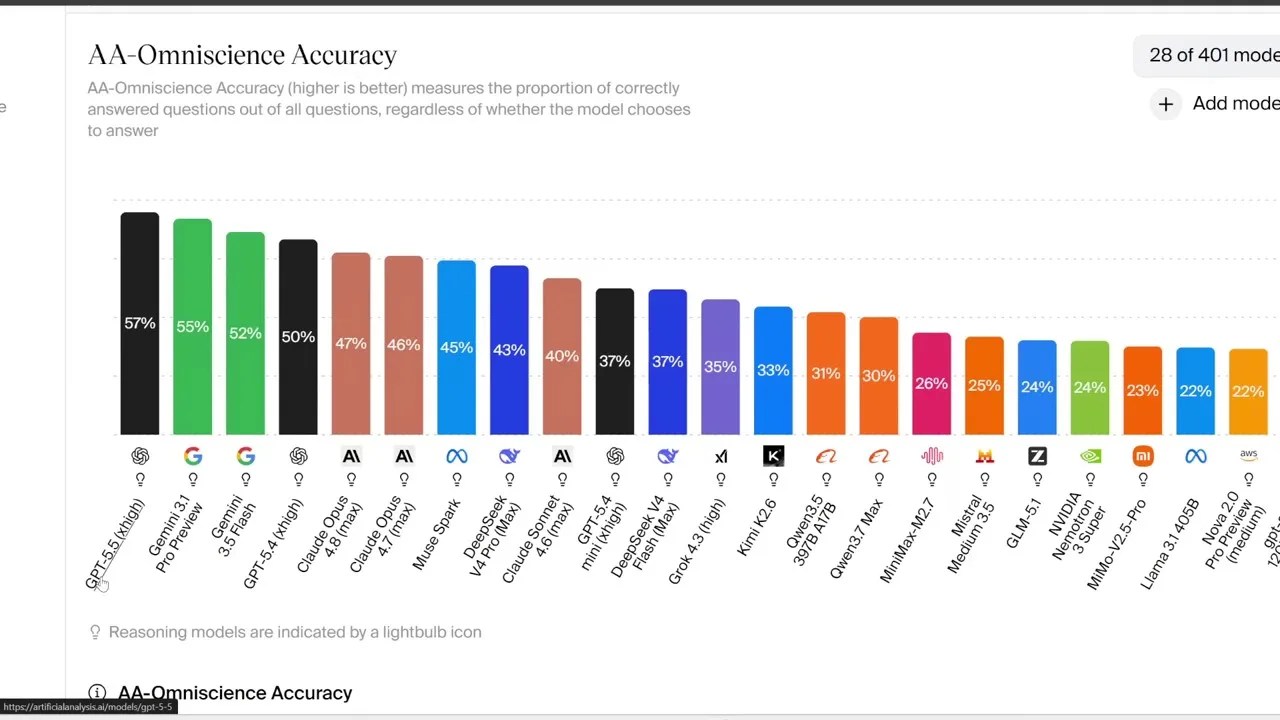
Omniscience Accuracy and Hallucination Index: How Claude 4.8 compares to competitors when it comes to raw truthfulness.
However, when we turn to independent tracking like the Omniscience Accuracy Index, the narrative gets muddy. Claude Opus 4.8 isn’t actually a runaway winner in absolute accuracy; GPT-5.5 and Gemini 3.1 Pro still hold their ground, and in terms of raw hallucination rates, Opus 4.8 remains on par with its predecessor, Opus 4.7. What we are seeing is not a single dominant king, but a highly specialized workforce. Use Claude for structured self-correcting logic, but keep GPT in your terminal for raw, brute-force generation.
2. Nvidia’s Open-Source Storm: Re-shaping the Latest AI Developments
While the world focuses on LLMs, Nvidia is quietly building some of the most practical vision and rendering tools on the market. Let’s look at Locate Anything, a vision-language grounding model that is only 3 billion parameters (roughly 7.8 GB), meaning you can run it on a mid-range consumer GPU at home.
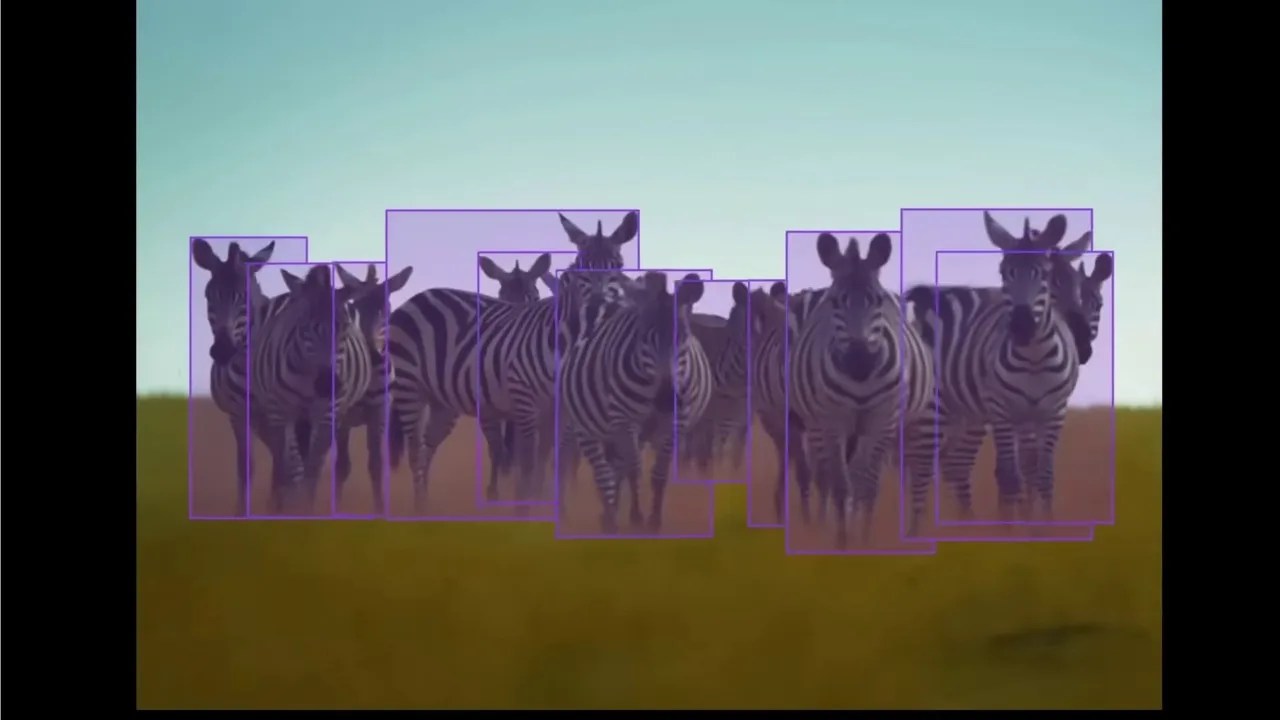
Nvidia’s Locate Anything model in action: Instantly identifying and drawing geometric bounds on complex targets simultaneously.
Traditional vision models output bounding box coordinates token-by-token—like a slow typist spelling out a latitude and longitude. Locate Anything bypasses this bottleneck using parallel box decoding, predicting the entire bounding box in a single unified step. Whether it’s OCR, user interface navigation, or finding a specific bird in a dense jungle canopy, it does so near-instantly.
Then, there’s the PID (Pixel Diffusion Decoder) upscaler. If you’ve ever tried to scale an image to 2K or 4K, you know the bottleneck is often the decoder translating latent space into pixel space, followed by a separate upscaling pass. PID completely replaces this multi-step headache with a single pixel diffusion decoder.

The difference is in the details: PID scales images to 2K in under one second, preserving clean structures without introducing synthetic noise.
With an execution time of under one second to scale a 512×512 image to 2K, it is roughly six times faster than Seed VR2. It’s highly integrated with ComfyUI and already supports Flux and SD3. When studying the latest AI developments, it becomes clear that Nvidia’s strategy of giving away these hyper-optimized local weights is a brilliant move to keep developers locked into their CUDA ecosystem.
3. Illusionists of Photons: Real-time Light Bending
Manipulating light in a 2D image has historically been a destructive process. Slide the exposure slider too far in Photoshop, and you introduce noise, artifacts, and flat, washed-out shadows. Two new tools, Control Light and Pixel Relights, are changing the game by applying generative physics to flat images.

Control Light: A generative slider that brightens scenes while preserving the underlying physical integrity and geometry of the room.
Instead of merely altering pixel exposure, Control Light understands structural depth. If you dial up the brightness, the model reconstructs what the light rays *should* do as they bounce off physical surfaces. This has massive implications for low-light surveillance recovery, photo restoration, and UI design.
If you want to take it a step further, look at Pixel Relights. It extracts a rough 3D estimation of a flat 2D image, imports that geometry into a background Blender instance in real-time, lets the user move a digital light source around, and then uses that render as a structural guide to output a beautifully consistent final image.
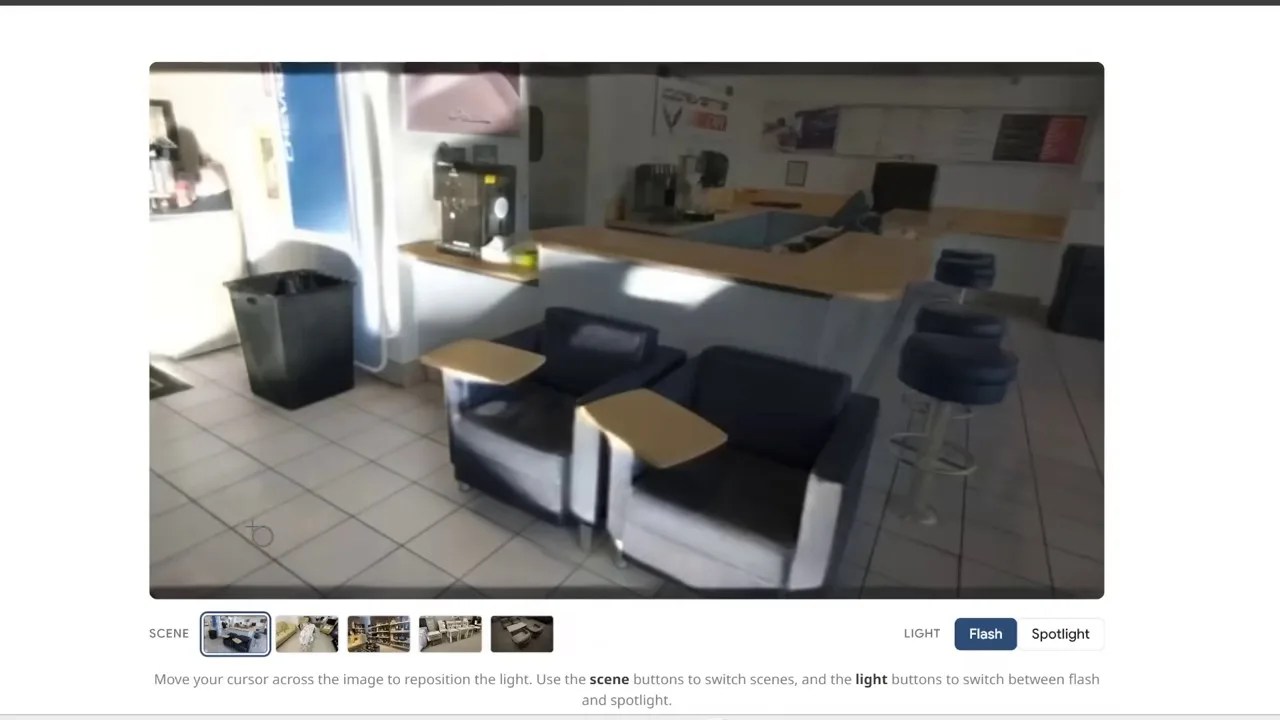
Pixel Relights: Dragging a virtual cursor to dynamically cast shadows and direct spotlight hardness on a flat, static image.
4. Building the Future in 3D: Meshes and World Models
For a long time, 3D AI models produced “Gaussian splats”—which look gorgeous on a screen but are practically useless for physics engines, robotic simulations, or game development. To use them, developers had to go through painful, lossy conversion pipelines to get a clean polygon mesh.
A new model called Triclat changes the paradigm. It completely skips the conversion step by representing the entire 3D splatting scene as triangle primitives from the very start.
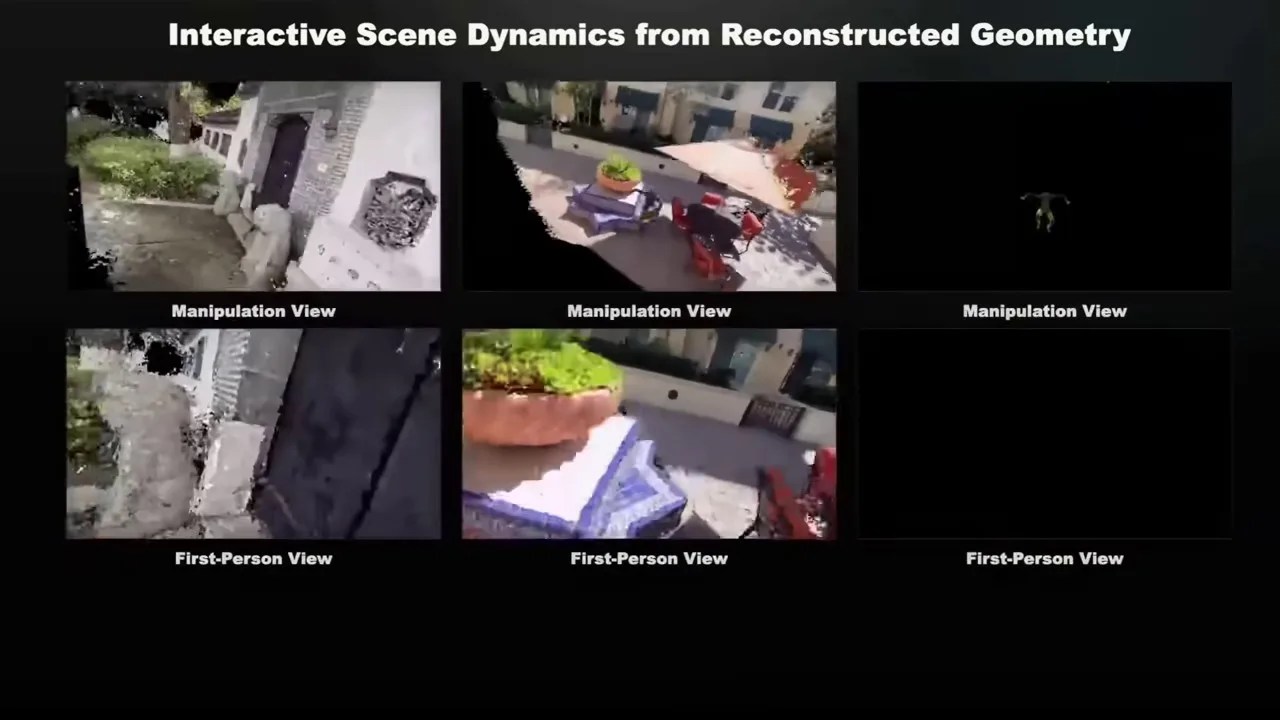
Triclat reconstructs environments as ready-to-use triangle meshes, allowing instant virtual robot navigation and collision testing.
This “simulation-ready” approach is also mirrored in Cube Part. If you generate a car using standard 3D AI, you get a solid, frozen block of geometry. Cube Part uses a diffusion transformer with cross-part attention to dynamically slice the generated asset into independent, logical meshes based on your requirements (e.g., wheels, chassis, doors).
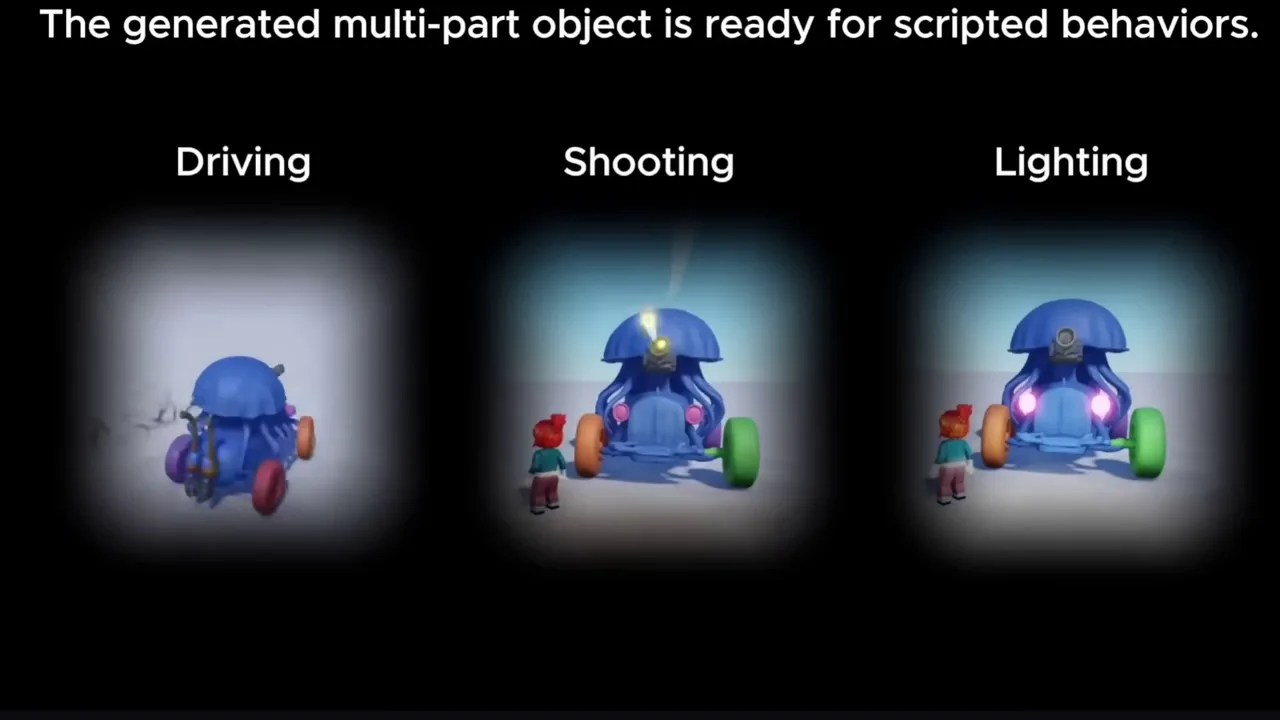
Cube Part: Generating complex assets that are automatically segmented into individual, articulable components.
This is crucial because if we want AI to generate playable worlds, we need systems like Scope—a generative world simulator trained on nearly 70,000 clips from first-person shooters. Scope reacts in real-time to up to 10 different controller inputs (moving, aiming, shooting, reloading).

Scope: A neural world model simulating real-time game state updates purely through generative video frame prediction.
5. The Rise of Collaborative Autonomy & Agentic Frameworks
The term “AI Agent” has been thoroughly abused by marketing departments lately. To understand the actual layout of this landscape, we have to look closely at what constitutes a *true* agent: autonomous planning, tool utilization, independent decision-making, and self-correction.
A bird’s-eye view of the agentic landscape: Analyzing the friction points, pricing models, and skill requirements of modern agent frameworks.
If you want to see agentic design pushing the boundaries of human knowledge, look at Autoscientist. It’s an open-source framework where AI agents don’t work in isolation; they organize themselves into decentralized research teams.
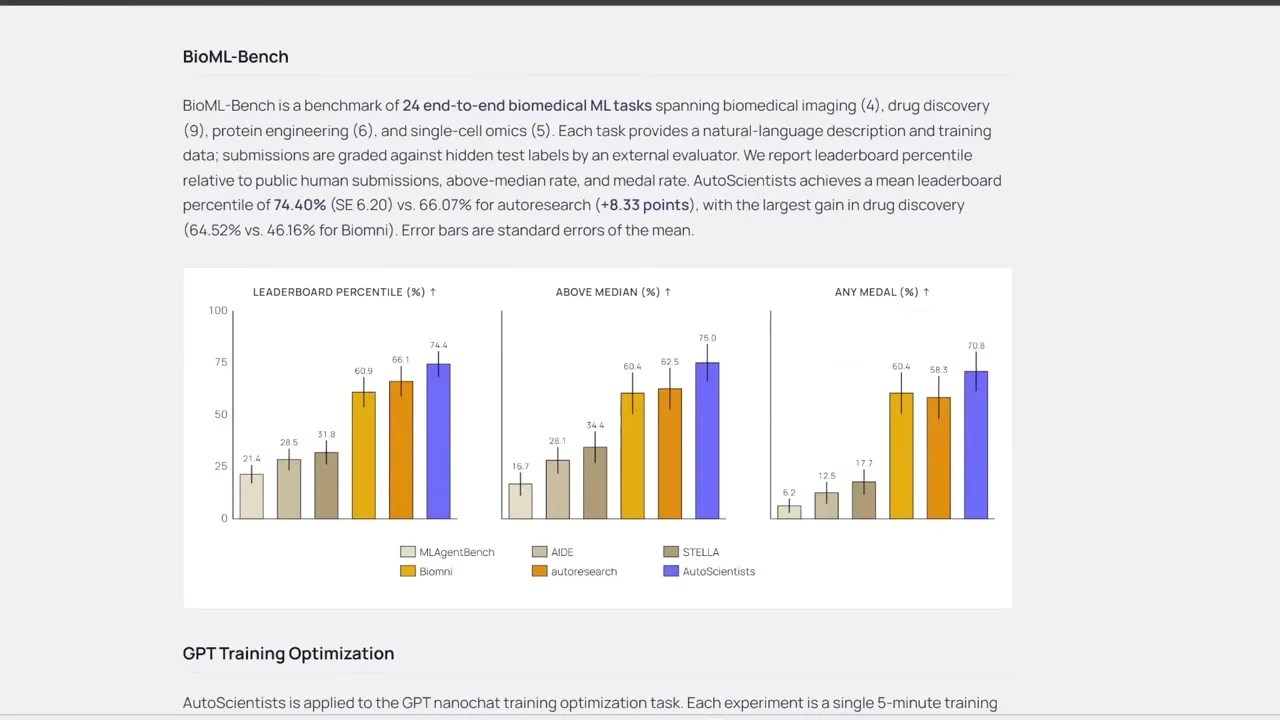
Autoscientist dominating the BioML Bench across complex imaging, drug discovery, and protein engineering benchmarks.
The system shares a collective state—including experiment logs, a discussion forum, and a crucial “dead-end registry” so agents don’t waste compute cycles repeating failed ideas. Analysts propose hypotheses, experimenters modify code and train models, and validators critique the results. In biomedical machine learning benchmarks (BioML Bench), this cooperative architecture outperformed every other framework on the market.
To run these heavy agentic tasks without bankrupting your startup, highly efficient “flash” models are essential. Stepfun’s new Step 3.7 Flash is a massive 400 GB unified multimodal model designed to read screens, use office tools, and maintain logic over incredibly long runs, rivaling proprietary heavyweights on agentic benchmarks.

Step 3.7 Flash: Delivering top-tier agentic and multimodal performance at a fraction of the cost of heavyweight alternatives.
6. Humanoids That Do Your Laundry and Juggle (No, Really)
Let’s close this out with physical hardware. Among all these latest AI developments, the democratization of local models is finally bleeding heavily into physical mechanics. First up is the Astrobot T1.

The Astrobot T1: Ironing shirts, dawning a wheeled base, and aiming for a highly disruptive $13,000 price tag.
With a rumored price tag of around $13,000, this is a massive shot across the bow of the domestic robotics industry. It is highly capable—operating washing machines, handling delicate glassware, and even ironing clothes on a standard board. The catch? It rolls on a wheeled base, meaning stairs are its sworn enemy. But for single-level homes and industrial warehouses, this is an incredibly low entry point.
Meanwhile, the Rye Institute demonstrated their Athena Zero robot learning to juggle complex, alternating patterns in under 10 minutes of real-world interaction. Juggling is a legendary benchmark for robotics because it demands absolute, low-latency mastery over high-speed hardware coordination, real-time spatial computing, and physical trajectory prediction.
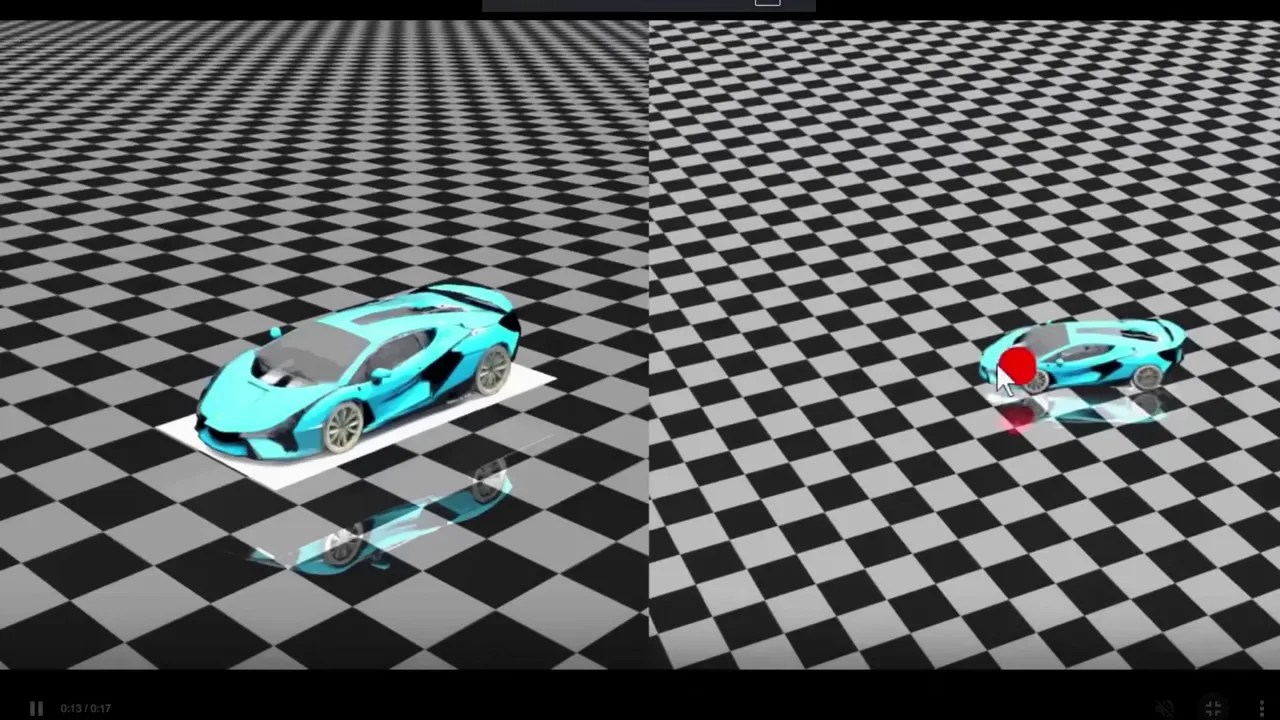
Ensuring physical realism: Open-source physical model generators like PhysX Omni are enabling robots to understand physical joint limits before they touch the real world.
Athena Zero doesn’t just memorize a single motion path; it dynamically rewires its patterns on the fly, switching between five distinct juggling styles seamlessly. It proves that physical AI is rapidly leaving the era of rigid scripts and entering the domain of highly adaptive, real-time intuition.
So, What’s the Real Takeaway?
We are witnessing a quiet but massive shift in how AI models interact with the world. We are moving away from models that merely output words on a screen. Today, we are deploying systems that reconstruct physical environments in 3D, write and self-correct software across massive structures, control real-world photons, and coordinate robotic joints in real-time. The space is moving fast, and as always, I’ll be here to filter out the noise and bring you the developments that actually matter. Let me know in the comments: which tool are you spinning up locally tonight?